Viola von Cramon MEP highlights three priorities for the Eastern Partnership Initiative

German Greens MEP, Viola von Cramon-Taubadel, has identified three crucial priorities for the EU to implement as it takes forward its flagship Eastern Partnership (EaP) initiative.

Speaking to commonspace.eu for the latest episode of its Global Europe Unpacked podcast, the MEP highlighted conflict prevention, transparent paths to EU membership for EaP countries and a confident approach towards Russia as three immediate priorities.

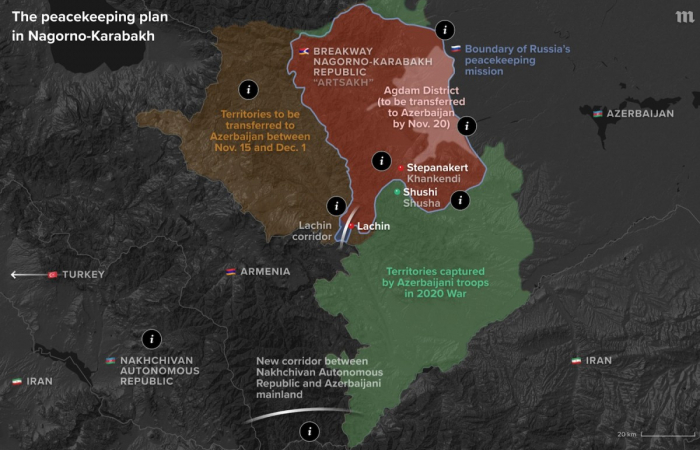
Von Cramon said that the “tragic and bloody” war between Armenia and Azerbaijan over Nagorno-Karabakh last year showed the need for the EU to focus on conflict prevention. She highlighted the requirement for the bloc to be a political actor, both “in this region and in the entire concept of the Eastern Partnership”:

“We see that the frustration in the region is huge and that the EU was completely absent [in the Karabakh War] and left it to Russia to mediate and find a ceasefire. Nevertheless, there is a lot of room for engagement and activity so conflict prevention should be a priority.”

Secondly, whilst mentioning that membership perspectives for the partner countries should not be explicitly formulated, she advised that the bloc must outline the transparent steps that the eastern partners can take to achieve full membership. According to Von Cramon, the path towards membership “should be explained in some way” to the partners, and it should “be at least possible for them to apply”.

As a third priority, the MEP highlighted the importance of the bloc standing up to Russia, especially in regard to its actions against Ukraine and Belarus. She highlighted the importance of the EU being “clear with [its] rhetoric” – that it stands in solidarity with Ukraine and Belarus and that it has redlines when it comes Russian action against its eastern partners. She expressed hope that the new presidential administration in Washington DC would mean closer US-EU ties in terms of foreign policy:

“We should not be afraid of Russia … It is much easier if we know the US and the EU will work together on this issue.”

Von Cramon’s comments came days before Tuesday's (2 February) letter from the foreign ministers of Georgia, Moldova and Ukraine, to EU High Representative Joseph Borrell, EU Commissioner for Neighbourhood and Enlargement Olivér Várhelyi, and foreign ministers of the EU member states, seeking closer economic co-operation and political dialogue with the EU, which will gradually lead to full integration into the union’s internal market. The letter emphasises that for the EaP to remain relevant, it must adapt to the “the new realities and needs” of the partnership countries, by promoting co-operation in various sectors stipulated by the Association Agreements signed by the countries.

Formed in May 2009, the Eastern Partnership Initiative was an upgrade to the EU’s neighbourhood policy to the east, aimed at ‘accelerating political association and deepening economic integration’ with six post-Soviet partners – Armenia, Azerbaijan, Belarus, Georgia, Moldova and Ukraine. The idea was that the level of commitment shown by each partner to the EU’s values and standards would be reflected by the level of integration and co-operation offered to it by the bloc. For many, it has been considered a way for the EU to integrate and prepare the partnership countries for membership without having to commit to it.

A Member of the European Parliament for The Greens in Germany, Viola Von Cramon-Taubadel is a member of the European Parliament’s Committee on Foreign Affairs. Amongst other things, she is also Vice-Chair for the Delegation to the EU-Ukraine Parliamentary Association Committee and on the Delegation for the Euronest Parliamentary assembly.

You can listen to the podcast here, as well as on Apple, Spotify and Google Podcasts:
Source: commonspace.eu
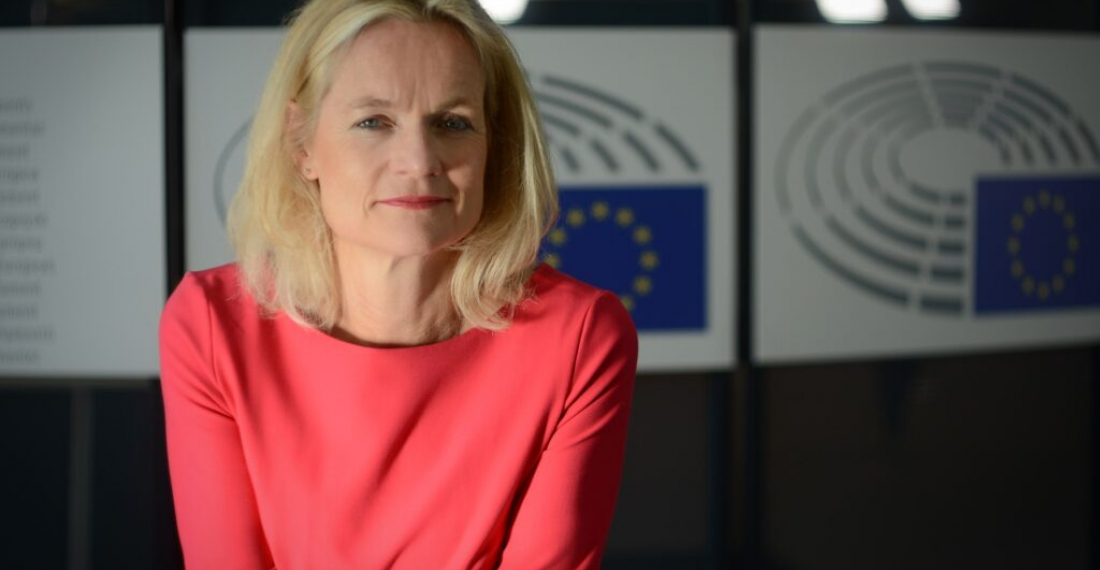
Photo: Viola von Cramon-Taubadel MEP; European Union

Related articles

Editor's choice
News
Borrell tells the European Parliament that the situation in Afghanistan was critical, but the EU will remain engaged

Borrell tells the European Parliament that the situation in Afghanistan was critical, but the EU will remain engaged

Borrell underlined that the European Union will make every effort to support the peace process and to remain a committed partner to the Afghan people. "Of course, we will have to take into account the evolving situation, but disengagement is not an option.  We are clear on that: there is no alternative to a negotiated political settlement, through inclusive peace talks.
Editor's choice
News
NATO Chief says war is on Europe's doorstep, and warns against complacency

NATO Chief says war is on Europe's doorstep, and warns against complacency

Russia could attack a Nato country within the next five years, the Secretary General of NATO, Mark Rutte, said in a stark new warning. "Nato's own defences can hold for now," Rutte warned in Berlin, but conflict was "next door" to Europe and he feared "too many are quietly complacent, and too many don't feel the urgency, too many believe that time is on our side. "Russia is already escalating its covert campaign against our societies," Rutte said in a speech in Germany. "We must be prepared for the scale of war our grandparents or great-grandparents endured." Earlier this month, Russia's President Vladimir Putin said his country was not planning to go to war with Europe, but it was ready "right now" if Europe wanted to - or started a war. But similar reassurances were given by Moscow in 2022, just before 200,000 Russian troops crossed the border and invaded Ukraine. Putin has accused European countries of hindering US efforts to bring peace in Ukraine - a reference to the role Ukraine's European allies have recently played in trying to change a US peace plan to end the war, whose initial draft was seen as favouring Russia. But Putin was not sincere, Nato's secretary-general said in the German capital, Berlin. Supporting Ukraine, he added, was a guarantee for European security. "Just imagine if Putin got his way; Ukraine under the boot of Russian occupation, his forces pressing against a longer border with Nato, and the significantly increased risk of an armed attack against us." Russia's economy has been on a war footing for more than three years now - its factories churn out ever more supplies of drones, missiles and artillery shells. According to a recent report by the Kiel Institute for the World Economy, Russia has been producing each month around 150 tanks, 550 infantry fighting vehicles, 120 Lancet drones and more than 50 artillery pieces. The UK, and most of its Western allies, are simply not anywhere near this point. Analysts say it would take years for Western Europe's factories to come close to matching Russia's mass-production of weapons. "Allied defence spending and production must rise rapidly, our armed forces must have what they need to keep us safe," the Nato chief said.

Popular

Editor's choice
News
NATO Chief says war is on Europe's doorstep, and warns against complacency

NATO Chief says war is on Europe's doorstep, and warns against complacency

Russia could attack a Nato country within the next five years, the Secretary General of NATO, Mark Rutte, said in a stark new warning. "Nato's own defences can hold for now," Rutte warned in Berlin, but conflict was "next door" to Europe and he feared "too many are quietly complacent, and too many don't feel the urgency, too many believe that time is on our side. "Russia is already escalating its covert campaign against our societies," Rutte said in a speech in Germany. "We must be prepared for the scale of war our grandparents or great-grandparents endured." Earlier this month, Russia's President Vladimir Putin said his country was not planning to go to war with Europe, but it was ready "right now" if Europe wanted to - or started a war. But similar reassurances were given by Moscow in 2022, just before 200,000 Russian troops crossed the border and invaded Ukraine. Putin has accused European countries of hindering US efforts to bring peace in Ukraine - a reference to the role Ukraine's European allies have recently played in trying to change a US peace plan to end the war, whose initial draft was seen as favouring Russia. But Putin was not sincere, Nato's secretary-general said in the German capital, Berlin. Supporting Ukraine, he added, was a guarantee for European security. "Just imagine if Putin got his way; Ukraine under the boot of Russian occupation, his forces pressing against a longer border with Nato, and the significantly increased risk of an armed attack against us." Russia's economy has been on a war footing for more than three years now - its factories churn out ever more supplies of drones, missiles and artillery shells. According to a recent report by the Kiel Institute for the World Economy, Russia has been producing each month around 150 tanks, 550 infantry fighting vehicles, 120 Lancet drones and more than 50 artillery pieces. The UK, and most of its Western allies, are simply not anywhere near this point. Analysts say it would take years for Western Europe's factories to come close to matching Russia's mass-production of weapons. "Allied defence spending and production must rise rapidly, our armed forces must have what they need to keep us safe," the Nato chief said.