Vatican loosing patience with Israel

The Vatican appears to be loosing patience with Israel. On Saturday (19 July), Pope Leo spoke to Israel prime minister Benyamin Netanyahu on the phone, but the Pope used strong language when referring to Gaza in his speech after the Angelus on Sunday.

Pope Leo XIV expressed his “deep sorrow” over the recent Israeli attack on the Catholic parish in Gaza, and called for “an immediate halt to the barbarity” in the Strip.

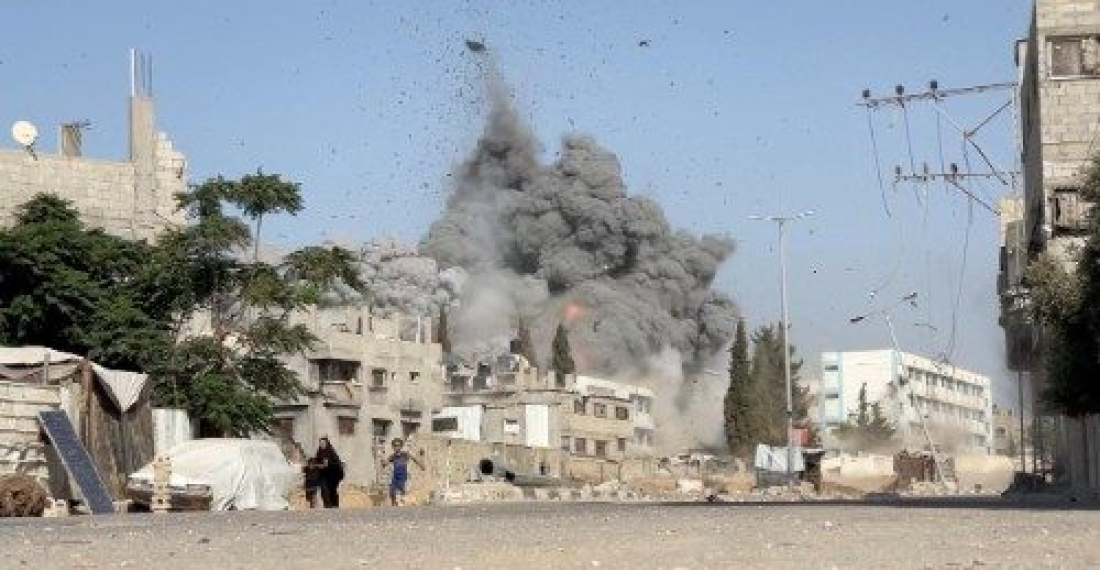
After the Holy Family church was struck on Thursday morning, three of the approximately 600 Gazans sheltering there were killed, and several others, including the parish priest Fr Gabriel Romanelli, were injured.


Speaking on Sunday after reciting the Angelus prayer at his summer residence in Castel Gandolfo, the Pope named the three victims – Saad Issa Kostandi Salameh, Foumia Issa Latif Ayyad, and Najwa Ibrahim Latif Abu Daoud – and said he was “close” to them and their families.

Pope Leo then stressed that the attack “is just one of the continuous military attacks against the civilian population and places of worship in Gaza”.

The Pope appealed for “an immediate halt to the barbarity of the war” and for “a peaceful resolution of the conflict”. He urged the international community to observe humanitarian law and respect the obligation to protect civilians, “as well as the prohibition of collective punishment, indiscriminate use of force and forced displacement of the population”.

Pope Leo brought his appeal to a close with a message to “our beloved” Christian communities in the Middle East, saying he understood they felt they could “do little, in the face of this tragic situation”.  

The head of Vatican diplomacy, Cardinal Pietro Pasolin, in an interview with RAI 2 described Gaza as a war without limits.

Radio Vaticana said in editorial by its director Andrea Tornieeli, that the images of the strike's aftermath speak volumes: a shell fired from an Israeli army tank directly hit the Holy Family Church, the only Catholic parish in Gaza.

"Five hundred people—families who have lost their homes—have taken refuge in the compound comprising two churches and a school for almost two years.

Three people lost their lives, and another ten are injured. One of those injured, Suhail, contributes to L’Osservatore Romano with his small column: “I write to you from Gaza.”

The most recent, on July 8, was titled “Love Is Stronger Than War” and concluded as follows: “Let us pray that not only Gaza, but the whole world may one day live in peace, through mutual forgiveness and reconciliation. A day when there will be no more wars, because love is stronger than war.”

Israeli authorities have apologized, stating that it was a mistake, that Israel respects places of worship, and that an investigation will be conducted into the incident.

Such statements can hardly be reassuring. Not only because they are contradicted by the images of mosques reduced to rubble and churches attacked—the raid on the Orthodox church of Saint Porphyrius cost dozens of lives, for example—but also because, after a year and a half, there are still no results from the investigation into the killing of two Christian women shot by a sniper in the Gaza parish.

Particularly significant in this regard are the words spoken by the Israeli Ambassador to Italy, Jonathan Peled: "We have no intention of endangering civilian institutions. But the terrorists are everywhere, even in public buildings like schools and, unfortunately, places of worship."

These statements are striking because, in some way, they provide the context for what has been described as a "mistake." Five hundred unarmed people—many of whom regularly gather to pray the rosary—unwittingly became collateral targets because, as Ambassador Peled says, "these are sometimes the consequences of war."


As readers and listeners of Vatican News know well, we did not wait for Christian deaths to talk about the daily massacres in Gaza, where dozens of innocent children, women, and men are killed every week as collateral victims of raids or strikes by those who are supposed to ensure the safe distribution of food.

We do not report on the victims in Gaza only now that they are Christians or because Suhail was injured.

All innocent victims cry out for vengeance in the sight of God, every life is sacred, and Christians of every denomination in Gaza share in all things the fate of their people, the martyred Palestinian people.

The inhumane massacre against Israel perpetrated by Hamas terrorists on October 7, 2023, was condemned by the Holy See with unambiguous words, while calling for the release of all hostages and recognizing Israel's right to defend itself.

However, that inhuman massacre—to the detriment of so many innocent civilians—cannot justify 60,000 dead and cities razed to the ground. It cannot justify the silence and inanity of so many who pretend not to see.

This is why we will never tire of denouncing the absurdity of this war by repeating the words Pope Leo XIV addressed to the Reunion of Aid Agencies for the Oriental Churches (ROACO) on June 26. “All of us, by virtue of our humanity, are called upon to examine the causes of these conflicts, to identify those that are real, and to attempt to resolve them. But also to reject those that are false, the result of emotional manipulation and rhetoric, and to make every effort to bring them to light. People must not die because of fake news.”

We are called to overcome that globalization of alternating stages of indifference, which makes us rightly indignant about some victims while overlooking others.

We are called to look realistically at the situation in the Middle East and the absurd escalation of war. New fronts are continuously opened, as if the survival of the ruling leaders, both in terrorist organizations and in states, depended on the endless perpetuation of wars instead of peace.

It is time for the international community to finally regain the courage to intervene with all the tools that the law makes available: to silence weapons, to stop the massacres, and to put an end to power games whose price is paid by thousands of innocent victims.

 source: commonspace.eu with Radio Vaticana (Vatican City)
 

Related articles

Editor's choice
News
Key European countries back Denmark in the face of Trump's continuing insistence on taking over Greenland

Key European countries back Denmark in the face of Trump's continuing insistence on taking over Greenland

 Six major European countries have declared their support to Denmark following renewed insistence by the US that it must have control over Greenland. "Greenland belongs to its people, and only Denmark and Greenland can decide on matters concerning their relations," said the leaders of the UK, France, Germany, Italy, Poland, and Spain, in a joint statement, issued on Tuesday (6 January), together with Denmark. On Sunday, Donald Trump said the US "needed" Greenland - a semi-autonomous region of fellow Nato member Denmark - for security reasons. He has refused to rule out the use of force to take control of the territory, and Danish Prime Minister Mette Frederiksen warned on Monday that an attack by the US would spell the end of Nato. The issue of Greenland's future resurfaced in the wake of the US military intervention in Venezuela, during which elite troops went in to seize the country's President Nicolás Maduro and take him to face drugs and weapons charges in New York. Following the raid, Trump said the US would "run" Venezuela for an unspecified period of time. He also said the US was returning to an 1823 policy of US supremacy in its sphere of influence in the Western hemisphere - and he warned a number of countries the US could turn its attention to them. The US military raid in Venezuela has reignited fears that the US may consider using force to secure control of Greenland. A day after the raid, Katie Miller - the wife of one of Trump's senior aides - posted on social media a map of Greenland in the colours of the American flag, alongside the word "SOON". On Monday, her husband Stephen Miller said it was "the formal position of the US government that Greenland should be part of the US". In an interview with CNN, he also said the US "is the power of Nato. For the US to secure the Arctic region, to protect and defend Nato and Nato interests, obviously Greenland should be part of the US." Asked repeatedly whether the US would rule out using force to annex it, Miller responded: "Nobody's going to fight the US over the future of Greenland." Stressing they were as keen as the US in Arctic security, the seven European signatories of Tuesday's joint statement said this must be achieved by Nato allies, including the US "collectively" - whilst "upholding the principles of the UN Charter, including sovereignty, territorial integrity and the inviolability of borders". Greenland's Prime Minister Jens-Frederik Nielsen welcomed the statement and called for "respectful dialogue". "The dialogue must take place with respect for the fact that Greenland's status is rooted in international law and the principle of territorial integrity," Nielsen said. Trump has claimed that making Greenland part of the US would serve American security interests due to its strategic location and its abundance of minerals critical to high-tech sectors. Greenland, which has a population of 57,000 people, has had extensive self-government since 1979, though defence and foreign policy remain in Danish hands. While most Greenlanders favour eventual independence from Denmark, opinion polls show overwhelming opposition to becoming part of the US.
Editor's choice
News
Donald Tusk: "One for all, and all for one! Otherwise we are finished."

Donald Tusk: "One for all, and all for one! Otherwise we are finished."

Europe is rattled by events in Venezuela, and there are serious concerns that US disregard for international law may have consequences close to home.  The BBC diplomatic correspondent, James Landale, said, the question is how Europe may respond in the longer term to America's military operation in Venezuela. Will it provide a catalyst for the continent to take greater responsibility for its own security in the face of so much instability from what many see as an unreliable ally? Polish prime minister, Donald Tusk, appears to have answered the question, saying on social media: "No-one will take seriously a weak and divided Europe: neither enemy nor ally. It is already clear now. "We must finally believe in our own strength, we must continue to arm ourselves, we must stay united like never before. One for all, and all for one. Otherwise, we are finished." The US seizing of Venezuela's leader has faced strong criticism from both America's friends and foes at an emergency meeting of the United Nations Security Council, held on Monday, 5 January. Many member states agreed with the US that Nicolás Maduro had been an illegitimate and repressive leader. But many also condemned the US military action as a breach of international law and the UN Charter, and they demanded a democratic transition that reflected the will of the Venezuelan people. (click the image to read the full article).

Popular

Editor's choice
News
Key European countries back Denmark in the face of Trump's continuing insistence on taking over Greenland

Key European countries back Denmark in the face of Trump's continuing insistence on taking over Greenland

 Six major European countries have declared their support to Denmark following renewed insistence by the US that it must have control over Greenland. "Greenland belongs to its people, and only Denmark and Greenland can decide on matters concerning their relations," said the leaders of the UK, France, Germany, Italy, Poland, and Spain, in a joint statement, issued on Tuesday (6 January), together with Denmark. On Sunday, Donald Trump said the US "needed" Greenland - a semi-autonomous region of fellow Nato member Denmark - for security reasons. He has refused to rule out the use of force to take control of the territory, and Danish Prime Minister Mette Frederiksen warned on Monday that an attack by the US would spell the end of Nato. The issue of Greenland's future resurfaced in the wake of the US military intervention in Venezuela, during which elite troops went in to seize the country's President Nicolás Maduro and take him to face drugs and weapons charges in New York. Following the raid, Trump said the US would "run" Venezuela for an unspecified period of time. He also said the US was returning to an 1823 policy of US supremacy in its sphere of influence in the Western hemisphere - and he warned a number of countries the US could turn its attention to them. The US military raid in Venezuela has reignited fears that the US may consider using force to secure control of Greenland. A day after the raid, Katie Miller - the wife of one of Trump's senior aides - posted on social media a map of Greenland in the colours of the American flag, alongside the word "SOON". On Monday, her husband Stephen Miller said it was "the formal position of the US government that Greenland should be part of the US". In an interview with CNN, he also said the US "is the power of Nato. For the US to secure the Arctic region, to protect and defend Nato and Nato interests, obviously Greenland should be part of the US." Asked repeatedly whether the US would rule out using force to annex it, Miller responded: "Nobody's going to fight the US over the future of Greenland." Stressing they were as keen as the US in Arctic security, the seven European signatories of Tuesday's joint statement said this must be achieved by Nato allies, including the US "collectively" - whilst "upholding the principles of the UN Charter, including sovereignty, territorial integrity and the inviolability of borders". Greenland's Prime Minister Jens-Frederik Nielsen welcomed the statement and called for "respectful dialogue". "The dialogue must take place with respect for the fact that Greenland's status is rooted in international law and the principle of territorial integrity," Nielsen said. Trump has claimed that making Greenland part of the US would serve American security interests due to its strategic location and its abundance of minerals critical to high-tech sectors. Greenland, which has a population of 57,000 people, has had extensive self-government since 1979, though defence and foreign policy remain in Danish hands. While most Greenlanders favour eventual independence from Denmark, opinion polls show overwhelming opposition to becoming part of the US.