The US is planning to open a consulate in Western Sahara. The consulate will be located in Dakhla, a fishing port located in southern Western Sahara, intended to become a “regional maritime hub” serving Africa and the Canary Islands through a large development project launched by Rabat.
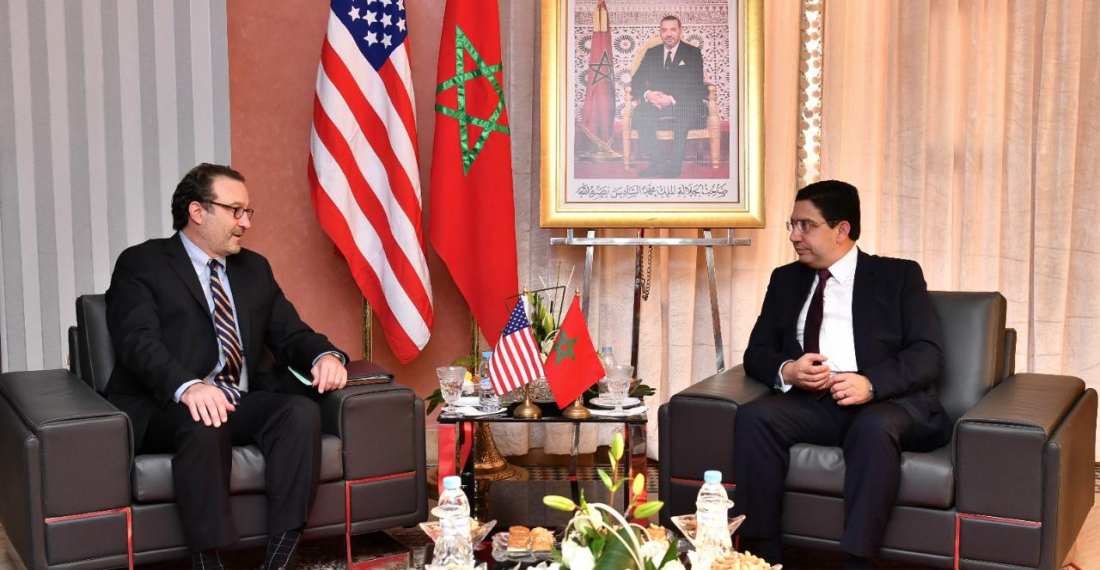
Last Saturday, the assistant secretary of state for near eastern affairs, David Schenker, visited Western Sahara. He is considered to be the highest-ranking US diplomat for North Africa and the Middle East.
Washington’s decision to recognise Morocco’s claim over Western Sahara was a significant policy shift. The move unnerved both the Polisario Front and Morocco’s neighbour Algeria, where the Polisario Front is based. He was in Algeria a day earlier, reiterating there that Morocco’s plan for Western Sahara’s autonomy should be the framework for negotiations.
Schenker on Saturday also visited the headquarters of the UN peacekeeping mission (MINURSO) in Western Sahara.
For his part, the Sahrawi official, Al-Bashir Mustafa Al-Sayed, said in statements to the Algerian News Agency, that the visit of the American delegation to Western Sahara is just "a propaganda tour organized by the Moroccan occupying tourist guide, for an administration whose performance will fall in less than two weeks."
Many countries have already opened diplomatic representations in Western Sahara including UAE, Bahrain, Liberia. Comoros, Burkina Faso
The strong diplomatic gesture by the US is part of the tripartite agreement signed on 22 December by the Americans, Israelis and Moroccans. The agreement states that the US will recognise Rabat’s sovereignty over Western Sahara in exchange for Morocco normalising relations with Israel.
It comes at a time when the political negotiations conducted by the UN on the status of this territory, located in northern Mauritania, have been stalled for decades. Morocco, which controls about two-thirds of the territory, wants “autonomy under control.” The Polisario, supported by neighbouring Algeria, is campaigning for independence and is calling for a referendum on self-determination, as planned by the UN.
On Monday, the leadership of the Polisario Front held a meeting to discuss the recent developments, including the situation in Guerguerat and the US decision to recognize Morocco’s sovereignty over Western Sahara. The outcomes of this meeting and the following steps are not clear yet.
Source: commonspace.eu with agencies.
Picture: The Moroccan Minister of Foreign Affairs, Nasser Bourita meeting with the US Assistant Secretary of State for Near Eastern Affairs, David Schenker in Dakhla. (Twitter: @Marocdiplo_EN).