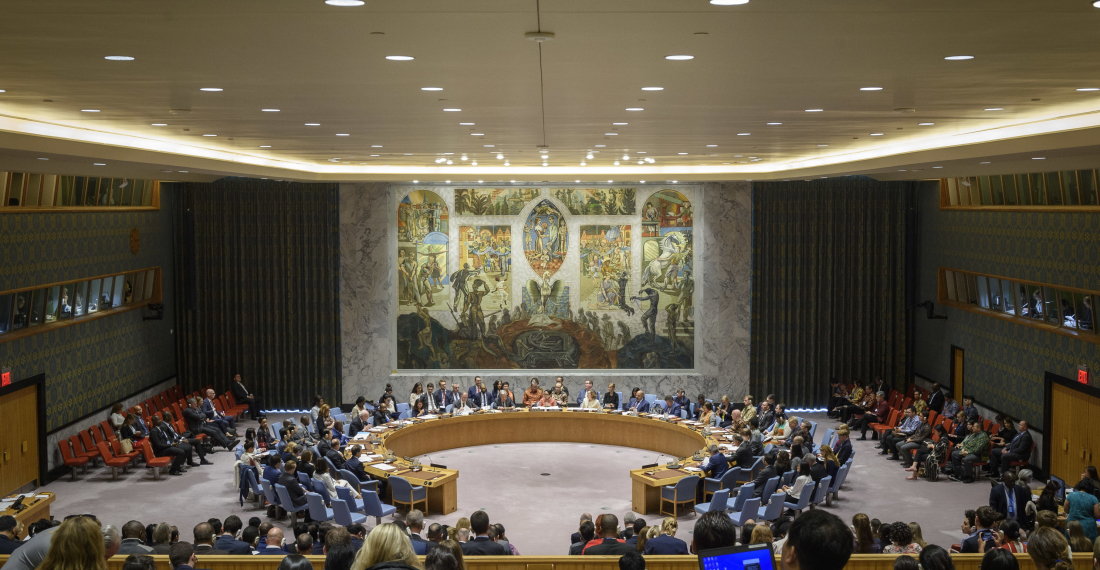
The Security Council is expected to hold a briefing on Wednesday (3 January), followed by closed consultations, on the Houthi attacks in the Red Sea under the “Maintenance of international peace and security” agenda item. Ecuador, France, Guyana, Japan, Malta, the Republic of Korea, the UK and the US requested the meeting earlier today. Mohamed Khaled Khiari, the Assistant Secretary-General for the Middle East, Asia and the Pacific, is expected to brief.
Since mid-November 2023, the Houthi rebel group in Yemen has conducted repeated attacks on commercial vessels in the Red Sea and has severely disrupted international shipping after first launching missile and drone attacks starting in October against Israel that the Houthis threathened to continue until Israel ended its military campaign in Gaza.
At the Security Council, Council members demanded in a 1 December 2023 press statement that all such attacks and actions cease immediately and called for the immediate release of the Galaxy Leader and its crew, which the Houthis continue to hold. The press statement further recalled the importance of enhancing international and regional cooperation to counter threats to peace and security in the region.
Council members have discussed the developments during their monthly meetings on Yemen, held in closed consultations. A major concern is the risk that the situation poses to the peace talks between Saudi Arabia and the Houthis, which have been nearing a comprehensive ceasefire agreement. During tomorrow’s briefing, Council members are likely to reiterate the need to not let these developments adversely affect Yemen’s peace process. More recently, on 18 December, Council members met under “any other business” in closed consultations to discuss the Houthi Red Sea attacks. Assistant Secretary-General for Europe, Central Asia and Americas in the United Nations Department of Political Affairs Miroslav Jenča briefed.
Following this meeting, on 26 December, Japan and the US proposed a draft presidential statement to reaffirm the freedom of navigation in the Red Sea, condemn the multiple Houthi attacks, and recognise the right of member states to take appropriate action to defend their merchant and naval vessels and the importance of international and regional cooperation to counter the threat. However, members could not agree to the text, amid concerns raised by China and Russia which, while reiterating their concerns over the threat posed to freedom of navigation, apparently contended that the presidential statement was unnecessary given the 1 December press statement that strongly condemned the Houthi attacks and contained other similar messaging.
At tomorrow’s session, members may reiterate their condemnation of the attacks as expressed in the 1 December press statement and during the 18 December consultations. Some may also echo points from a 19 December joint statement by the US, High Representative Josep Borrell on behalf of the European Union, Secretary General Jens Stoltenberg on behalf of NATO, and a group representing 44 allies and partner nations (including Japan and the Republic of Korea). In addition to condemning Houthi interference with navigational rights and freedoms and reiterating calls for the release of the Galaxy Leader and its crew, the statement noted that the attacks threaten the movement of food, fuel, humanitarian assistance, and other essential commodities to destinations and populations all over the world. During the session, members are also likely to highlight their concern over the risk of escalation that the attacks in the Red Sea create. They could further call on regional actors such as Iran to refrain from provocative acts.