


Ukrainian parliament approves new government

The Ukrainian parliament, the Vekhrovna Rada, has approved the new Ukrainian government consisting of 15 ministers and two deputy prime ministers. The new government takes over following recent presidential and parliamentary elections and complete the transition from the government of Petro Poroshenko to that of Vlodimir Zelenskiy.

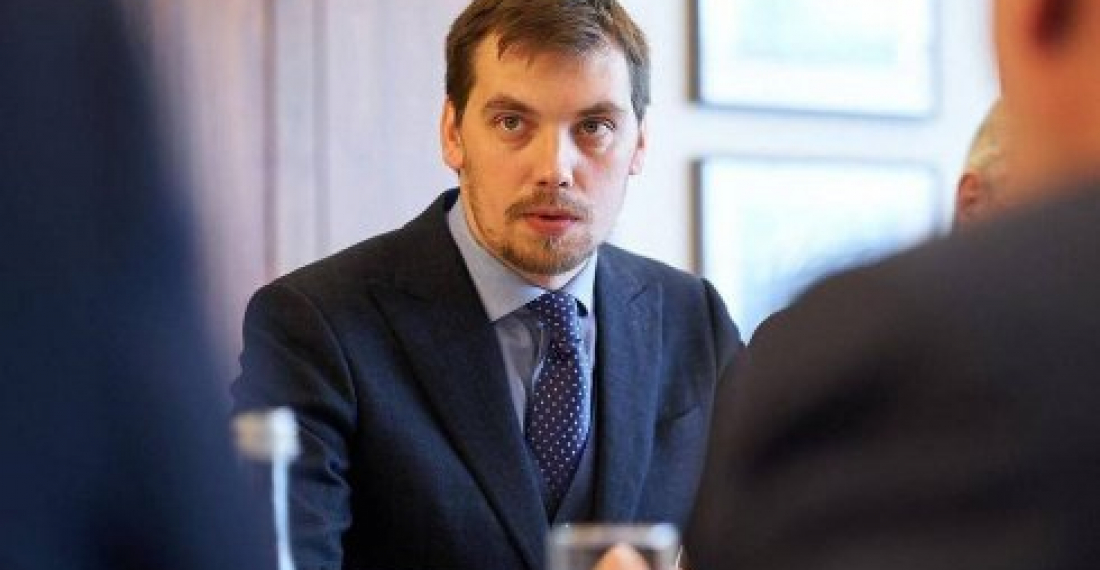
Parliament first approved the nomination of Alexei Goncharuk as prime minister, Vadim Pristayko as Foreign Minister and Andrey Zagorodnyuk as Defense Minister. It is the prerogative of the president to nominate these ministers. The new prime minister then proposed the rest of the Cabinet.

The ministries of energy and ecology were merged into one, as well as ministries of economy and agricultural policy; ministries of youth and sports and culture; ministries of veterans and uncontrolled territories.

Interior Minister Arsen Avakov kept his position, along with Finance Minister Oxana Makarova. All other members of the cabinet of ministers are new appointees.

Dmitry Kuleba was appointed as Deputy Prime Minister for European and Euro-Atlantic integration, Mikhail Fedorov - as Deputy Prime Minister for Digital Information.

Timofey Milovanov was appointed as Minister of Economic Development, Trade and Agriculture; Alexey Orzhel - as Minister of Energy and Environmental Protection; Vladislav Krikliy - as Minister of Infrastruture; Alena Babak - as Minister of Communities and Territories; Anna Novosad - as Minister of Education and Science; Zoryana Skaletskaya - as Minister of Healthcare; Vladimir Borodyansky - as Minister of Culture, Youth and Sport; Yulia Sokolovskaya - as Minister of Social Policy; Oxana Kolyada - as Minister of Veteran Affairs and Uncontrolled Territories; Denis Malyuska - as Minister of Justice.

Speaking prior to his approval by parliament, incoming prime minister Goncharuk declared that he saw the Ukrainian economy's growth as the chief task of his Cabinet on the way to resolving all of the country's other problems. He acknowledged that the new government would have a very hard time.

"You all know our problems: the debts we have inherited, the ruined infrastructures and the war in the east," Goncharuk said. "And we still have corruption. We remain unable to eliminate a situation where the one who rises to power hurries to lay hands on anything that comes his way."

Smuggling, he said, is another major problem, which "must disappear by the end of this year." The new government is faced with the task of achieving economic growth, which is the most important task of all. "We should be growing not by 2%-3%, but at least by 5%-7% a year," Goncharuk said. "This will bring us closer to a level that is regarded as normal in the world."

Another major task Goncharuk mentioned is changing the world's attitude to Ukraine.

"It's about image," he said. "Our credit rating speaks for itself. This should be done as quickly as possible. Cooperation with partners must become the basis for such changes."

Goncharuk said a mission of the International Monetary Fund would visit Kiev within weeks to discuss the conditions of a new cooperation program, extended over three to four years.

As for the situation in the east of Ukraine, Goncharuk said that he saw a solution of this issue including war in economic growth. At the same time he believes it is important to enhance Ukraine's defense capability.

"On the one hand, the army is to equipped properly. On the other hand, investment must be made into the war-stricken regions. We've got to see what we should do to demonstrate we are strong enough to keep enemies away from our land," Goncharuk said.

The new government stated that European and Euro-Atlantic integration remain the key pillar of the country's foreign policy.

source: commonspace.eu with agencies

photo: New Ukrainian prime minister, Alexei Goncharuk (picture courtesy of TASS news agency, Moscow)
 

Related articles

Editor's choice
News
Women emerge favourite to lead United Nations from next year, after straw-poll of UN Security Council members

Women emerge favourite to lead United Nations from next year, after straw-poll of UN Security Council members

​ Two women have emerged as favourite to lead the United Nations as Secretary-General from 1 January 2027, when the term of the present incumbent, Antonio Gutteres, expires. A straw poll of the members of the UN Security Council, held on Thursday, 30 July showed that of the seven candidates, Rebecca Grynspan of Costa Rica and Carolyn Rodriguez-Birkett of Guyana received ten and nine positive endorsements respectively, by the 15 members UN Security Council Although the poll and its result are supposed to be secret, the result leaked within minutes, and was carried on world media outlets, such as Reuters. The result was as follows   Michelle Bachelet 6 encourage 5  discourage   4 no opinion María Fernanda Espinosa 5 2 8 Rafael Grossi 7 2 6 Rebeca Grynspan 10 1 4 Olara Otunnu 2 5 8 Carolyn Rodrigues-Birkett 9 2 4 Macky Sall 6 7 2   Article 97 of the UN Charter states that the “Secretary-General shall be appointed by the General Assembly upon the recommendation of the Security Council”. Straw polls are informal ballots used to determine the viability of Secretary-General candidates.  The seven current candidates are: Michelle Bachelet Jeria (Chile), who was nominated by Brazil, Chile, and Mexico on 2 February, with Chile withdrawing its nomination on 24 March; María Fernanda Espinosa Garcés (Ecuador), who was nominated by Antigua and Barbuda on 11 May; Rafael Mariano Grossi (Argentina), who was nominated by Argentina on 26 November 2025; Rebeca Grynspan Mayufis (Costa Rica), who was nominated by Costa Rica on 3 March; Olara Otunnu (Uganda), who was nominated by Uganda on 24 July; Carolyn Rodrigues Birkett (Guyana), who was nominated by Guyana on 15 June; and Macky Sall (Senegal), who was nominated by Burundi on 2 March. At Thursday's straw poll, there was no difference between the ballots presented to the five permanent members (P5) and the ten elected members (E10). Council members received one ballot per candidate, containing the candidate’s name followed by three options: “encouraged”, “discouraged”, and “no opinion expressed”.   It is ofcourse early days, and the straw poll is just an informal indication of the mood of the UN Security Council, but the strong showwing by the two womencandidates may be an indication that for the first time, the head of the UN can be a women. (click image to read more) ​

Popular

Editor's choice
Interview
Thursday Interview: Murad Muradov

Thursday Interview: Murad Muradov

Today, commonspace.eu starts a new regular weekly series. THURSDAY INTERVIEW, conducted by Lauri Nikulainen, will host  persons who are thinkers, opinion shapers, and implementors in their countries and spheres. We start the series with an interview with Murad Muradov, a leading person in Azerbaijan's think tank community. He is also the first co-chair of the Action Committee for a new Armenian-Azerbaijani Dialogue. Last September he made history by being the first Azerbaijani civil society activist to visit Armenia after the 44 day war, and the start of the peace process. Speaking about this visit Murad Muradov said: "My experience was largely positive. My negative expectations luckily didn’t play out. The discussions were respectful, the panel format bringing together experts from Armenia, Azerbaijan, and Turkey was particularly valuable during the NATO Rose-Roth Seminar in Yerevan, and media coverage, while varied in tone, remained largely constructive. Some media outlets though attempted to represent me as more of a government mouthpiece than an independent expert, which was totally misleading.  Overall, I see these initiatives as important steps in rebuilding trust and normalising professional engagement. The fact that soon a larger Azerbaijani civil society visits to Armenia followed, reinforces the sense that this process is moving in the right direction." (click the image to read the interview in full)

