Ukrainian leader calls on EU for vaccine support after visit by Moldovan leader to Kyiv

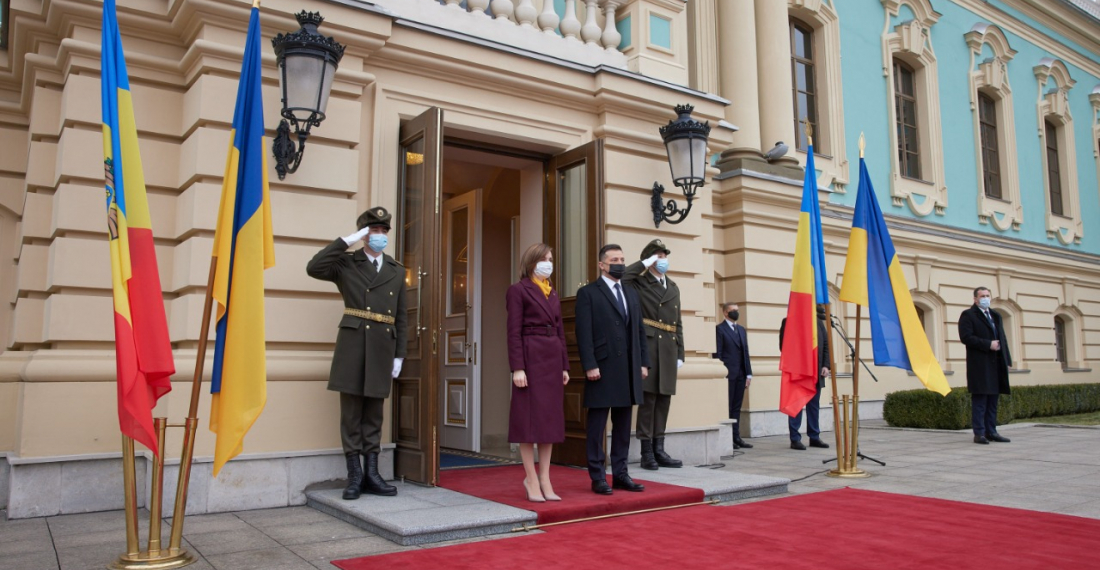
Ukrainian President Volodymyr Zelensky today (12 January) called on the European Union for help in sourcing COVID-19 vaccines having failed to secure any deals with Western manufacturers. Speaking following a meeting with Moldovan President Maia Sandu in the Ukrainian capital, Zelensky emphasised the need for the EU to pay "increased attention" to the post-Soviet countries of the Eastern Partnership, "in matters of joint procurement procedures and accelerating the supply of vaccines".

A ban by President Trump on US vaccine exports has left Ukraine far down the list of countries waiting to receive vaccines. On 6 January, Ukrainian pharmaceuticals company Biolik announced that it had applied for state approval to manufacture the Russian Sputnik V vaccine for distribution in Ukraine. However, the Ukrainian leadership is reluctant to accept the Russian vaccine due to strained relations following the Russian annexation of Crimea in 2014 and the country's ongoing support for separatist groups in eastern Ukraine.

Zelensky’s call for EU help follows comments made today by the country’s Minister of Foreign Affairs, Dmytro Kuleba, who told the Ukrainian '1+1' television channel that the Russian Sputnik V vaccine’s value as a tool for propaganda, "far exceed its real capabilities and effectiveness”. He noted that regardless of the Russian vaccine’s effectiveness (which is yet to be verified), he would oppose its uptake:

"As a government member, I would oppose such a decision, because Russia does not care about the health of Ukrainians. It cares about imposing its propaganda stamps and ideology through vaccine supplies."

Last week, 13 EU member states signed a letter urging the bloc, “to go beyond the current initiatives [to share vaccines with the Western Balkan countries] and give similar attention and support to the other EU neighbors – the countries of EU Eastern Partnership (EaP)”. The EaP includes the countries of Armenia, Azerbaijan, Belarus, Georgia, Moldova and Ukraine.

The letter – signed by the foreign ministers of Bulgaria, Croatia, Czech Republic, Denmark, Estonia, Finland, Hungary, Latvia, Lithuania, Poland, Romania, Slovakia and Sweden – emphasised:

“We believe that our borders will not be safe if we do not extend our support to our immediate neighbours […] We are confident that our efforts will be appreciated by the Governments and civil society of the EU Eastern Partners and will increase the visibility of the geopolitical efforts of the Commission and of the whole EU.”

The EU Commission confirmed receipt of the letter but did not indicate any intention to set up vaccine arrangements with the EaP countries.

The Moldovan President Maia Sandu was visiting Kyiv in her first foreign state visit since taking office in December 2020. In a joint statement, the Moldovan and Ukrainian leaders highlighted the importance of their countries’ relationship and, “the need for further cooperation in the energy sector in order to strengthen energy security in the region”. The leaders also emphasised their common support for closer relations with the EU:

"we reaffirm our interest in deepening regional cooperation in order to achieve the strategic goals of our states as regards full membership in the European Union, including through the implementation of the Association Agreements with the EU."

Source: commonspace.eu with The Guardian, UKRINFORM and agencies
Photo: Office of the President of Ukraine

 

Related articles

Editor's choice
News
Borrell tells the European Parliament that the situation in Afghanistan was critical, but the EU will remain engaged

Borrell tells the European Parliament that the situation in Afghanistan was critical, but the EU will remain engaged

Borrell underlined that the European Union will make every effort to support the peace process and to remain a committed partner to the Afghan people. "Of course, we will have to take into account the evolving situation, but disengagement is not an option.  We are clear on that: there is no alternative to a negotiated political settlement, through inclusive peace talks.
Editor's choice
News
Germany accuses Russia of cyberattacks and disinformation campaign

Germany accuses Russia of cyberattacks and disinformation campaign

The German government holds Russia responsible for a cyberattack on German air traffic control, and for targeted disinformation campaigns before the last federal election. According to the German Foreign Office in Berlin, the incidents could be clearly attributed to the Russian military intelligence service, the GRU. In response, the Russian ambassador to Berlin was summoned to the Foreign Ministry. "We have been observing a massive increase in threatening hybrid activities by Russia for some time now," a spokesperson for the Foreign Ministry stated. These range from disinformation campaigns and espionage to cyberattacks and sabotage attempts. The aim is to divide society, sow distrust, and undermine confidence in democratic institutions. The spokesperson added that with these actions, Russia is "very concretely threatening our security, not only through its war of aggression against Ukraine, but also here in Germany."  The Foreign Ministry spokesperson explained that the cyberattack on air traffic control in August 2024 was clearly attributed to the hacker collective "APT28," known as "Fancy Bear," and to the responsibility of the Russian military intelligence service, the GRU. Furthermore, it could now be "conclusively stated" that Russia had attempted "to influence and destabilize both the last Federal election and the ongoing internal affairs of the Federal Republic of Germany." There was "absolutely irrefutable evidence" for this". The so-called "Storm 1516" campaign, which has been running since 2024, is allegedly backed by "reliable information" that the Moscow-based think tank "Center for Geopolitical Expertise" is behind it. The Center is also said to be supported by Russian military intelligence. Its primary aim is to influence democratic elections in the West. (Click the image to read more).

Popular

Editor's choice
News
Germany accuses Russia of cyberattacks and disinformation campaign

Germany accuses Russia of cyberattacks and disinformation campaign

The German government holds Russia responsible for a cyberattack on German air traffic control, and for targeted disinformation campaigns before the last federal election. According to the German Foreign Office in Berlin, the incidents could be clearly attributed to the Russian military intelligence service, the GRU. In response, the Russian ambassador to Berlin was summoned to the Foreign Ministry. "We have been observing a massive increase in threatening hybrid activities by Russia for some time now," a spokesperson for the Foreign Ministry stated. These range from disinformation campaigns and espionage to cyberattacks and sabotage attempts. The aim is to divide society, sow distrust, and undermine confidence in democratic institutions. The spokesperson added that with these actions, Russia is "very concretely threatening our security, not only through its war of aggression against Ukraine, but also here in Germany."  The Foreign Ministry spokesperson explained that the cyberattack on air traffic control in August 2024 was clearly attributed to the hacker collective "APT28," known as "Fancy Bear," and to the responsibility of the Russian military intelligence service, the GRU. Furthermore, it could now be "conclusively stated" that Russia had attempted "to influence and destabilize both the last Federal election and the ongoing internal affairs of the Federal Republic of Germany." There was "absolutely irrefutable evidence" for this". The so-called "Storm 1516" campaign, which has been running since 2024, is allegedly backed by "reliable information" that the Moscow-based think tank "Center for Geopolitical Expertise" is behind it. The Center is also said to be supported by Russian military intelligence. Its primary aim is to influence democratic elections in the West. (Click the image to read more).