


Thousands of Yemeni pilgrims stranded in Saudi Arabia after Houthis seize Yemenia planes

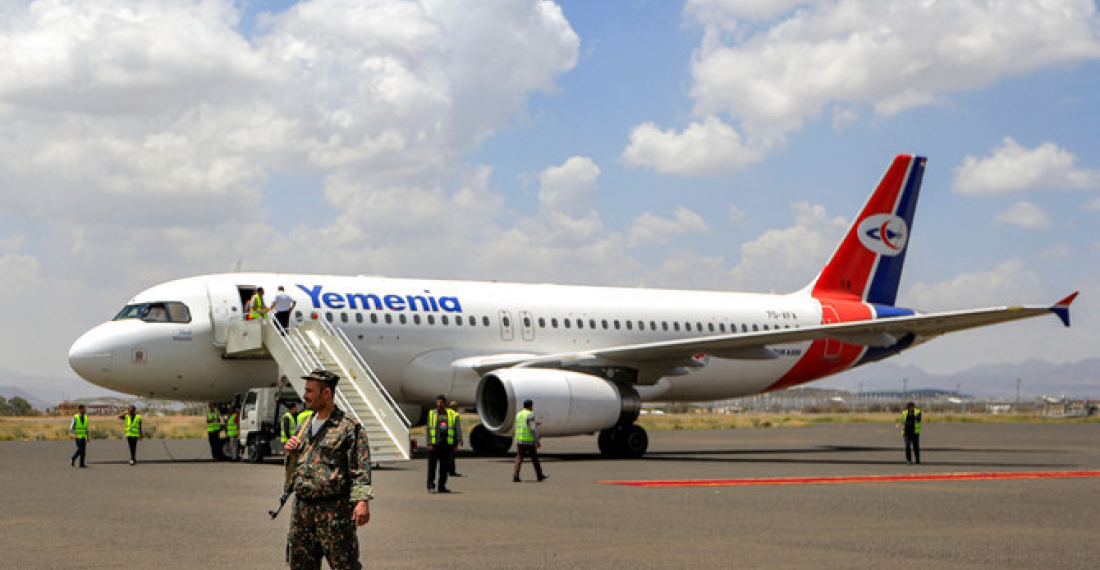
At least 1,000 Yemeni pilgrims are stranded in Saudi Arabia after the Houthis seized Yemenia Airways flights that were to take them from the kingdom to Houthi-held Sanaa, the Yemeni government said on Saturday (29 June). Last week, the Houthis took control of three Yemenia planes at Sanaa airport, preventing them from returning to Jeddah airport in Saudi Arabia to take Yemeni pilgrims home. The Yemeni government accused the Houthis of "hijacking" the planes and worsening the plight of the Yemeni people.

On Thursday (27 June), the Houthi transport ministry confirmed the seizure of the planes and announced plans to take over Yemenia Airways. They intend to reschedule flights from Yemeni airports, including those under government control, and repair planes at Sanaa airport, while accusing the Yemeni government of embezzling the airline's revenues. In response, the internationally recognised Presidential Leadership Council on Friday (28 June) formed a government committee chaired by the prime minister to address the Houthis' takeover of Yemenia flights and the freezing of more than $100 million of the airline's assets in Sanaa banks. "The council holds the terrorist militia fully responsible for the consequences of this dangerous escalation, which would increase the suffering of civilians and affect the operations of the national airline," the presidential council said, according to the official SABA news agency.

In other developments, US and British jets carried out air strikes on Houthi targets in two Yemeni provinces on 7 June, amid an escalation in the militia's use of drones, missiles and drone boats to attack ships. On 28 June, Houthi media reported that US and UK aircraft carried out four airstrikes on Hodeidah airport in the western province of Hodeidah and four more on locations in Mawiyah district in the southern province of Taiz over the past 24 hours. These airstrikes followed Houthi claims of attacks on ships in the Red Sea and Mediterranean using ballistic missiles, drones and explosive-laden drone boats. Over the past eight months, the Houthis have sunk two ships, seized a commercial vessel in the Red Sea and fired hundreds of ballistic missiles, drones and drone boats at vessels in the Red Sea, Gulf of Aden, Indian Ocean and, most recently, the Mediterranean. The Houthis claim that these actions are aimed at ships linked to Israel or bound for Israel in order to pressure an end to the war in Gaza.


Source: commonspace.eu with Arab news and other agencies
Photo: At least 1,000 Yemeni pilgrims are stranded in Saudi Arabia after the Houthis seized Yemenia Airways flights that were to take them from the kingdom to Houthi-held Sanaa, the Yemeni government said on Saturday. AFP

Related articles

Editor's choice
News
Borrell tells the European Parliament that the situation in Afghanistan was critical, but the EU will remain engaged

Borrell tells the European Parliament that the situation in Afghanistan was critical, but the EU will remain engaged

Borrell underlined that the European Union will make every effort to support the peace process and to remain a committed partner to the Afghan people. "Of course, we will have to take into account the evolving situation, but disengagement is not an option.  We are clear on that: there is no alternative to a negotiated political settlement, through inclusive peace talks.
Editor's choice
News
Germany accuses Russia of cyberattacks and disinformation campaign

Germany accuses Russia of cyberattacks and disinformation campaign

The German government holds Russia responsible for a cyberattack on German air traffic control, and for targeted disinformation campaigns before the last federal election. According to the German Foreign Office in Berlin, the incidents could be clearly attributed to the Russian military intelligence service, the GRU. In response, the Russian ambassador to Berlin was summoned to the Foreign Ministry. "We have been observing a massive increase in threatening hybrid activities by Russia for some time now," a spokesperson for the Foreign Ministry stated. These range from disinformation campaigns and espionage to cyberattacks and sabotage attempts. The aim is to divide society, sow distrust, and undermine confidence in democratic institutions. The spokesperson added that with these actions, Russia is "very concretely threatening our security, not only through its war of aggression against Ukraine, but also here in Germany."  The Foreign Ministry spokesperson explained that the cyberattack on air traffic control in August 2024 was clearly attributed to the hacker collective "APT28," known as "Fancy Bear," and to the responsibility of the Russian military intelligence service, the GRU. Furthermore, it could now be "conclusively stated" that Russia had attempted "to influence and destabilize both the last Federal election and the ongoing internal affairs of the Federal Republic of Germany." There was "absolutely irrefutable evidence" for this". The so-called "Storm 1516" campaign, which has been running since 2024, is allegedly backed by "reliable information" that the Moscow-based think tank "Center for Geopolitical Expertise" is behind it. The Center is also said to be supported by Russian military intelligence. Its primary aim is to influence democratic elections in the West. (Click the image to read more).

Popular

Editor's choice
News
Germany accuses Russia of cyberattacks and disinformation campaign

Germany accuses Russia of cyberattacks and disinformation campaign

The German government holds Russia responsible for a cyberattack on German air traffic control, and for targeted disinformation campaigns before the last federal election. According to the German Foreign Office in Berlin, the incidents could be clearly attributed to the Russian military intelligence service, the GRU. In response, the Russian ambassador to Berlin was summoned to the Foreign Ministry. "We have been observing a massive increase in threatening hybrid activities by Russia for some time now," a spokesperson for the Foreign Ministry stated. These range from disinformation campaigns and espionage to cyberattacks and sabotage attempts. The aim is to divide society, sow distrust, and undermine confidence in democratic institutions. The spokesperson added that with these actions, Russia is "very concretely threatening our security, not only through its war of aggression against Ukraine, but also here in Germany."  The Foreign Ministry spokesperson explained that the cyberattack on air traffic control in August 2024 was clearly attributed to the hacker collective "APT28," known as "Fancy Bear," and to the responsibility of the Russian military intelligence service, the GRU. Furthermore, it could now be "conclusively stated" that Russia had attempted "to influence and destabilize both the last Federal election and the ongoing internal affairs of the Federal Republic of Germany." There was "absolutely irrefutable evidence" for this". The so-called "Storm 1516" campaign, which has been running since 2024, is allegedly backed by "reliable information" that the Moscow-based think tank "Center for Geopolitical Expertise" is behind it. The Center is also said to be supported by Russian military intelligence. Its primary aim is to influence democratic elections in the West. (Click the image to read more).

