


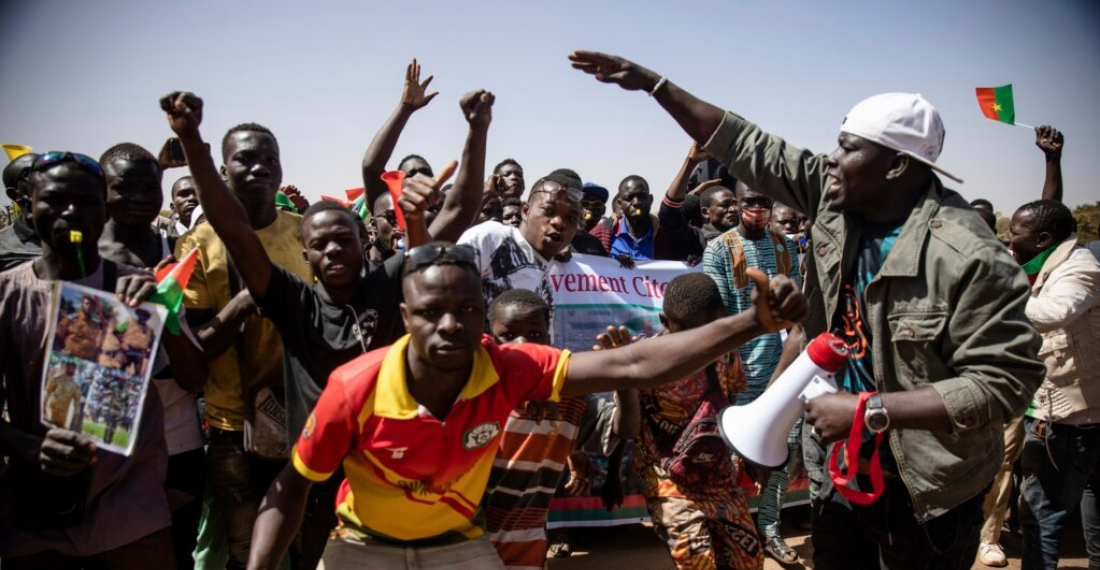
Task Force Takuba, the EU's mission in the Sahel, is not going according to plan

The foreign ministers of Mali, Mauritania, Niger, and Chad failed to agree on the terms for a joint ministerial summit with the European Union and have instead chosen to hold bilateral talks with EU High Representative Josep Borrell.

The cancellation followed a series of coups in Mali and Burkina Faso, which has put into question the main European military tool in the Sahel region, the Takuba force. Task Force Takuba was created with much fanfare, and after a lot of French insistence, in March 2020 to help Mali and its neighbours in the West African Sahel fight militants linked to the Islamic State and al-Qaeda, who have taken over large parts of their territory. 

The growing instability in the region, combined with the increasing unpopularity of the French military presence in the Sahel, now appears to have weakened the role and influence of the European Union in the region. Earlier this week a contingent of Danish Special forces was asked to leave immediately on its arrival in Burkina Faso, where the new military authorities claimed that its deployment was not co-ordinated with them, a claim the Danish government has strenously denied

Three days after the announcement of the coup in Burkina Faso, local and European media are still not sure about what has happened to ousted President Kaboré, adding a further complication to relations.  On Wednesday (26 January) Borell called for “the immediate release of all illegally detained persons, starting with the President [of Burkina Faso, Roch] Kaboré himself", saying this was essential”, according to a statement issued by the European External Action Service.  

Moreover, the presence of the Wagner Group in Mali, a significant Russian mercenary group with close connections to the Kremlin, has further complicated the French and European presence in the Sahel. Moscow has understood that as Islamist militants grew in strength in the region, local sentiment would harden against European involvement which is perceived as having failed to stop them. Yevgeny Prigozhin, head of the Wagner Group, even compared the recent coup in Burkina Faso to a "new era of decolonisation", a reference to the French colonial past in the country.

In the same statement last night, Borell expressed "major concern following the proven deployment of Russian mercenaries in Mali”, highlighting the “significant risks that this poses to the civilian population”, before recalling that the methods of operation of this group were "incompatible with our collective efforts in favour of security and development".

In recent days, Russia’s growing influence has become apparent by Burkinabe coup supporters’ hoisting of the Russian tricolore, seen as an act of defiance against European and French influence in the region.

Regarding the Danish troops in Mali, the European representatives of the states contributing to the Takuba Task Force issued a joint statement on Wednesday evening condemning the junta's position: “We, the international partners committed to supporting Mali and its people in their efforts to achieve sustainable peace and stability and combat terrorism, deeply regret the statement by the Malian transitional authorities {…} alleging that the deployment of the Danish contingent in the Task Force Takuba has been made without a proper legal basis and consent from the Malian government”, wrote the fifteen states, whilst further calling on the Malian authorities to “quickly remedy to this situation”.


Sources: CommonSpace.eu, with Euractiv, Reuters and other media outlets
Picture: Supporters of Burkina Faso’s Military coup ; Twitter: @Henry_Wilkins


Related articles

Editor's choice
News
Russia adds pressure on Armenia ahead of key elections; recalls Ambassador in Yerevan for consultations

Russia adds pressure on Armenia ahead of key elections; recalls Ambassador in Yerevan for consultations

Ahead of key parliamentary elections,scheduled to be held in Armenia on Sunday, 7 June, Russia continues to attempt to put pressure on the Armenian Government led by prime minister Nikol Pashinyan. On 30 May, Russia recalled its Ambassador to Yerevan for consultations. A terse statement, published on the website of the Russian Foreign Ministry, said, "The Ambassador of the Russian Federation to the Republic of Armenia , S.P. Kopyrkin, has been summoned to Moscow for consultations in connection with the steps taken by the Armenian leadership to move closer to the European Union, which are detrimental to cooperation within the EAEU." This followed a statement issued the day before, by the leaders of the Eurasian Economic Union (EAEU) that challenges the Armenian trajectory towards approximating to the European Union. Vladimir Putin is undertood to have personally pushed the other four EAEU leaders to issue the statement, which said: "Taking into account the significant risks to the economic security of the member states of the Eurasian Economic Union (hereinafter referred to as the Union) arising in connection with the preparation of the Republic of Armenia for accession to the European Union, as well as the need to prevent the associated damage to the member states of the Union: decided that the members of the Eurasian Intergovernmental Council from the Republic of Belarus, the Republic of Kazakhstan, the Kyrgyz Republic and the Russian Federation will report at the next meeting of the Supreme Eurasian Economic Council in December 2026 on the possible consequences of the suspension of the Treaty on the Eurasian Economic Union with respect to the Republic of Armenia. We share the position on the need to hold a national referendum in the Republic of Armenia as soon as possible on joining the European Union or continuing to be part of the Eurasian Economic Union."
Editor's choice
News
The leaders of the states of the Eurasian Economic Union issued a tough statement warning fellow-member state Armenia of the consequences of its desire to join the European Union.

The leaders of the states of the Eurasian Economic Union issued a tough statement warning fellow-member state Armenia of the consequences of its desire to join the European Union.

The leaders of the states of the Eurasian Economic Union (EEAS) issued a tough statement warning fellow-member state Armenia of the consequences of its desire to join the European Union. The stark, sharply worded,  warning, comes days before crucial parliamentary elections in Armenia, scheduled for 7 June. The full statement said, “We, the Presidents of the Republic of Belarus, the Republic of Kazakhstan, the Kyrgyz Republic and the Russian Federation, Taking into account the actions of the Republic of Armenia aimed at joining the European Union, including the approval in 2025 by the National Assembly of the Republic of Armenia and the signing by the President of the Republic of Armenia of the Law of the Republic of Armenia "On the Start of the Process of Accession of the Republic of Armenia to the European Union", as well as the confirmation by the European Union of the European aspirations of the Government of the Republic of Armenia, expressed in the joint declaration following the first Armenia-European Union summit, adopted on 5 May 2026, Taking into account the significant risks to the economic security of the member states of the Eurasian Economic Union (hereinafter referred to as the Union) arising in connection with the preparation of the Republic of Armenia for accession to the European Union, as well as the need to prevent the associated damage to the member states of the Union: decided that the members of the Eurasian Intergovernmental Council from the Republic of Belarus, the Republic of Kazakhstan, the Kyrgyz Republic and the Russian Federation will report at the next meeting of the Supreme Eurasian Economic Council in December 2026 on the possible consequences of the suspension of the Treaty on the Eurasian Economic Union with respect to the Republic of Armenia. We share the position on the need to hold a national referendum in the Republic of Armenia as soon as possible on joining the European Union or continuing to be part of the Eurasian Economic Union. Astana, May 29, 2026” A meeting of the Supreme Eurasian Economic Council was held in Astana, Kazakhstan, on May 29, 2026. The meeting of the Supreme Eurasian Economic Council in a restricted format was attended by Russian President Vladimir Putin, Belarusian President Alexander Lukashenko , Kazakh President Kassym-Jomart Tokayev , Kyrgyz President Sadyr Japarov , Armenian Deputy Prime Minister Mher Grigoryan, and Chairman of the Board of the Eurasian Economic Commission Bakytzhan Sagintayev. From the Russian side, the meeting was also attended by Deputy Prime Minister and member of the Council of the Eurasian Economic Commission Alexey Overchuk and Presidential Aide Yury Ushakov . The heads of delegations from EAEU observer states, including President of Uzbekistan Shavkat Mirziyoyev , Vice President of Cuba Salvador Valdés Mesa, Minister of Industry, Mines, and Trade of Iran Mohammad Atabak, and CIS Secretary General Sergei Lebedev, joined the expanded meeting . Following the meeting of the Supreme Eurasian Economic Council, a number of documents were signed .

Popular

Editor's choice
Interview
Thursday Interview: Murad Muradov

Thursday Interview: Murad Muradov

Today, commonspace.eu starts a new regular weekly series. THURSDAY INTERVIEW, conducted by Lauri Nikulainen, will host  persons who are thinkers, opinion shapers, and implementors in their countries and spheres. We start the series with an interview with Murad Muradov, a leading person in Azerbaijan's think tank community. He is also the first co-chair of the Action Committee for a new Armenian-Azerbaijani Dialogue. Last September he made history by being the first Azerbaijani civil society activist to visit Armenia after the 44 day war, and the start of the peace process. Speaking about this visit Murad Muradov said: "My experience was largely positive. My negative expectations luckily didn’t play out. The discussions were respectful, the panel format bringing together experts from Armenia, Azerbaijan, and Turkey was particularly valuable during the NATO Rose-Roth Seminar in Yerevan, and media coverage, while varied in tone, remained largely constructive. Some media outlets though attempted to represent me as more of a government mouthpiece than an independent expert, which was totally misleading.  Overall, I see these initiatives as important steps in rebuilding trust and normalising professional engagement. The fact that soon a larger Azerbaijani civil society visits to Armenia followed, reinforces the sense that this process is moving in the right direction." (click the image to read the interview in full)

