Russia remains defiant over Trump threats

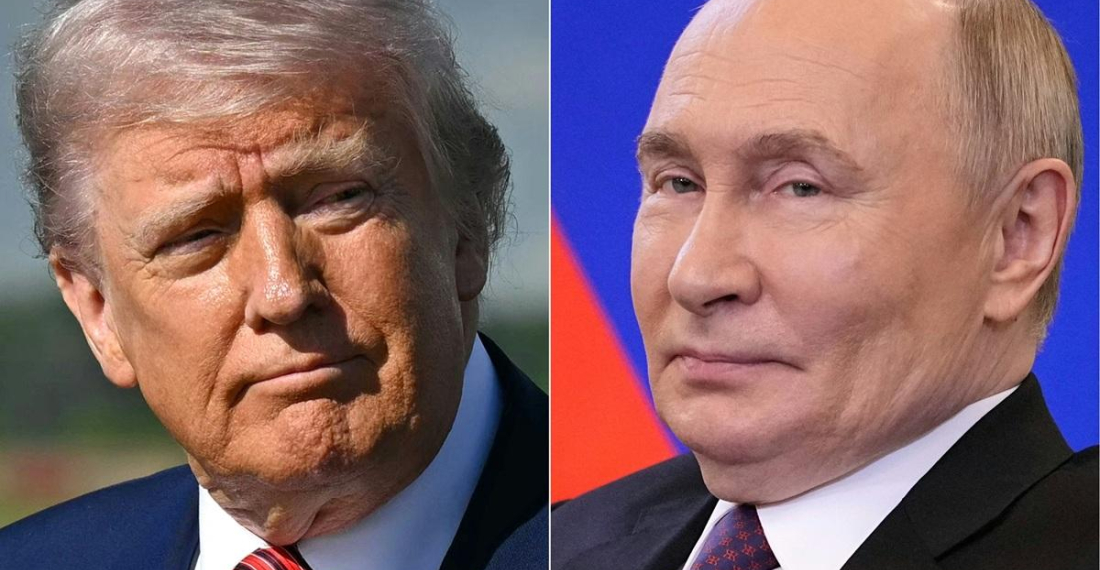
Russian glide bombs and ballistic missiles struck a Ukrainian prison and a medical facility overnight as Russia’s relentless strikes killed at least 22 people across the country, officials said on Tuesday 29 July, despite U.S. President Donald Trump’s threat to punish Russia with sanctions and tariffs unless it stops. Trump said on Monday he is giving Russian President Vladimir Putin 10 to 12 days to stop the killing in Ukraine after three years of war, moving up a 50-day deadline he had given the Russian leader two weeks ago. “I’m disappointed in President Putin,” Trump said during a visit to Scotland.

The move meant Trump wants peace efforts to make progress by Aug. 7-9. Trump has repeatedly rebuked Putin for talking about ending the war but continuing to bombard Ukrainian civilians but the Kremlin hasn’t changed its tactics.

Four powerful Russian glide bombs hit a prison in Ukraine’s southeastern Zaporizhzhia region, authorities said, according to AP. They killed at least 17 inmates and wounded more than 80 others, officials said.

In the Dnipro region of central Ukraine, authorities said Russian missiles partially destroyed a three-story building and damaged nearby medical facilities, including a maternity hospital and a city hospital ward. Officials said at least four people were killed, including a 23-year-old pregnant woman, and eight were injured.

Ukrainian President Volodymyr Zelenskyy said that across the country, 22 people were killed in Russian strikes on 73 cities, towns and villages. “These were conscious, deliberate strikes, not accidental,” Zelenskyy said on Telegram.

Zelenskyy welcomed Trump’s move on the timeline. “Everyone needs peace — Ukraine, Europe, the United States and responsible leaders across the globe,” Zelenskyy wrote in a post on Telegram. “Everyone except Russia.”

The Kremlin pushed back, with a top Putin lieutenant warning Trump against “playing the ultimatum game with Russia.” “Russia isn’t Israel or even Iran,” former president Dmitry Medvedev, who is deputy head of the country’s Security Council, wrote on social platform X. “Each new ultimatum is a threat and a step towards war. Not between Russia and Ukraine, but with his own country,” Medvedev said.

Since Russia’s full-scale invasion of its neighbour, the Kremlin has warned Kyiv’s Western backers that their involvement could end up broadening the war to NATO countries.

“Kremlin officials continue to frame Russia as in direct geopolitical confrontation with the West in order to generate domestic support for the war in Ukraine and future Russian aggression against NATO,” the Institute for the Study of War, a Washington think tank, said on Monday, according to AP.

The Ukrainian air force said Russia launched two Iskander-M ballistic missiles along with 37 Shahed-type strike drones and decoys at Ukraine overnight. It said 32 Shahed drones were intercepted or neutralized by Ukrainian air defenses.

The Russian attack close to midnight Monday hit the Bilenkivska Correctional Facility with glide bombs, according to the State Criminal Executive Service of Ukraine.  Glide bombs, which are Soviet-era bombs retrofitted with retractable fins and guidance systems, have been laying waste to cities in eastern Ukraine, where the Russian army is trying to pierce Ukrainian defenses. The bombs carry up to 3,000 kilograms of explosives.

Ukrainian officials condemned the attack, saying that targeting civilian infrastructure, such as prisons, is a war crime under international conventions. The assault occurred exactly three years after an explosion killed more than 50 people at the Olenivka detention facility in the Russia-occupied Donetsk region.

Ukraine has sought to fight back against Russian strikes by developing its own long-range drone technology, hitting oil depots, weapons plants and disrupting commercial flights. Russia’s Defense Ministry said Tuesday that air defenses downed 74 Ukrainian drones over several regions overnight, including 43 over the Bryansk region.

Yuri Slyusar, the head of the Rostov region said a man in the city of Salsk was killed in a drone attack, which started a fire at the Salsk railway station. Officials said a cargo train was set ablaze at the Salsk station and the railway traffic via Salsk was suspended. Explosions shattered windows in two cars of a passenger train and passengers were evacuated.

Source: commonspace.eu with AP and agencies. Photo: AFP

Related articles

Editor's choice
News
Borrell tells the European Parliament that the situation in Afghanistan was critical, but the EU will remain engaged

Borrell tells the European Parliament that the situation in Afghanistan was critical, but the EU will remain engaged

Borrell underlined that the European Union will make every effort to support the peace process and to remain a committed partner to the Afghan people. "Of course, we will have to take into account the evolving situation, but disengagement is not an option.  We are clear on that: there is no alternative to a negotiated political settlement, through inclusive peace talks.
Editor's choice
News
NATO Chief says war is on Europe's doorstep, and warns against complacency

NATO Chief says war is on Europe's doorstep, and warns against complacency

Russia could attack a Nato country within the next five years, the Secretary General of NATO, Mark Rutte, said in a stark new warning. "Nato's own defences can hold for now," Rutte warned in Berlin, but conflict was "next door" to Europe and he feared "too many are quietly complacent, and too many don't feel the urgency, too many believe that time is on our side. "Russia is already escalating its covert campaign against our societies," Rutte said in a speech in Germany. "We must be prepared for the scale of war our grandparents or great-grandparents endured." Earlier this month, Russia's President Vladimir Putin said his country was not planning to go to war with Europe, but it was ready "right now" if Europe wanted to - or started a war. But similar reassurances were given by Moscow in 2022, just before 200,000 Russian troops crossed the border and invaded Ukraine. Putin has accused European countries of hindering US efforts to bring peace in Ukraine - a reference to the role Ukraine's European allies have recently played in trying to change a US peace plan to end the war, whose initial draft was seen as favouring Russia. But Putin was not sincere, Nato's secretary-general said in the German capital, Berlin. Supporting Ukraine, he added, was a guarantee for European security. "Just imagine if Putin got his way; Ukraine under the boot of Russian occupation, his forces pressing against a longer border with Nato, and the significantly increased risk of an armed attack against us." Russia's economy has been on a war footing for more than three years now - its factories churn out ever more supplies of drones, missiles and artillery shells. According to a recent report by the Kiel Institute for the World Economy, Russia has been producing each month around 150 tanks, 550 infantry fighting vehicles, 120 Lancet drones and more than 50 artillery pieces. The UK, and most of its Western allies, are simply not anywhere near this point. Analysts say it would take years for Western Europe's factories to come close to matching Russia's mass-production of weapons. "Allied defence spending and production must rise rapidly, our armed forces must have what they need to keep us safe," the Nato chief said.

Popular

Editor's choice
News
NATO Chief says war is on Europe's doorstep, and warns against complacency

NATO Chief says war is on Europe's doorstep, and warns against complacency

Russia could attack a Nato country within the next five years, the Secretary General of NATO, Mark Rutte, said in a stark new warning. "Nato's own defences can hold for now," Rutte warned in Berlin, but conflict was "next door" to Europe and he feared "too many are quietly complacent, and too many don't feel the urgency, too many believe that time is on our side. "Russia is already escalating its covert campaign against our societies," Rutte said in a speech in Germany. "We must be prepared for the scale of war our grandparents or great-grandparents endured." Earlier this month, Russia's President Vladimir Putin said his country was not planning to go to war with Europe, but it was ready "right now" if Europe wanted to - or started a war. But similar reassurances were given by Moscow in 2022, just before 200,000 Russian troops crossed the border and invaded Ukraine. Putin has accused European countries of hindering US efforts to bring peace in Ukraine - a reference to the role Ukraine's European allies have recently played in trying to change a US peace plan to end the war, whose initial draft was seen as favouring Russia. But Putin was not sincere, Nato's secretary-general said in the German capital, Berlin. Supporting Ukraine, he added, was a guarantee for European security. "Just imagine if Putin got his way; Ukraine under the boot of Russian occupation, his forces pressing against a longer border with Nato, and the significantly increased risk of an armed attack against us." Russia's economy has been on a war footing for more than three years now - its factories churn out ever more supplies of drones, missiles and artillery shells. According to a recent report by the Kiel Institute for the World Economy, Russia has been producing each month around 150 tanks, 550 infantry fighting vehicles, 120 Lancet drones and more than 50 artillery pieces. The UK, and most of its Western allies, are simply not anywhere near this point. Analysts say it would take years for Western Europe's factories to come close to matching Russia's mass-production of weapons. "Allied defence spending and production must rise rapidly, our armed forces must have what they need to keep us safe," the Nato chief said.