Putin announces surprise ceasefire to coincide with Victory Day commemorations

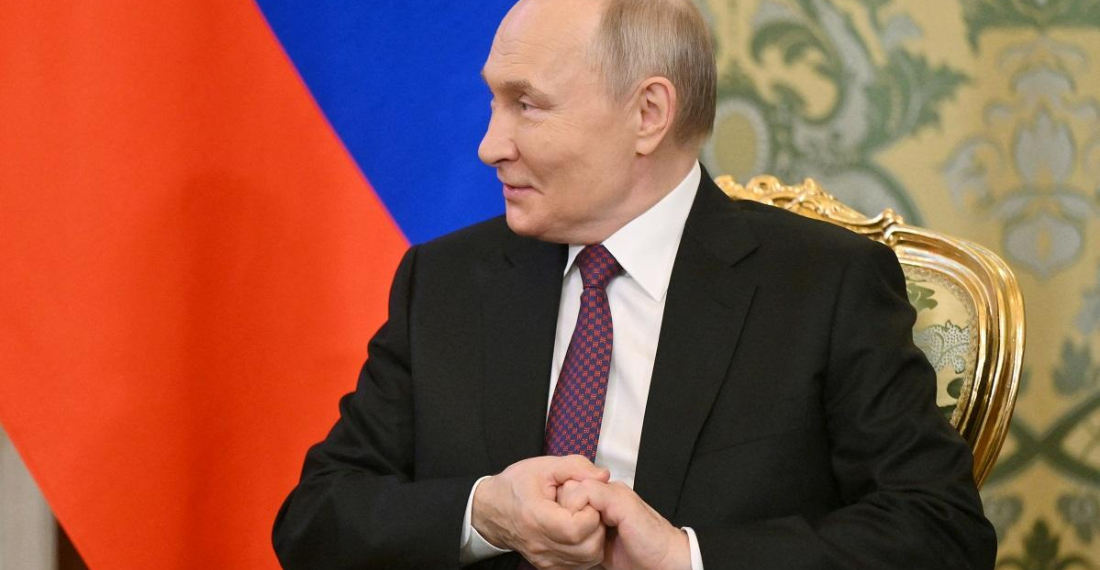
Russian President Vladimir Putin has ordered a surprise three-day ceasefire from May 8-10, coinciding with Moscow's World War II Victory Day commemorations, the Kremlin said on Monday. Moscow said it expected Kyiv to issue a similar order, and that it stood ready to respond to any violations of the possible halt in fighting. Putin made a similar order to stop combat over Easter, a truce that both sides accused the other of violating hundreds of times, but did lead to a temporary reduction in fighting.

"The Russian side is declaring a ceasefire during the 80th anniversary of Victory Day, from midnight on May 7-8 to midnight on May 10-11. All combat operations will be suspended during this period," the Kremlin said in a statement. "Russia believes that the Ukrainian side should follow this example. In the event of violations of the truce by the Ukrainian side, the Russian armed forces will give an adequate and effective response," it added. Putin last month rejected a US proposal for a full and unconditional 30-day ceasefire that had been accepted by Ukraine.

Kyiv and its European backers accused Putin of announcing the 30-hour Easter truce as a PR exercise and said he had little desire for peace. Since launching its Ukraine offensive in February 2022, Russia has seized large parts of four Ukrainian regions and claimed them as its own, in addition to Crimea, which it annexed in 2014.

Putin's order of a ceasefire comes at the beginning of what the United States indicated would be a crucial week for the chances of a ceasefire that could determine how long Washington keeps trying to broker a deal. After a meeting with Ukrainian President Volodymyr Zelensky at Pope Francis's funeral on Saturday, Donald Trump questioned whether the Russian leader was serious about peace.

"There was no reason for Putin to be shooting missiles into civilian areas, cities and towns, over the last few days. It makes me think that maybe he doesn't want to stop the war, he's just tapping me along," Trump had said on Truth Social. Russian missiles have killed dozens of civilians over the last month in large-scale strikes on Zelensky's home city of Kryvyi Rig, the northeastern city of Sumy and the capital Kyiv.

Russia had earlier on Monday said it was ready to negotiate directly with Ukraine, but that recognition of its claims over five Ukrainian regions including Crimea were "imperative" to resolving the conflict. Ukraine has denounced the annexations as an illegal land grab and says it will never recognise them, while European officials have warned that accepting Moscow's demands set a dangerous precedent that could lead to future Russian aggression.

Zelensky said last Friday that Ukraine would "not legally recognise any temporarily occupied territories", and has previously called the demilitarisation demand "incomprehensible". Russia and Ukraine have not held direct talks on the fighting since the start of Moscow's offensive in 2022.

Meanwhile, Russia over the weekend announced it had taken full control of its Kursk region with the help of North Korean troops, more than eight months after Kyiv launched a cross-border ground assault. Putin thanked North Korean leader Kim Jong Un on Monday for help with the operation, which has denied Kyiv a key bargaining chip in future talks with Moscow.

Source: commonspace.eu with agencies. Photo: AFP

Related articles

Editor's choice
News
Borrell tells the European Parliament that the situation in Afghanistan was critical, but the EU will remain engaged

Borrell tells the European Parliament that the situation in Afghanistan was critical, but the EU will remain engaged

Borrell underlined that the European Union will make every effort to support the peace process and to remain a committed partner to the Afghan people. "Of course, we will have to take into account the evolving situation, but disengagement is not an option.  We are clear on that: there is no alternative to a negotiated political settlement, through inclusive peace talks.
Editor's choice
News
Germany accuses Russia of cyberattacks and disinformation campaign

Germany accuses Russia of cyberattacks and disinformation campaign

The German government holds Russia responsible for a cyberattack on German air traffic control, and for targeted disinformation campaigns before the last federal election. According to the German Foreign Office in Berlin, the incidents could be clearly attributed to the Russian military intelligence service, the GRU. In response, the Russian ambassador to Berlin was summoned to the Foreign Ministry. "We have been observing a massive increase in threatening hybrid activities by Russia for some time now," a spokesperson for the Foreign Ministry stated. These range from disinformation campaigns and espionage to cyberattacks and sabotage attempts. The aim is to divide society, sow distrust, and undermine confidence in democratic institutions. The spokesperson added that with these actions, Russia is "very concretely threatening our security, not only through its war of aggression against Ukraine, but also here in Germany."  The Foreign Ministry spokesperson explained that the cyberattack on air traffic control in August 2024 was clearly attributed to the hacker collective "APT28," known as "Fancy Bear," and to the responsibility of the Russian military intelligence service, the GRU. Furthermore, it could now be "conclusively stated" that Russia had attempted "to influence and destabilize both the last Federal election and the ongoing internal affairs of the Federal Republic of Germany." There was "absolutely irrefutable evidence" for this". The so-called "Storm 1516" campaign, which has been running since 2024, is allegedly backed by "reliable information" that the Moscow-based think tank "Center for Geopolitical Expertise" is behind it. The Center is also said to be supported by Russian military intelligence. Its primary aim is to influence democratic elections in the West. (Click the image to read more).

Popular

Editor's choice
News
Germany accuses Russia of cyberattacks and disinformation campaign

Germany accuses Russia of cyberattacks and disinformation campaign

The German government holds Russia responsible for a cyberattack on German air traffic control, and for targeted disinformation campaigns before the last federal election. According to the German Foreign Office in Berlin, the incidents could be clearly attributed to the Russian military intelligence service, the GRU. In response, the Russian ambassador to Berlin was summoned to the Foreign Ministry. "We have been observing a massive increase in threatening hybrid activities by Russia for some time now," a spokesperson for the Foreign Ministry stated. These range from disinformation campaigns and espionage to cyberattacks and sabotage attempts. The aim is to divide society, sow distrust, and undermine confidence in democratic institutions. The spokesperson added that with these actions, Russia is "very concretely threatening our security, not only through its war of aggression against Ukraine, but also here in Germany."  The Foreign Ministry spokesperson explained that the cyberattack on air traffic control in August 2024 was clearly attributed to the hacker collective "APT28," known as "Fancy Bear," and to the responsibility of the Russian military intelligence service, the GRU. Furthermore, it could now be "conclusively stated" that Russia had attempted "to influence and destabilize both the last Federal election and the ongoing internal affairs of the Federal Republic of Germany." There was "absolutely irrefutable evidence" for this". The so-called "Storm 1516" campaign, which has been running since 2024, is allegedly backed by "reliable information" that the Moscow-based think tank "Center for Geopolitical Expertise" is behind it. The Center is also said to be supported by Russian military intelligence. Its primary aim is to influence democratic elections in the West. (Click the image to read more).