


Parliamentarians and Civil Society activists in Azerbaijan debate the next steps on Karabakh

At a round table meeting in Baku in the framework of the camapign LANDMINE FREE SOUTH CAUCASUS, civil society activists call for increased efforts to peacefully resolve the Nagorno-Karabakh conflict.

Members of the Azerbaijan Milli Meclis (Parliament) and leaders of leading civil society organisations engaged with issues related to the Nagorno-Karabakh conflict and debated the next steps towards the resolution of the conflict during a round table meeting held in Baku on Monday, 8 April. The round table meeting "Contextual Challenges to efforts to eliminate the scourge of landmines and unexploded ordinance in the South Caucasus" was held as part of the region wide campaign LANDMINE FREE SOUTH CAUCASUS taking place from 4-10 April. The event was organised by the Caucasus Policy Analysis Centre and LINKS (Dialogue, Analysis and Research).

Members of parliament attending the meeting included Araz Alizade, Tahir Karimli, Fazil Mustafa, Rasim Musabeyov and Sahib Aliyev.

Among the civil society leaders present was Avaz Hasanov from the Humanitarian Research Public Union, Arzu Abullayeva from the Helsinki Citizens Assembly, Vagif Jahangior from the Azerbaijan Community of Nagorno-Karabakh, and Mamad Hassan Hassanov from the Azerbaijan Public Union for supporting the victims of Landmines

The meeting discussed the current state of play in the conflict resolution process following recent meetings between the leaders of Armenia and Azerbaijan. Civil society activists were generally upbeat about the prospects for peace, whilst the parliamentarians were more cautious, with some voicing doubt if a peaceful settlement of the conflict was possible at all.

Avaz Hassanov said the process of peacebuilding was difficult to measure but societal efforts need to be increased at this important moment. He was confident that the leaders of the two countries understand the need for peace and are taking the right steps. He spoke of his own visits to Nagorno-Karabakh where he could also see the problem of landmines and the impact it has on the population.

Arzu Abullayeva said the current situation was not sustainable but the solution was not military. She condemned the large influx of weaponary in the region and said that one of the Minsk Group co-Chair countries, whilst mediating peace was arming both sides. Arzu Abdullaeva said that the campaign LANDMINE FREE SOUTH CAUCASUS was commendable, but it should also be extended to become "Arms free South Caucasus".

Mamad Hassan Hassanov from the Azerbaijan Public Union for supporting the victims of Landmines said that there was complete lack of trust between Armenians and Azerbaijanis. He said that Azerbaijan was putting in efforts for peace and hoped the Armenian side will do so too. He hailed the holding of the campaign LANDMINE FREE SOUTH CAUCASUS and said that this was a serious issue that need to be given proper attention.

Sahib Aliyev MP said that every day the conflict creates new victims, and this was a tragic situation for both sides. He urged the Armenian side to stop violating the cease fire.

Also attending the meeting were representatives of various government structures. Among those attending the meeting was also the UN Resident Representative Ghulam Isaczai, representatives of the International Committee of the Red Cross, and representatives of a number of embassies and international organisations.

Participants in the meeting expressed support for the camapign LANDMINE FREE SOUTH CAUCASUS and welcomed efforts to eliminate the scourge of unexploded ordinance in the region.

read more: In Baku, stakeholders discussed the problem of demining in the context of the Karabakh conflict

read more: On Karabakh, the leaders have turned the page. Others must now do so too!

source: commonspace.eu

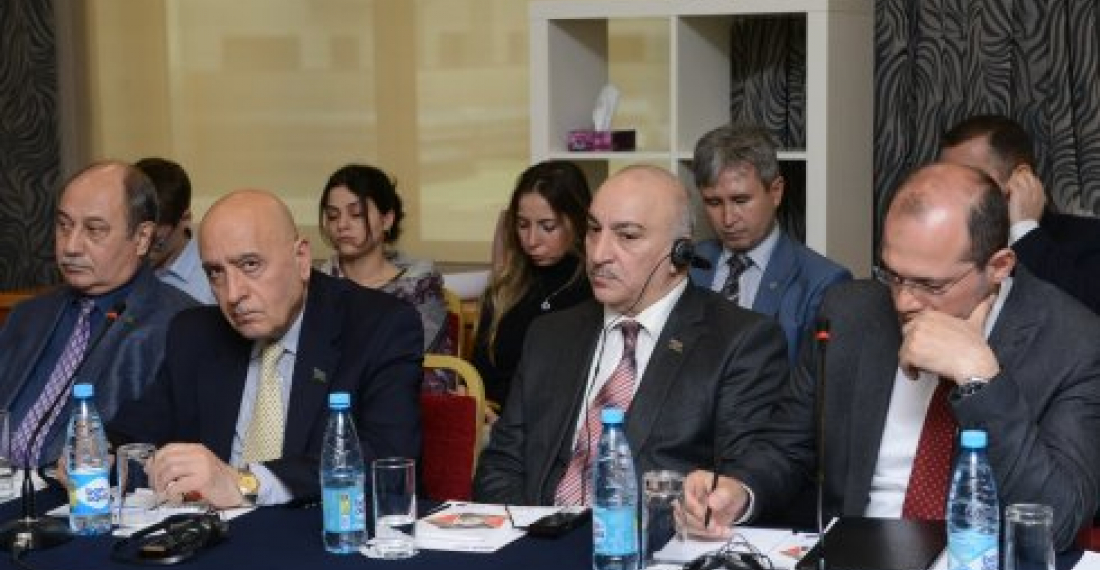
photo: Members of the Azerbaijan Milli meclis at the Roundtable meeting in Baku on 8 April 2019.



Related articles

Editor's choice
News
Aden under curfew, as problem in Yemen's south deepens

Aden under curfew, as problem in Yemen's south deepens

The port city of Aden, in Yemen's south, has been put under curfew, as the rift in the country between  the Saudi led coalition which  backs Yemen's presidential governing council, and the southern forces led by the Southern Transitional Council (STC), deepens. Abdul Rahman al-Mahrami, a member of the Yemeni Presidential Governing Council and commander of the al-Amalik brigades, has ordered a curfew in the temporary capital, Aden, "to maintain security". "A curfew has been imposed throughout Aden Governorate from 9:00 p.m. to 6:00 a.m., in accordance with the instructions of Commander Abdul Rahman al-Mahrami, a member of the Presidential Management Council," the statement said. It states that only security and military personnel, as well as medical and technical teams with approved permits, will be allowed to move in the area during these hours. Yemen's presidential council, which is backed by Saudi Arabia and which already is in a struggle with the Houthi Movement in the north of the country who also occupy the capital Sanaa, two days ago issued an order for the arrest of the head of the Southern Transitional Council (STC),, Aidarous al Zubaidi. The STC have wide support among people in the South, and advocate that South Yemen restores its independence. The coalition warned of further escalation in Aden, long regarded as an STC stronghold, as the Presidential Leadership Council (PLC) chief accused STC leader Aidarous Al Zubaidi of “high treason” and announced the revocation of his membership in the governing body. The moves mark a sharp escalation in tensions within the anti-Houthi camp, despite National Shield Forces, rivals of the STC and former allies, having recently retaken control of Hadhramaut and Mahra from southern fighters. The STC’s takeover of the two regions last month angered Saudi Arabia and contributed to igniting the current internal conflict. (click the picture to read more)

Popular

Editor's choice
News
Aden under curfew, as problem in Yemen's south deepens

Aden under curfew, as problem in Yemen's south deepens

The port city of Aden, in Yemen's south, has been put under curfew, as the rift in the country between  the Saudi led coalition which  backs Yemen's presidential governing council, and the southern forces led by the Southern Transitional Council (STC), deepens. Abdul Rahman al-Mahrami, a member of the Yemeni Presidential Governing Council and commander of the al-Amalik brigades, has ordered a curfew in the temporary capital, Aden, "to maintain security". "A curfew has been imposed throughout Aden Governorate from 9:00 p.m. to 6:00 a.m., in accordance with the instructions of Commander Abdul Rahman al-Mahrami, a member of the Presidential Management Council," the statement said. It states that only security and military personnel, as well as medical and technical teams with approved permits, will be allowed to move in the area during these hours. Yemen's presidential council, which is backed by Saudi Arabia and which already is in a struggle with the Houthi Movement in the north of the country who also occupy the capital Sanaa, two days ago issued an order for the arrest of the head of the Southern Transitional Council (STC),, Aidarous al Zubaidi. The STC have wide support among people in the South, and advocate that South Yemen restores its independence. The coalition warned of further escalation in Aden, long regarded as an STC stronghold, as the Presidential Leadership Council (PLC) chief accused STC leader Aidarous Al Zubaidi of “high treason” and announced the revocation of his membership in the governing body. The moves mark a sharp escalation in tensions within the anti-Houthi camp, despite National Shield Forces, rivals of the STC and former allies, having recently retaken control of Hadhramaut and Mahra from southern fighters. The STC’s takeover of the two regions last month angered Saudi Arabia and contributed to igniting the current internal conflict. (click the picture to read more)


