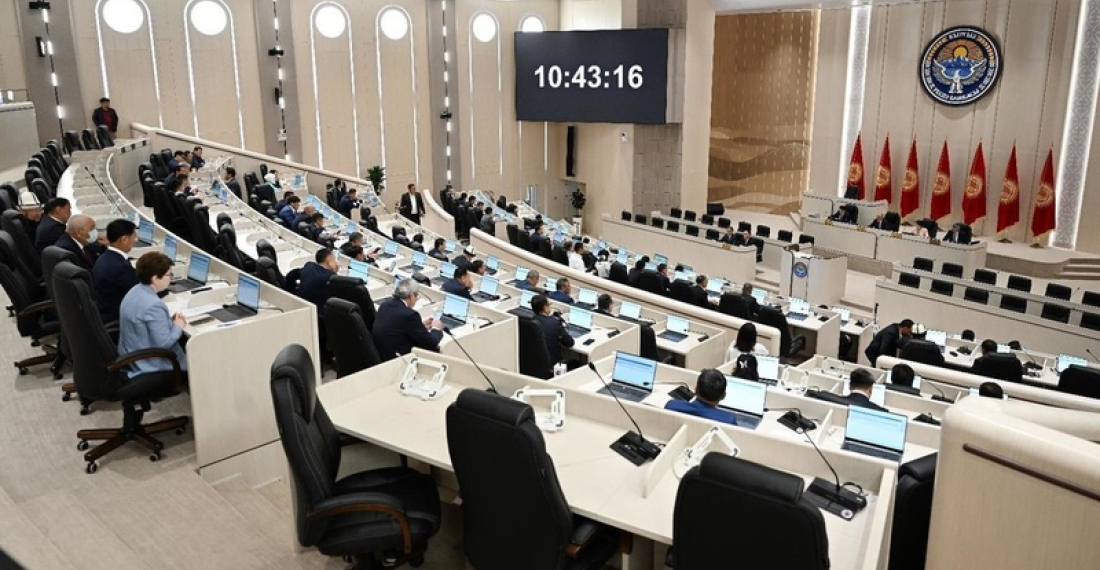
On Thursday (25 September), the Kyrgyz parliament voted to dissolve itself, opening the way for early parliamentary elections. The decision, passed by 84 votes in favour (with five abstentions and one absence), marks a significant shift in the country’s political calendar. Under the law, once the self-dissolution motion takes effect, the President has five days in which to call the snap election. Parliamentary leadership has already signalled a likely election date of 30 November 2025. Until the new parliament is elected, the current legislature will continue to exercise its powers.
The proposal to dissolve parliament had been in motion for weeks. Earlier in September, a contingent of deputies began gathering signatures to trigger the vote. They argued that holding parliamentary elections in November 2026 would conflict closely with the already scheduled presidential vote in January 2027, creating logistical and administrative burdens.
In addition, the change reflects newer electoral rules approved earlier in 2025, which eliminate the mixed system (some deputies elected via party lists, others via single-member districts) and move to a fully single-mandate setup. The reformed system will see all 90 parliamentary seats filled via single-district contests. Proponents argue that the change better aligns representation with local accountability.
Some deputies supporting the dissolution have also pointed to practical concerns. The Central Election Commission (CEC) itself had warned that overlapping campaigns for parliament and presidency would place a strain on electoral administration and undermine the clarity and fairness of both elections.
While the vote passed with no formal opposition, observers note that the current parliament is dominated by deputies aligned with President Sadyr Japarov. The move is widely interpreted as part of a broader political recalibration by the ruling camp, seeking to consolidate influence over the legislative branch ahead of future elections. Critics warn that snap elections under such conditions may disadvantage independent candidates or smaller parties, particularly given the new higher costs of entry and the burden of last-minute campaigning. The switch to single-member districts, combined with the expense of candidate registration and campaigning, may favour better-financed actors close to established power centres.