Orthodox Christians celebrate Christmas in the shadow of the Ukraine-Russia War

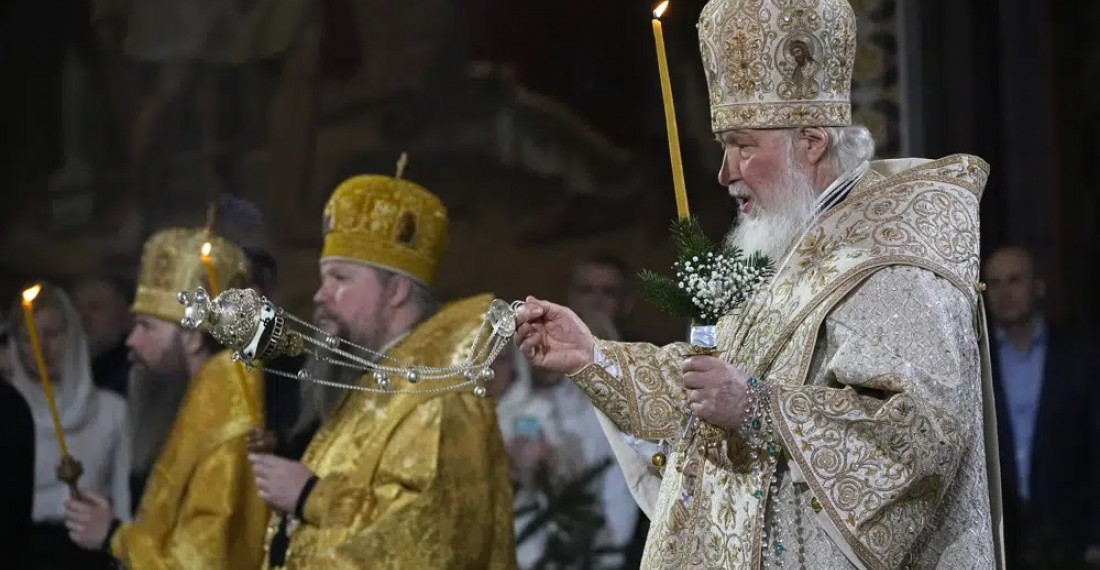
Orthodox Christians all over the world on Saturday (7 January) celebrate Christmas in accordance with the Julian Calander. On the eve, Russian Orthodox Patriarch Kirill delivered a Christmas service in the Christ the Saviour Cathedral in Moscow, and the scene was repeated in Christian Orthodox Churches across Eastern Europe and the Middle East and world wide. This Christmas however sees the Orthodox world in conflict with itself as the Ukraine-Russia War rages on.

In the Ukrainian capital, Kyiv, Ukrainians ventured out into a light dusting of snow to buy gifts, cakes and groceries for Christmas Eve family celebrations. 

In a video message, President Volodymyr Zelenskyy praised Ukrainians as “united as never before” and lamented that the conflict has forced many to abandon Christmas folk traditions that prohibit sewing and hunting.

“It is forbidden to sew and knit, but we weave camouflage nets and sew bulletproof vests, overcoming evil. Our ancestors did not go hunting in these days, but we fight so that we do not become prey and to defeat the beast,” he said.

Putin attended services at the Annunciation Cathedral, one of several churches on the grounds of the Kremlin.

In other parts of the world, bells pealed over the biblical town of Bethlehem on Friday as crowds holding crosses aloft filed through the rain-soaked streets to mark Orthodox Christmas.

Dozens of boys and girls marched through Bethlehem in the occupied West Bank for the annual scouts parade, playing Palestinian anthems and religious hymns on bagpipes and huge drums. The Greek Orthodox Patriarch of Jerusalem, Theophilos III, joined the faithful as they flocked the Church of the Nativity, revered by Christians as the traditional site of Jesus’s birthplace. Similar celebrations took over the Christian Quarter of Jerusalem’s walled Old City.

In Egypt, where Coptic Christians make up roughly 10% of the nation’s population of 104 million, one of the year’s most festive holidays was infused with grave uncertainty about the nation’s economy.

In Cairo’s northern suburb of Shobra and other Christian hubs, golden fairy lights and Christmas-themed decorations adorned the streets. Although Shobra is typically bustling with families buying gifts ahead of Orthodox Christmas, this year shop owners reported a drop in sales.  

During his speech at Coptic Christmas Eve Mass in Cairo, Egypt’s President Abdel Fattah el-Sissi emphasized the harmful impact the fighting in Ukraine was having on the country.

“The world will be, after the current crisis, different from the world we saw before this. This economic crisis will affect many countries if the war continues this year or longer,” el-Sissi said.

El-Sissi has attended several Christmas Eve services held by the country’s Coptic Orthodox minority, in a public act of interfaith solidarity. In predominantly Muslim Egypt, Coptic Christians make up roughly 10% of the nation’s population of 104 million and face various restrictions, including inter-religious marriages and church building.

A Christmas mass in Dohuk, in the Kurdish region of Iraq, drew Armenian faithful from across the city.

The Armenian Apostolic Church celebrates Christmas on 6 January, and services were held in Armenian Churches across the country and in diaspora communities across the world.

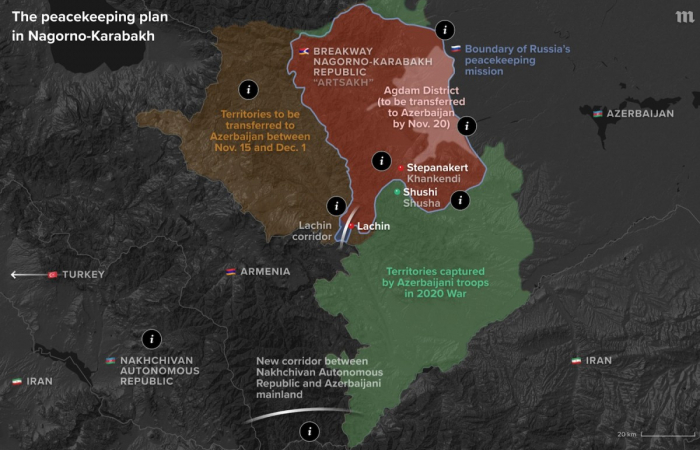
This year's christmas celebration has a special significance for the Armenian population in Nagorno-Karabakh due to the current stand-off on the Lachin Corridor that hinders the free movement of people and goods from the Armenian parts of Nagorno-Karabakh to Armenia.

Armenians in Stepanakert celebrated Christmas during a ceremony at the Cathedral of the Armenian Apostolic Church with a Christmas and Epiphany service led by the Head of the Armenian Church in Nagorno-Karabakh, Bishop Abrahamyan. Amongst those attending the service were prominent leaders in the territory, including the president of the self-declared Nagorno-Karabakh Republic, Arayik Harutyunyan, Minister of State Ruben Vardanyan, former presidents Arkadi Ghukasyan and Bako Sahakyan. 

As part of the Christmas celebration Armenians greet each other with the words: "Christ was born and revealed", to which the reply is: "Blessed is the birth of Christ, great news for us and for you".

After the liturgy, a water blessing ceremony is performed in memory of Jesus' baptism. The cross is lowered into the water and blessed, as Jesus blessed the water with his baptism. The liturgical priest drops holy light Myro into the water and blesses it. According to tradition, the people take this water home as a blessing. After the Christmas, the priests visit the houses of the believers to announce the birth of Jesus Christ by performing the blessing ceremony.

This year's christmas celebration has a special significance for the Armenian population of Stepanakert due to the current stand-off on the Lachin Corridor that hinders the free movement of people and goods from the Armenian parts of Nagorno-Karabakh to Armenia.

source: commonspace.eu with agencies.
photo: Russian Orthodox Patriarch Kirill delivered a Christmas service in the Christ the Saviour Cathedral in Moscow on the night of 6 January, marking the start of Christmas celebrations in Russia.


Related articles

Editor's choice
News
Borrell tells the European Parliament that the situation in Afghanistan was critical, but the EU will remain engaged

Borrell tells the European Parliament that the situation in Afghanistan was critical, but the EU will remain engaged

Borrell underlined that the European Union will make every effort to support the peace process and to remain a committed partner to the Afghan people. "Of course, we will have to take into account the evolving situation, but disengagement is not an option.  We are clear on that: there is no alternative to a negotiated political settlement, through inclusive peace talks.
Editor's choice
News
NATO Chief says war is on Europe's doorstep, and warns against complacency

NATO Chief says war is on Europe's doorstep, and warns against complacency

Russia could attack a NATO country within the next five years, the Secretary General of NATO, Mark Rutte, said in a stark new warning. "NATO's own defences can hold for now," Rutte warned in Berlin, but conflict was "next door" to Europe, and he feared "too many are quietly complacent, and too many don't feel the urgency, too many believe that time is on our side. "Russia is already escalating its covert campaign against our societies," Rutte said in a speech in Germany. "We must be prepared for the scale of war our grandparents or great-grandparents endured." Earlier this month, Russia's President Vladimir Putin said his country was not planning to go to war with Europe, but it was ready "right now" if Europe wanted to - or started a war. But similar reassurances were given by Moscow in 2022, just before 200,000 Russian troops crossed the border and invaded Ukraine. Putin has accused European countries of hindering US efforts to bring peace in Ukraine - a reference to the role Ukraine's European allies have recently played in trying to change a US peace plan to end the war, whose initial draft was seen as favouring Russia. But Putin was not sincere, Nato's secretary-general said in the German capital, Berlin. Supporting Ukraine, he added, was a guarantee for European security. "Just imagine if Putin got his way; Ukraine under the boot of Russian occupation, his forces pressing against a longer border with Nato, and the significantly increased risk of an armed attack against us." Russia's economy has been on a war footing for more than three years now - its factories churn out ever more supplies of drones, missiles and artillery shells. According to a recent report by the Kiel Institute for the World Economy, Russia has been producing each month around 150 tanks, 550 infantry fighting vehicles, 120 Lancet drones and more than 50 artillery pieces. The UK, and most of its Western allies, are simply not anywhere near this point. Analysts say it would take years for Western Europe's factories to come close to matching Russia's mass-production of weapons. "Allied defence spending and production must rise rapidly, our armed forces must have what they need to keep us safe," the Nato chief said.

Popular

Editor's choice
News
NATO Chief says war is on Europe's doorstep, and warns against complacency

NATO Chief says war is on Europe's doorstep, and warns against complacency

Russia could attack a NATO country within the next five years, the Secretary General of NATO, Mark Rutte, said in a stark new warning. "NATO's own defences can hold for now," Rutte warned in Berlin, but conflict was "next door" to Europe, and he feared "too many are quietly complacent, and too many don't feel the urgency, too many believe that time is on our side. "Russia is already escalating its covert campaign against our societies," Rutte said in a speech in Germany. "We must be prepared for the scale of war our grandparents or great-grandparents endured." Earlier this month, Russia's President Vladimir Putin said his country was not planning to go to war with Europe, but it was ready "right now" if Europe wanted to - or started a war. But similar reassurances were given by Moscow in 2022, just before 200,000 Russian troops crossed the border and invaded Ukraine. Putin has accused European countries of hindering US efforts to bring peace in Ukraine - a reference to the role Ukraine's European allies have recently played in trying to change a US peace plan to end the war, whose initial draft was seen as favouring Russia. But Putin was not sincere, Nato's secretary-general said in the German capital, Berlin. Supporting Ukraine, he added, was a guarantee for European security. "Just imagine if Putin got his way; Ukraine under the boot of Russian occupation, his forces pressing against a longer border with Nato, and the significantly increased risk of an armed attack against us." Russia's economy has been on a war footing for more than three years now - its factories churn out ever more supplies of drones, missiles and artillery shells. According to a recent report by the Kiel Institute for the World Economy, Russia has been producing each month around 150 tanks, 550 infantry fighting vehicles, 120 Lancet drones and more than 50 artillery pieces. The UK, and most of its Western allies, are simply not anywhere near this point. Analysts say it would take years for Western Europe's factories to come close to matching Russia's mass-production of weapons. "Allied defence spending and production must rise rapidly, our armed forces must have what they need to keep us safe," the Nato chief said.