The recent visit of the head of the CIA to Moscow had two objectives: first to renew the contacts between the CIA and the FIS on operational issues related to countering international terrorism; the second to pave the way for further high level contacts including possible meetings between Biden and Putin. Professor Lieutenant General (ret.) Hayk Kotanjian in this op-ed says the importance of the visit should not be underestimated.
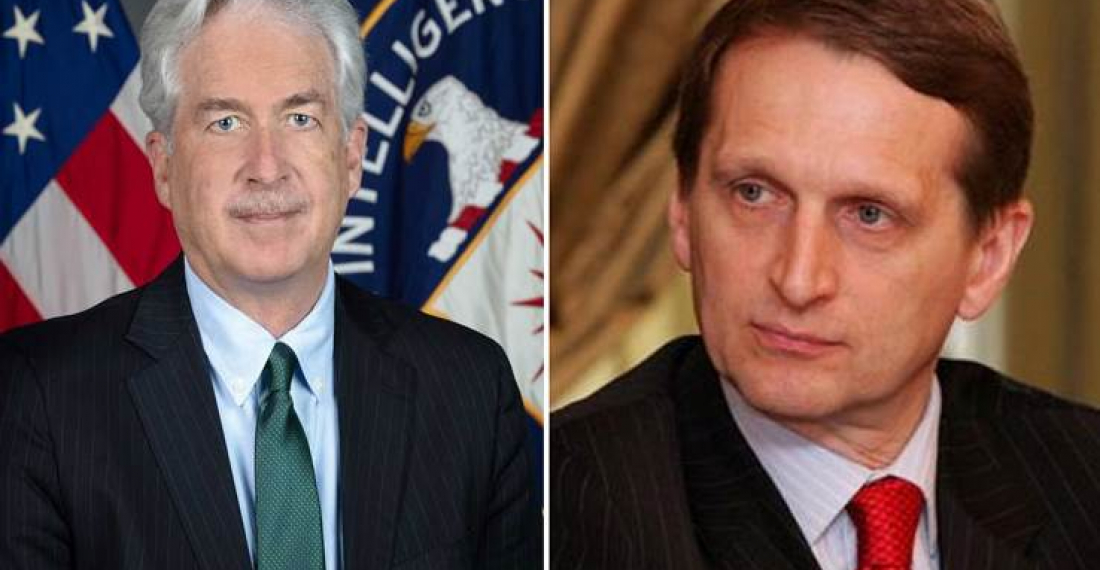
The recent meeting between the Director of the Russian Foreign Intelligence Service Sergei Naryshkin and the Director of the US Central Intelligence Agency William Burns in Moscow was of particular importance. It came at the initiative of the American side resulting from the conversation between US President Joe Biden and Russian Foreign Minister Sergei Lavrov on the sidelines of the G20 summit in Rome, when Biden conveyed "best regards to his Russian counterpart, emphasizing his commitment to further contacts."
It appears that the visit had two objectives: first to renew the contacts between the CIA and the FIS on operational issues related to countering international terrorism; the second to pave the way for further high level contacts including possible meetings between Biden and Putin.
According to Russian media sources, citing the press service of the Russian Foreign Intelligence Service, the meetings between the Heads of the Russian and American special services covered a wide range of international security issues in the context of the difficult and unpredictable dynamics of the current world order. It was stated that “the focus was on issues of interagency cooperation in the context of Russian-American relations with an emphasis on the fight against international terrorism”.
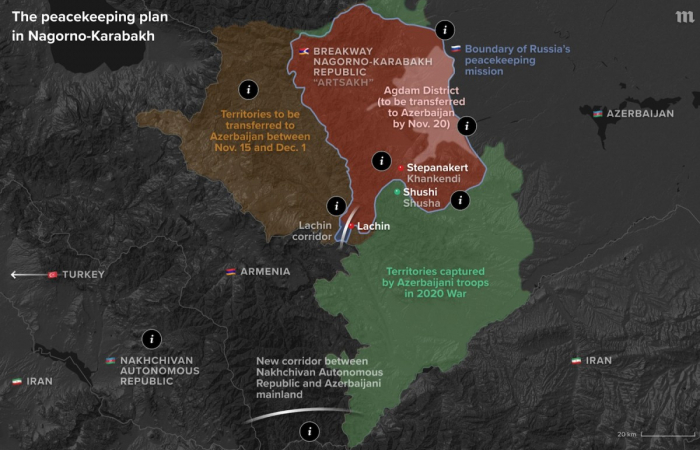
Here one can suppose that one of the issues discussed was the translocation of jihadist fighters and others to the Karabakh conflict zone during the 44 Day Karabakh War. One recalls that at the time Naryshkin, addressing Russian parliamentarians, had warned that thousands of radicals fighting in the Middle East were being thrown into the conflict zone in Nagorno-Karabakh, warning that “Transcaucasia can become a new springboard for international terrorist organizations.”
According to him, the conflict in Nagorno-Karabakh was "like a magnet attracting militants from various kinds of international terrorist structures."
“We cannot but worry that Transcaucasia is capable of becoming a new springboard for international terrorist organizations, from where militants can subsequently infiltrate into states adjacent to Azerbaijan and Armenia, including Russia,” Naryshkin stressed at the time. He said that mercenaries from the international terrorist organizations fighting in the Middle East are actively pulling into the conflict zone, mentioning in particular, "Jabhat al-Nusra", "Firkat al-Hamza", "Sultan Murad", as well as extremist Kurdish groups. As Naryshkin noted, we are talking about hundreds and even thousands of radicals hoping to make money on the new Karabakh war. (Подробнее на ПГ: https://www.pnp.ru/politics/naryshkin-zayavil-o-pribytii-terroristov-v-nagornyy-karabakh.html).
However, beyond the immediate operational issues there appeared to be other things on the agenda in the Burns-Naryshkin meeting. William Burns is an experienced diplomat, well seasoned in statecraft and with an academic and expert background. It can be assumed that the agenda of the talks went beyond the purely professional day-to-day contacts of the special services. Prior to his appointment as Head of the CIA in March 2021, Burns headed one of the think tanks for strategic studies - the Carnegie Endowment for International Peace. Previously he served as the US under Secretary of State.
The professional contacts between the Head of the Russian Security Council, Nikolai Patrushev, and the current head of the CIA date back to 2013, when Patrushev went on a visit to the United States to exchange views on the challenges in the reset of US-Russian relations. In the period 2011-2014 Burns was First Deputy Secretary of State, and by coincidence at the time of Patrushev's visit to Washington, he was serving as Acting Secretary of State of the United States. William Burns is considered one of the leading experts on Russia among the international security establishment in the United States, having alsoserved between 2005-2008 as the US Ambassador to Russia.
According to information from open sources, during his recent visit to Moscow, the Head of the CIA, in conversations with the Heads of the FIS Sergei Naryshkin and the Russian Security Council Nikolai Patrushev, made an international security inventory of relations between the United States and the Russian Federation after the meeting of Presidents Putin and Biden in Geneva on June 16, 2021. Press reports suggest that of a particular importance of the mission of CIA Director was the system-forming focus of the agenda and schedule for further contacts between US President Joe Biden and Russian President Vladimir Putin.
The importance of Burn’s visit to Moscow should not therefore be underestimated.