NGO work for millions of displaced people in Somalia paralyzed by USAID freeze

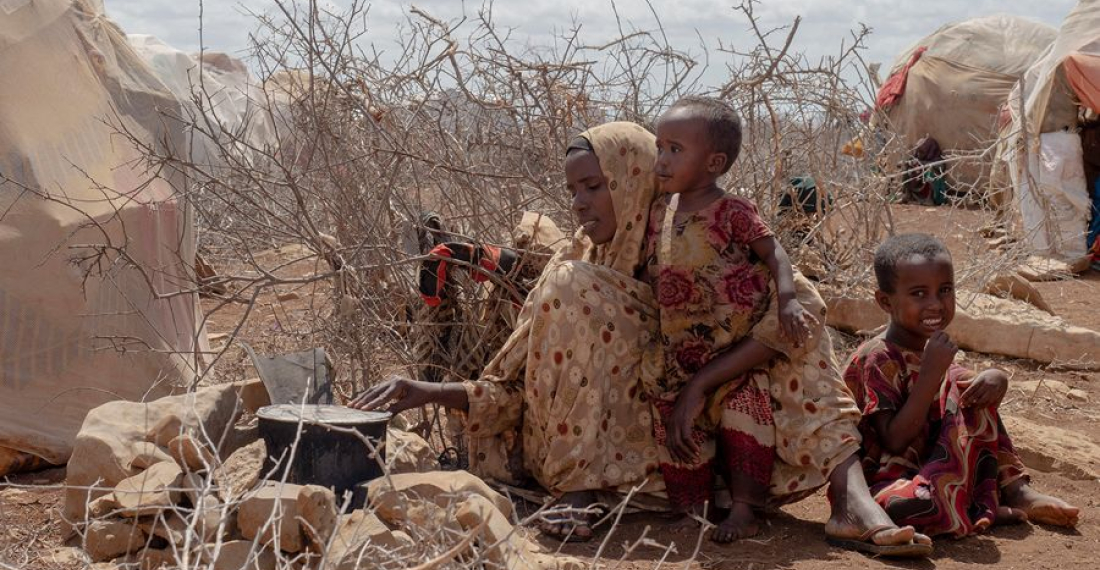
In a desolate makeshift camp on the fringes of Somalia's capital, tens of thousands of internally displaced people sit under the baking sun not sure if they can have access to food rations and medication following U.S. President Donald Trump’s decree to freeze most of his country's foreign aid. Trump’s decision, which will remain in force for 90 days following his executive order of January 20, threatens to collapse the humanitarian aid economy that sustains the livelihoods of some of the world’s most vulnerable people. The U.S. provides more foreign aid globally than any other country, budgeting about $60 billion in 2023, or about 1 per cent of the U.S. budget.

Somalia, a Horn of Africa nation that struggles with a homegrown Islamic extremist insurgency, depends almost entirely on foreign aid to look after people displaced by armed conflict, amounting to 3 million, according to the UN refugee agency. The east African country also grapples with the effects of natural disasters, particularly drought, and food insecurity.

The United States Agency for International Development, or USAID, spent $369 million in Somalia in 2021, supporting everything from sanitation programs to emergency nutrition with funds channeled through government and non-governmental groups. 

Ayan Ali Hussein, chairwoman of the Dooxdoox IDP camp on the outskirts of Mogadishu, said Trump’s order provoked almost immediate stop-work orders addressed to USAID partners, shutting down basic services. Suddenly “there are no facilities to treat malnourished children,” she said. “Women who had experienced gender-based violence once had access to care, counseling, protection, medication, financial support, and clothing, none of which are available anymore.”

Hussein’s camp looks after eight sites, home to nearly 8,000 households of internally displaced Somalis who will “lack basic items like plastic sheets” for temporary shelter. The suspension of USAID, “left a huge void in our lives” she said. One of the camp's residents, an 85-year-old mother of eight, Ruqiya Abdulle Ubeyd, said she was shocked by Trump’s decision and asked "the U.S. government to restore the aid it used to give to vulnerable people,” she said.

The fund freeze has also caused major concern among those in need of urgent medical care, including people with HIV, as it disrupted the work of almost all NGOs in Somalia. One of the hard-hit organizations is the Somali Young Doctors Association, or SOYDA, a key provider of medical assistance in the camps. Its founder, Dr. Abdiqani Sheikh Omar, previously a top official in Somalia’s health ministry, said the abruptness of Trump’s announcement has destabilized their programmes.

In 2025, Somalia was to receive $125 million in USAID support for programmes that could now become “null and void,” he said. To cope with funding shortages, his group decided to prioritize critical nutrition and hygiene programs.

Many of his workers also face immediate job losses, and the organization is “engaging our volunteer health professionals to cover this emergency staff funding gap through part-time shifts,” he said. SODYA also provides medication for people who can’t afford it. “Previously, whenever our children got sick, we would come straight to (the SODYA) center for help,” said Hussein Abikar, a father of five who lives in the camp with his family.  “There is no other place where we could find such support,” Abikar said.

Source: commonspace.eu with agencies. Photo: Photo: Ingrid Prestetun

Related articles

Editor's choice
News
Borrell tells the European Parliament that the situation in Afghanistan was critical, but the EU will remain engaged

Borrell tells the European Parliament that the situation in Afghanistan was critical, but the EU will remain engaged

Borrell underlined that the European Union will make every effort to support the peace process and to remain a committed partner to the Afghan people. "Of course, we will have to take into account the evolving situation, but disengagement is not an option.  We are clear on that: there is no alternative to a negotiated political settlement, through inclusive peace talks.
Editor's choice
News
Syrian president al Sharaa at the White House

Syrian president al Sharaa at the White House

Syrian president, Mohammed al Sharaa met with US President Donald Trump at the White House on Monday (10 November). Trump met with Sharaa in the first-ever visit by a Syrian president to the White House, six months after the two first met in Saudi Arabia, and just days after Washington said that the Syrian leader, who once led an Al-Qaeda affiliate group, was no longer a "Specially Designated Global Terrorist." Washington suspended the imposition of Caesar Act sanctions on Syria in part for 180 days, the Treasury Department said as the meeting took place. The move replaces a previous waiver enacted on 23 May, it said On Friday, the US lifted sanctions on Sharaa and Interior Minister Anas Khattab, a day after the UN Security Council took the same step. Sharaa, 42, took power last year after his fighters launched a lightning offensive from their Idlib and overthrew longtime Syrian President Bashar al-Assad just days later on December 8. Syria's regional realignment has since moved  away from key allies of the former regime, Iran and Russia, and toward Turkey, the Gulf - and Washington. Syria's presidency said that Sharaa and Trump discussed the bilateral relationship, "the ways to strengthen and develop it, as well as a number of regional and international issues of common interest." After al Sharaa and Trump met in Riyadh in May, Trump announced he would lift all sanctions on Syria.

Popular

Editor's choice
News
Syrian president al Sharaa at the White House

Syrian president al Sharaa at the White House

Syrian president, Mohammed al Sharaa met with US President Donald Trump at the White House on Monday (10 November). Trump met with Sharaa in the first-ever visit by a Syrian president to the White House, six months after the two first met in Saudi Arabia, and just days after Washington said that the Syrian leader, who once led an Al-Qaeda affiliate group, was no longer a "Specially Designated Global Terrorist." Washington suspended the imposition of Caesar Act sanctions on Syria in part for 180 days, the Treasury Department said as the meeting took place. The move replaces a previous waiver enacted on 23 May, it said On Friday, the US lifted sanctions on Sharaa and Interior Minister Anas Khattab, a day after the UN Security Council took the same step. Sharaa, 42, took power last year after his fighters launched a lightning offensive from their Idlib and overthrew longtime Syrian President Bashar al-Assad just days later on December 8. Syria's regional realignment has since moved  away from key allies of the former regime, Iran and Russia, and toward Turkey, the Gulf - and Washington. Syria's presidency said that Sharaa and Trump discussed the bilateral relationship, "the ways to strengthen and develop it, as well as a number of regional and international issues of common interest." After al Sharaa and Trump met in Riyadh in May, Trump announced he would lift all sanctions on Syria.