NATO sends additional military forces to Eastern Europe because of Russian threat

NATO is sending extra reinforcements to its member states in Eastern European because of Russia's military troop build-up on the border with Ukraine. The Secretary-General of NATO, Jens Stoltenberg, confirmed this Monday (24 January). This includes frigates, fighter jets and troops for "collective defence". The reinforcements will be stationed in the Baltic Sea and Lithuania, among other places. A Russian invasion of Ukraine now appears increasingly likely. Moscow has placed more than 100,000 soldiers on the Russian/Ukrainian border.

Stoltenberg said he "welcomes allies contributing additional forces to Nato", without giving precise numbers.

"Nato will continue to take all necessary measures to protect and defend all allies, including by reinforcing the eastern part of the alliance. We will always respond to any deterioration of our security environment, including through strengthening our collective defence", he said.

In a reaction, the Kremlin called the decision "hysterical" and "based on lies". Kremlin spokesman, Dmitry Peskov, said a military conflict in eastern Ukraine "initiated by Ukraine" to up the tensions is now more probable than ever. The Kremlin is thus suggesting that Ukraine is ratcheting up tensions and also accusing the country of amassing a large military force in the east of the country.

The US is currently considering the deployment of troops and military assets to Eastern Europe


Evacuation families of embassy staff

The European Union will not evacuate the families of EU diplomats from Ukraine for now, the High Representative of the Union for Foreign Affairs and Security Policy, Josep Borrell, said Monday. The United States is planning to do so, it was announced earlier on Monday. All other US citizens were also advised to consider leaving due to the ongoing threat of a Russian military invasion. 

However, there is no question of evacuating American citizens, according to a statement from the US Department of State. Commercial flights are being used in the evacuation. Non-essential embassy personnel also have the option of leaving. The Department emphasised that the US embassy in Ukraine will remain open and that the US continues to support Ukraine.

The UK and Germany have also started to recall some of their diplomatic staff. The British Secretary of State for Foreign, Commonwealth and Development Affairs stressed that the embassy would remain open for all critical matters.

By removing the families of diplomats and diplomatic staff from Ukraine, the Western countries are "trying to increase the tension", said Kremlin spokesman, Peskov.
 

source: commonspace.eu with agencies
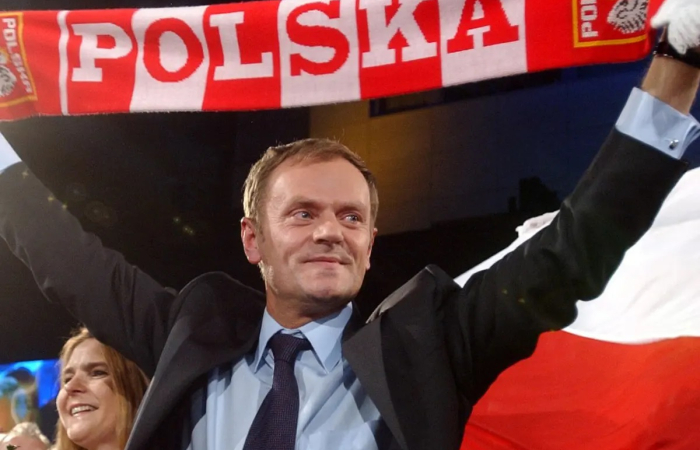
photo: Military vehicles during the NATO annual military exercise "Winter Shield" 2021 in Latvia. AFP

Related articles

Editor's choice
News
Borrell tells the European Parliament that the situation in Afghanistan was critical, but the EU will remain engaged

Borrell tells the European Parliament that the situation in Afghanistan was critical, but the EU will remain engaged

Borrell underlined that the European Union will make every effort to support the peace process and to remain a committed partner to the Afghan people. "Of course, we will have to take into account the evolving situation, but disengagement is not an option.  We are clear on that: there is no alternative to a negotiated political settlement, through inclusive peace talks.
Editor's choice
News
Germany accuses Russia of cyberattacks and disinformation campaign

Germany accuses Russia of cyberattacks and disinformation campaign

The German government holds Russia responsible for a cyberattack on German air traffic control, and for targeted disinformation campaigns before the last federal election. According to the German Foreign Office in Berlin, the incidents could be clearly attributed to the Russian military intelligence service, the GRU. In response, the Russian ambassador to Berlin was summoned to the Foreign Ministry. "We have been observing a massive increase in threatening hybrid activities by Russia for some time now," a spokesperson for the Foreign Ministry stated. These range from disinformation campaigns and espionage to cyberattacks and sabotage attempts. The aim is to divide society, sow distrust, and undermine confidence in democratic institutions. The spokesperson added that with these actions, Russia is "very concretely threatening our security, not only through its war of aggression against Ukraine, but also here in Germany."  The Foreign Ministry spokesperson explained that the cyberattack on air traffic control in August 2024 was clearly attributed to the hacker collective "APT28," known as "Fancy Bear," and to the responsibility of the Russian military intelligence service, the GRU. Furthermore, it could now be "conclusively stated" that Russia had attempted "to influence and destabilize both the last Federal election and the ongoing internal affairs of the Federal Republic of Germany." There was "absolutely irrefutable evidence" for this". The so-called "Storm 1516" campaign, which has been running since 2024, is allegedly backed by "reliable information" that the Moscow-based think tank "Center for Geopolitical Expertise" is behind it. The Center is also said to be supported by Russian military intelligence. Its primary aim is to influence democratic elections in the West. (Click the image to read more).

Popular

Editor's choice
News
Germany accuses Russia of cyberattacks and disinformation campaign

Germany accuses Russia of cyberattacks and disinformation campaign

The German government holds Russia responsible for a cyberattack on German air traffic control, and for targeted disinformation campaigns before the last federal election. According to the German Foreign Office in Berlin, the incidents could be clearly attributed to the Russian military intelligence service, the GRU. In response, the Russian ambassador to Berlin was summoned to the Foreign Ministry. "We have been observing a massive increase in threatening hybrid activities by Russia for some time now," a spokesperson for the Foreign Ministry stated. These range from disinformation campaigns and espionage to cyberattacks and sabotage attempts. The aim is to divide society, sow distrust, and undermine confidence in democratic institutions. The spokesperson added that with these actions, Russia is "very concretely threatening our security, not only through its war of aggression against Ukraine, but also here in Germany."  The Foreign Ministry spokesperson explained that the cyberattack on air traffic control in August 2024 was clearly attributed to the hacker collective "APT28," known as "Fancy Bear," and to the responsibility of the Russian military intelligence service, the GRU. Furthermore, it could now be "conclusively stated" that Russia had attempted "to influence and destabilize both the last Federal election and the ongoing internal affairs of the Federal Republic of Germany." There was "absolutely irrefutable evidence" for this". The so-called "Storm 1516" campaign, which has been running since 2024, is allegedly backed by "reliable information" that the Moscow-based think tank "Center for Geopolitical Expertise" is behind it. The Center is also said to be supported by Russian military intelligence. Its primary aim is to influence democratic elections in the West. (Click the image to read more).