Lavrov says Moscow concerned about situation in Armenia, but insists it is a domestic issue

Moscow is concerned that the situation in Armenia is still boiling but it is the country's domestic affair, Russian Foreign Minister Sergey Lavrov said, addressing students and lecturers at Moscow State Institute of International Relations on Monday, 3 September.

"We are concerned that the situation in Armenia is still boiling, in particular, events that took place ten years ago are being investigated and arrests are taking place," Lavrov said. "We believe that it is Armenia's domestic affair and would like these domestic affairs to remain based on the country's laws and constitution so that they can be resolved as soon as possible and Armenia can focus on creative tasks," the Russian top diplomat added.

According to Lavrov, it is in Russia's interest that the situation in countries with which it has allied relations and those of strategic partnership remains stable "and domestic processes remain based on the constitution so that there are conditions for economic development and social welfare improvements." "This is what we have been trying to ensure, particularly through our integration association - the Eurasian Economic Union (EAEU) - and the Collective Security Treaty Organization (CSTO)," he said.

"We have been keeping an eye on the events that took place after the constitutional provision, which transferred all major powers from the president to the prime minister elected by the country's parliament, had come into effect," Lavrov went on to say. "We took no actions and made no statements that by any stretch of the imagination could be taken as interference in domestic affairs... I cannot say that other players acted in the same way," Lavrov noted.

In the meantime, Armenian prime minister Nikol Pashinyan said on Sunday (2 September) that he plans to visit Russia in the near future and meet with Russian President Vladimir Putin.

"I know that many have been saying in the recent time that there are certain problems in the Armenian-Russian relations. I can reassure that these relations are characterized by working atmosphere. In the near future I plan to visit Russia and meet with Russian President Vladimir Putin for the third time already," he said during an online address via Facebook. He said he wants to discuss with the Russian leader the entire spectrum of the Armenian-Russian relations. "I cannot say that all the problems will be resolved but we will do our best for that," he added. Pashinyan has met Putin twice since becoming prime minister in May, and spoke with him on the phone on several occasions.

source: commonspace.eu with TASS and other agencies.

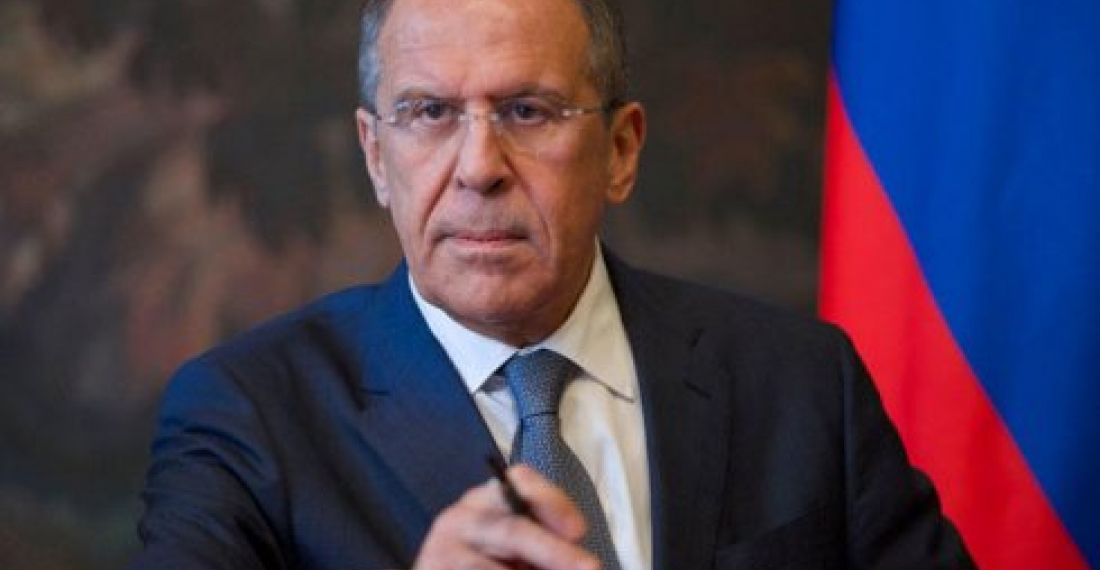
photo: Russian Foreign Minister Sergei Lavrov (archive picture)
Related articles

Editor's choice
News
Aden under curfew, as problem in Yemen's south deepens

Aden under curfew, as problem in Yemen's south deepens

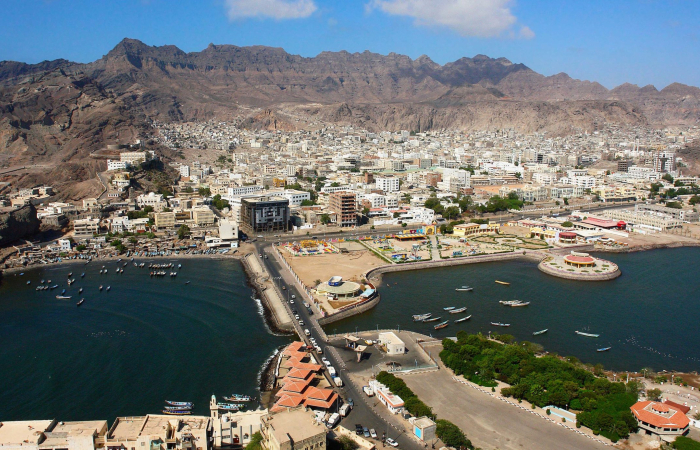
The port city of Aden, in Yemen's south, has been put under curfew, as the rift in the country between  the Saudi led coalition which  backs Yemen's presidential governing council, and the southern forces led by the Southern Transitional Council (STC), deepens. Abdul Rahman al-Mahrami, a member of the Yemeni Presidential Governing Council and commander of the al-Amalik brigades, has ordered a curfew in the temporary capital, Aden, "to maintain security". "A curfew has been imposed throughout Aden Governorate from 9:00 p.m. to 6:00 a.m., in accordance with the instructions of Commander Abdul Rahman al-Mahrami, a member of the Presidential Management Council," the statement said. It states that only security and military personnel, as well as medical and technical teams with approved permits, will be allowed to move in the area during these hours. Yemen's presidential council, which is backed by Saudi Arabia and which already is in a struggle with the Houthi Movement in the north of the country who also occupy the capital Sanaa, two days ago issued an order for the arrest of the head of the Southern Transitional Council (STC),, Aidarous al Zubaidi. The STC have wide support among people in the South, and advocate that South Yemen restores its independence. The coalition warned of further escalation in Aden, long regarded as an STC stronghold, as the Presidential Leadership Council (PLC) chief accused STC leader Aidarous Al Zubaidi of “high treason” and announced the revocation of his membership in the governing body. The moves mark a sharp escalation in tensions within the anti-Houthi camp, despite National Shield Forces, rivals of the STC and former allies, having recently retaken control of Hadhramaut and Mahra from southern fighters. The STC’s takeover of the two regions last month angered Saudi Arabia and contributed to igniting the current internal conflict. (click the picture to read more)

Popular

Editor's choice
News
Aden under curfew, as problem in Yemen's south deepens

Aden under curfew, as problem in Yemen's south deepens

The port city of Aden, in Yemen's south, has been put under curfew, as the rift in the country between  the Saudi led coalition which  backs Yemen's presidential governing council, and the southern forces led by the Southern Transitional Council (STC), deepens. Abdul Rahman al-Mahrami, a member of the Yemeni Presidential Governing Council and commander of the al-Amalik brigades, has ordered a curfew in the temporary capital, Aden, "to maintain security". "A curfew has been imposed throughout Aden Governorate from 9:00 p.m. to 6:00 a.m., in accordance with the instructions of Commander Abdul Rahman al-Mahrami, a member of the Presidential Management Council," the statement said. It states that only security and military personnel, as well as medical and technical teams with approved permits, will be allowed to move in the area during these hours. Yemen's presidential council, which is backed by Saudi Arabia and which already is in a struggle with the Houthi Movement in the north of the country who also occupy the capital Sanaa, two days ago issued an order for the arrest of the head of the Southern Transitional Council (STC),, Aidarous al Zubaidi. The STC have wide support among people in the South, and advocate that South Yemen restores its independence. The coalition warned of further escalation in Aden, long regarded as an STC stronghold, as the Presidential Leadership Council (PLC) chief accused STC leader Aidarous Al Zubaidi of “high treason” and announced the revocation of his membership in the governing body. The moves mark a sharp escalation in tensions within the anti-Houthi camp, despite National Shield Forces, rivals of the STC and former allies, having recently retaken control of Hadhramaut and Mahra from southern fighters. The STC’s takeover of the two regions last month angered Saudi Arabia and contributed to igniting the current internal conflict. (click the picture to read more)