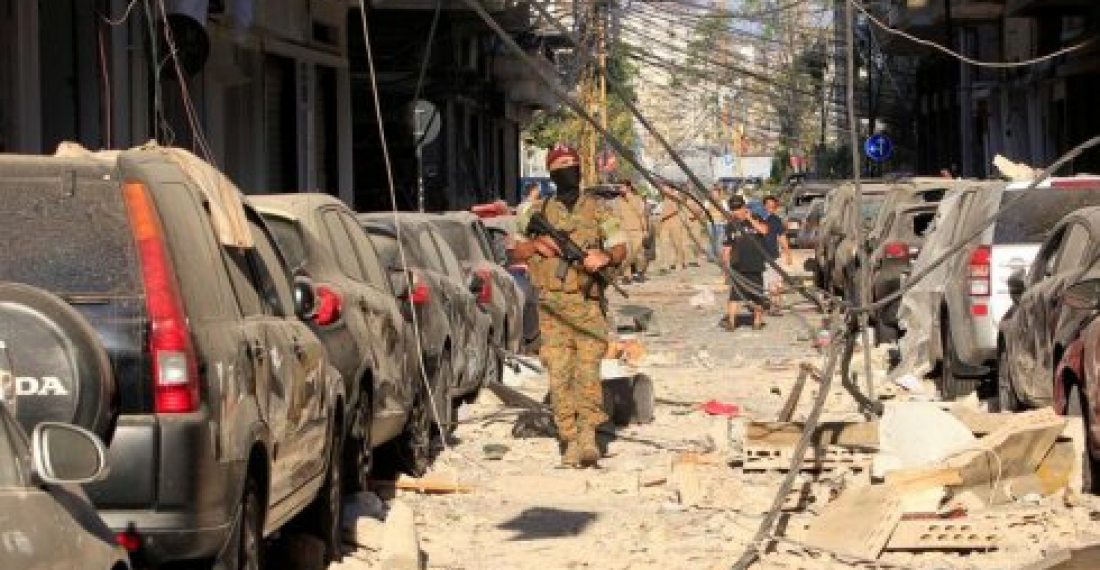
There have been world-wide expressions of sadness and solidarity with Lebanon from across the world following the explosion on Tuesday (4 August) in the Port of Beirut, which left more than one hundred people dead and thousands injured. The material costs of the damage are expected to run in billions.
French President Emmanuel Macron will visit Lebanon on Thursday to "stress solidarity with the Lebanese in the ordeal that befell them."
In a call to Prime Minister Hassan Diab, US Secretary of State Mike Pompeo pledged "the support of the United States for Lebanon, and its willingness to provide urgent assistance," the PM's office said.
The European Union expressed its full solidarity with and support for the families of the victims, the Lebanese people and authorities. The European Union said it stands ready to respond to the most urgent needs of Lebanon and to provide required assistance after these grave events.
In a phone call on Wednesday with Lebanon's Foreign Minister Charbel Wehbe, European Union High Representative Josep Borrell stressed the EU's support to help Lebanon.
He was quoted by sources at the European External Action Service saying that "this tragic moment for Lebanon should be the occasion to unite all political forces around a national effort to respond to the many challenges the country is facing. The European Union will remain firmly at the side of Lebanon and the Lebanese people in this effort."
The High Representative also underlined the importance that the European Union attaches to the unity and stability of Lebanon, which are all the more important today, both internally and for the region.
There have been expressions of support and solidarity from across the world, in particular from Arab and Muslim countries.
Azerbaijan was one of the countries to offer assistance. The Government agreed a 1 million USD assistance to Lebanon.
Lebanese President Michel Aoun said the blast was caused by 2,750 tonnes of ammonium nitrate stored unsafely in a warehouse.
Ammonium nitrate is used as a fertiliser in agriculture and as an explosive.
Opening an emergency cabinet meeting on Wednesday, President Aoun said: "No words can describe the horror that has hit Beirut last night, turning it into a disaster-stricken city".
Specialists at the University of Sheffield in the UK estimate that the blast had about one tenth of the explosive power of the atomic bomb dropped on the Japanese city of Hiroshima during World War Two and was "unquestionably one of the biggest non-nuclear explosions in history".
source: commonspace.eu with agencies.
photo: Soldiers patrol the port area of Beirut in an effort to stop looting after Tuesday's massive explosion (picture courtesy of Reuters News Agency)