Guterres Condemns the obliteration of Gaza as High-Level Conference on Palestine meets at UN Headquarters

United Nations Secretary-General António Guterres has condemned both the 7 October Hamas attacks and what he described as the “obliteration” of Gaza, including mass civilian casualties, starvation and destruction of infrastructure. Guterres was addressing the  High-Level International Conference for the Peaceful Settlement of the Question of Palestine and the Implementation of the Two-State Solution that is being convened at the UN Headquarters in New York between 28 and 30 July. The UN chief urged world leaders to ensure the conference becomes a turning point for irreversible progress toward a two-State solution, calling it the only credible path to peace based on international law. Mandated by the General Assembly of the UN, the meeting features plenaries, working groups and interventions from senior UN officials and Member States.

“For decades, Middle East diplomacy has been far more process than peace,” observed the UN Secretary-General.  “Words, speeches and declarations have little meaning to those on the ground as destruction and annexation bulldoze ahead” he stressed while adding that “the obligation is on all of us to prove that this effort is something different”.

Guterres urged:  “Let us reject the false choice between Palestinian statehood and Israeli security — there is no security in occupation.”  Rather, Israel’s legitimate security concerns must be addressed, he said — “and so must the legitimate rights of the Palestinian people”. “We cannot wait for perfect conditions — we must create them,” he added.

Co-chaired by the Ministers for Foreign Affairs of France and Saudi Arabia, the Conference is being held pursuant to General Assembly resolution 79/81 to advance the implementation of UN resolutions pertaining to the question of Palestine and the two-State solution.

The conference is also being addressed by European Commissioner for the Mediterranean, Dubravka Šuica. According to a media statement by the Commission, Šuica will reaffirm the EU's commitment to a two-state solution as the only path to a just, lasting and sustainable peace. She will recall the EU's ongoing efforts to alleviate the catastrophic humanitarian situation in Gaza, as well as its strong support for a reformed and revitalised Palestinian Authority as the legitimate governing body of a future Palestinian state. The Commissioner will also contribute to discussions on the ‘day after', focusing on international efforts for the recovery and reconstruction of Gaza.

The European Commission has disbursed €30 million to the United Nations Relief and Works Agency for Palestine Refugees (UNRWA), the second tranche of this year's allocation under the multiannual Comprehensive Support Programme for Palestine to help the agency pay the salaries of their teachers and medical staff.  

The European Commission stated that the high-level conference on Palestine represents a pivotal international effort to salvage the two-state solution amid a catastrophic humanitarian situation in Gaza and growing tensions and violence in the West Bank.

The conference aims to produce an action-oriented roadmap for peace, grounded in international law and the International Court of Justice 2024 opinion on the illegality of the occupation. It brings together global actors to coordinate post-war reconstruction in Gaza, support Palestinian institutional reform, advance hostage release and demilitarisation, and promote broad diplomatic recognition of a Palestinian state, seeking to shift the status quo toward a just, lasting solution.

The 193-member UN General Assembly decided in September last year that such a conference would be held in 2025. Hosted by France and Saudi Arabia, the conference was postponed in June due to the Israel-Iran war.

Days before the conference, French President Emmanuel Macron announced he would formally recognize Palestinian statehood in September, provoking strong opposition from Israel and the United States. Both countries decided not to participate in the High-Level Conference.

Israel’s UN Ambassador Danny Danon said on Monday: “This conference does not promote a solution, but rather deepens the illusion. Instead of demanding the release of the hostages and working to dismantle Hamas’s reign of terror, the conference organizers are engaging in discussions and plenaries that are disconnected from reality.”

Luxembourg hinted Monday that it could follow France and recognise a Palestinian state in September, with the possibility that other countries could announce similar plans in the coming days and weeks.

France is hoping Britain will follow its lead. More than 200 British members of parliament on Friday 25 July voiced support for the idea, but Prime Minister Keir Starmer said that recognition of a Palestinian state “must be part of a wider plan.”

For decades, most UN members have supported a two-state solution with Israel and a Palestinian state existing side-by-side.

However, the establishment of a Palestinian state and its would-be borders appear to be increasingly shrinking after more than 21 months of devastating war in Gaza sparked by Hamas’s October 2023 atrocities, the ongoing expansion of Israeli settlements in the West Bank, and Israeli government officials declaring designs to annex the territory along with the Gaza Strip.

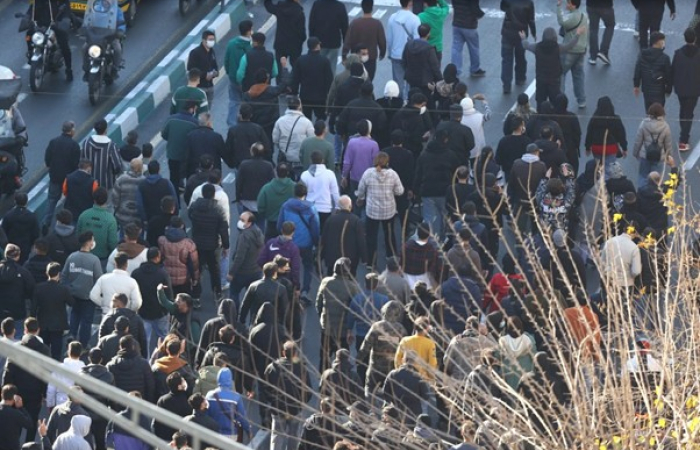
Source: commonspace.eu with the UN, European Commission, Times of Israel and agencies. Photo: Attendees stand during a moment of silence during a ministerial high-level meeting during the United Nations conference on a two-state solution for Israel and the Palestinians, at UN headquarters on July 28, 2025, in New York City. (TIMOTHY A. CLARY / AFP)

Related articles

Editor's choice
News
Borrell tells the European Parliament that the situation in Afghanistan was critical, but the EU will remain engaged

Borrell tells the European Parliament that the situation in Afghanistan was critical, but the EU will remain engaged

Borrell underlined that the European Union will make every effort to support the peace process and to remain a committed partner to the Afghan people. "Of course, we will have to take into account the evolving situation, but disengagement is not an option.  We are clear on that: there is no alternative to a negotiated political settlement, through inclusive peace talks.
Editor's choice
News
NATO Chief says war is on Europe's doorstep, and warns against complacency

NATO Chief says war is on Europe's doorstep, and warns against complacency

Russia could attack a Nato country within the next five years, the Secretary General of NATO, Mark Rutte, said in a stark new warning. "Nato's own defences can hold for now," Rutte warned in Berlin, but conflict was "next door" to Europe and he feared "too many are quietly complacent, and too many don't feel the urgency, too many believe that time is on our side. "Russia is already escalating its covert campaign against our societies," Rutte said in a speech in Germany. "We must be prepared for the scale of war our grandparents or great-grandparents endured." Earlier this month, Russia's President Vladimir Putin said his country was not planning to go to war with Europe, but it was ready "right now" if Europe wanted to - or started a war. But similar reassurances were given by Moscow in 2022, just before 200,000 Russian troops crossed the border and invaded Ukraine. Putin has accused European countries of hindering US efforts to bring peace in Ukraine - a reference to the role Ukraine's European allies have recently played in trying to change a US peace plan to end the war, whose initial draft was seen as favouring Russia. But Putin was not sincere, Nato's secretary-general said in the German capital, Berlin. Supporting Ukraine, he added, was a guarantee for European security. "Just imagine if Putin got his way; Ukraine under the boot of Russian occupation, his forces pressing against a longer border with Nato, and the significantly increased risk of an armed attack against us." Russia's economy has been on a war footing for more than three years now - its factories churn out ever more supplies of drones, missiles and artillery shells. According to a recent report by the Kiel Institute for the World Economy, Russia has been producing each month around 150 tanks, 550 infantry fighting vehicles, 120 Lancet drones and more than 50 artillery pieces. The UK, and most of its Western allies, are simply not anywhere near this point. Analysts say it would take years for Western Europe's factories to come close to matching Russia's mass-production of weapons. "Allied defence spending and production must rise rapidly, our armed forces must have what they need to keep us safe," the Nato chief said.

Popular

Editor's choice
News
NATO Chief says war is on Europe's doorstep, and warns against complacency

NATO Chief says war is on Europe's doorstep, and warns against complacency

Russia could attack a Nato country within the next five years, the Secretary General of NATO, Mark Rutte, said in a stark new warning. "Nato's own defences can hold for now," Rutte warned in Berlin, but conflict was "next door" to Europe and he feared "too many are quietly complacent, and too many don't feel the urgency, too many believe that time is on our side. "Russia is already escalating its covert campaign against our societies," Rutte said in a speech in Germany. "We must be prepared for the scale of war our grandparents or great-grandparents endured." Earlier this month, Russia's President Vladimir Putin said his country was not planning to go to war with Europe, but it was ready "right now" if Europe wanted to - or started a war. But similar reassurances were given by Moscow in 2022, just before 200,000 Russian troops crossed the border and invaded Ukraine. Putin has accused European countries of hindering US efforts to bring peace in Ukraine - a reference to the role Ukraine's European allies have recently played in trying to change a US peace plan to end the war, whose initial draft was seen as favouring Russia. But Putin was not sincere, Nato's secretary-general said in the German capital, Berlin. Supporting Ukraine, he added, was a guarantee for European security. "Just imagine if Putin got his way; Ukraine under the boot of Russian occupation, his forces pressing against a longer border with Nato, and the significantly increased risk of an armed attack against us." Russia's economy has been on a war footing for more than three years now - its factories churn out ever more supplies of drones, missiles and artillery shells. According to a recent report by the Kiel Institute for the World Economy, Russia has been producing each month around 150 tanks, 550 infantry fighting vehicles, 120 Lancet drones and more than 50 artillery pieces. The UK, and most of its Western allies, are simply not anywhere near this point. Analysts say it would take years for Western Europe's factories to come close to matching Russia's mass-production of weapons. "Allied defence spending and production must rise rapidly, our armed forces must have what they need to keep us safe," the Nato chief said.