Greenland elects Democrats with a surprise victory, taking moderate path to independence

Greenland's general parliamentary elections were won in a surprise victory by the centre-right social-liberal opposition party Demokraatit, beating the left-wing Inuit Ataqatigiit party led by incumbent Prime Minister Múte Egede.

Demokraatit, which advocates gradual independence from Denmark, won 29.9 per cent of the vote. In the last parliamentary election in 2021, it won only 9.3 per cent.

"People want change," said Jens-Frederik Nielsen, leader of Demokraatit and a former Greenlandic trade minister. "We want more trade to finance our prosperity." Furthermore, "Greenland needs us to stand together in a time of great interest from outside," party leader Jens-Frederik Nielsen told local media. "There is a need for unity, so we will enter into negotiations with everyone."

The Democrats campaigned for tax cuts, a stronger economy, and more help for the poorest in society. The party wants to attract investment in sectors such as tourism and mining to become more economically self-sufficient. To achieve this, the mining sector's rules need to be relaxed.

The elections in Greenland have received a lot of attention in recent months due to statements made by US President Donald Trump. He has regularly said that he wants the island to become part of the United States, and has promised its inhabitants billions of dollars to do so. The island is currently part of the Kingdom of Denmark.

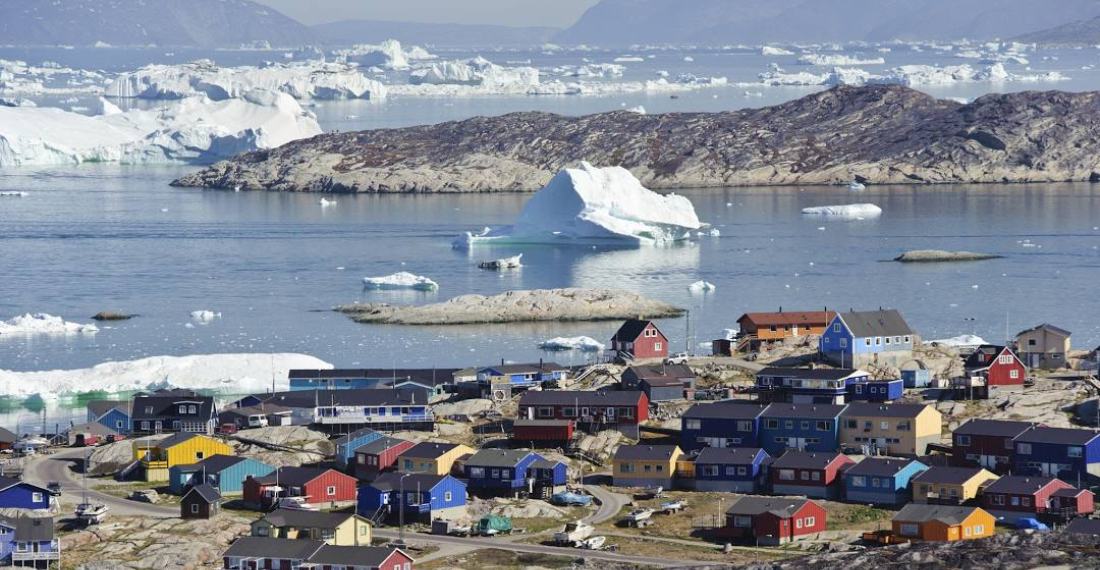
Only 57,000 people live in Greenland, but the vast island is important in the Arctic region. The island has large quantities of valuable raw materials, which are becoming more accessible as the polar ice caps melt. It is also strategically located. China and Russia have increased their military activities in the region.

Many Greenlanders do not want to be annexed by the United States. Demokraatit favours independence from Denmark, but wants to prepare for it properly. Naleraq wants to start the independence process immediately.
 

Source: commonspace.eu with agencies

Related articles

Editor's choice
News
Borrell tells the European Parliament that the situation in Afghanistan was critical, but the EU will remain engaged

Borrell tells the European Parliament that the situation in Afghanistan was critical, but the EU will remain engaged

Borrell underlined that the European Union will make every effort to support the peace process and to remain a committed partner to the Afghan people. "Of course, we will have to take into account the evolving situation, but disengagement is not an option.  We are clear on that: there is no alternative to a negotiated political settlement, through inclusive peace talks.
Editor's choice
News
Germany will soon have the largest conventional army in Europe, but there will be no conscription

Germany will soon have the largest conventional army in Europe, but there will be no conscription

The Bundeswehr currently has around 182,000 troops. The new military service model aims to increase that number by 20,000 over the next year, rising to between 255,000 and 260,000 over the next 10 years, supplemented by approximately 200,000 reservists. From next year, all 18-year-old men and women will be sent a questionnaire to assess their interest and willingness to join the armed forces. It will be mandatory for men and voluntary for women. From July 2027 all men aged 18 will also have to take a medical exam to assess their fitness for duty. If the government's targets are not met, a form of compulsory enlistment could be considered by parliament. If war were to break out, the military would be able to draw on the questionnaires and medical exams for potential recruits. Defence Minister Boris Pistorius said despite the new military service plan there was "no cause for concern... no reason for fear". "The more capable of deterrence and defence our armed forces are, through armament through training and through personnel, the less likely it is that we will become a party to a conflict at all," Pistorius said. Defence spending in Germany tumbled after the end of the Cold War, while conscription was suspended in 2011. Given its past, Germany has long been shy of showing military might, but earlier this year Friedrich Merz announced that the rule for German defence "now has to be whatever it takes", following Russia's full-scale invasion of Ukraine. Around 300,000 young men per year will be affected. The defense minister argues that this is the only way for the Bundeswehr to get an idea of who could be called up in the event of a conflict.

Popular

Editor's choice
News
Germany will soon have the largest conventional army in Europe, but there will be no conscription

Germany will soon have the largest conventional army in Europe, but there will be no conscription

The Bundeswehr currently has around 182,000 troops. The new military service model aims to increase that number by 20,000 over the next year, rising to between 255,000 and 260,000 over the next 10 years, supplemented by approximately 200,000 reservists. From next year, all 18-year-old men and women will be sent a questionnaire to assess their interest and willingness to join the armed forces. It will be mandatory for men and voluntary for women. From July 2027 all men aged 18 will also have to take a medical exam to assess their fitness for duty. If the government's targets are not met, a form of compulsory enlistment could be considered by parliament. If war were to break out, the military would be able to draw on the questionnaires and medical exams for potential recruits. Defence Minister Boris Pistorius said despite the new military service plan there was "no cause for concern... no reason for fear". "The more capable of deterrence and defence our armed forces are, through armament through training and through personnel, the less likely it is that we will become a party to a conflict at all," Pistorius said. Defence spending in Germany tumbled after the end of the Cold War, while conscription was suspended in 2011. Given its past, Germany has long been shy of showing military might, but earlier this year Friedrich Merz announced that the rule for German defence "now has to be whatever it takes", following Russia's full-scale invasion of Ukraine. Around 300,000 young men per year will be affected. The defense minister argues that this is the only way for the Bundeswehr to get an idea of who could be called up in the event of a conflict.