


Georgian State Minister: “We will not allow elections to be used as a pretext to distabilise the country”

The Georgian government will not allow anyone to use the forthcoming parliamentary elections to distabilise the country. This was stated by Georgian State Minister for European and Euro-atlantic integration, David Bakradze, on Tuesday (27 September) whilst addressing a policy dialogue on Georgia held at the European Parliament.

Bakradze told more than one hundred MEPs, EU officials, diplomats and representatives of civil society and the business community gathered in Brussels, that for Georgia elections were no longer a challenge, but an opportunity. He said that how the election campaign is held, and the election itself conducted is just as important as the result of the election itself.

Georgia should continue to enhance democracy, and democracy needs to become the norm in the country, the Minister said. Each political party has a contribution to make to the country, and in a consolidated democracy it is not a question of winner takes all. Whoever wins will be responsible for all citizens, not just its own supporters. David Bakradze said to build a powerful country Georgians must first of all respect each other, and this was a learning-by-doing-process. "On October 8, voters in Georgia will determine who will form a government and implement policy. But, respect alone will determine how strong we are as a European democracy", the State Minister said.  

Bakradze listed a number of key reforms that the Georgian government had worked on since 2012, and said that the country had moved from the period of democratic transition to that democratic consolidation. This was ongoing despite the fact that the government faced a constant propaganda warfare from anti-western forces who were trying to convince the Georgian people that reforms were futile. "They do not understand", Bakradze said, "that we actually believe in these reforms".

The Georgian State Minister also touched on the government's social and economic policy. He referred to the free and comprehensive health care system that gave Georgians free medical assistance for the first time in more than twenty years. The government was introducing new initiatives to make Georgia more attractive for investment - creating a simpler, one stop window for the investor to deal with all government related issues. There was also an ongoing effort to simplify the country's tax system. The Georgian Minister said that Georgia was not a perfect country and a lot of work still needed to be done in all sectors, but the achievements of recent years was real, and this was now confirmed by different international organisations who assessed the country's progress. "As guardians of our country's present, we take responsibility for its future", David Bakradze said.

After his keynote speech, the Georgian Minister answered questions from several MEPs and civil society activists attending the event.

The policy dialogue on the theme "Georgia: Recognising achievements, consolidating reforms and addressing future challenges and aspirations" was organised by the European Policy Centre and LINKS (Dialogue Analysis and Research) under the patronage of the S and D Group in the European Parliament. It was chaired and hosted by Andrej Mamikins, MEP from Latvia.

source: commonspace.eu

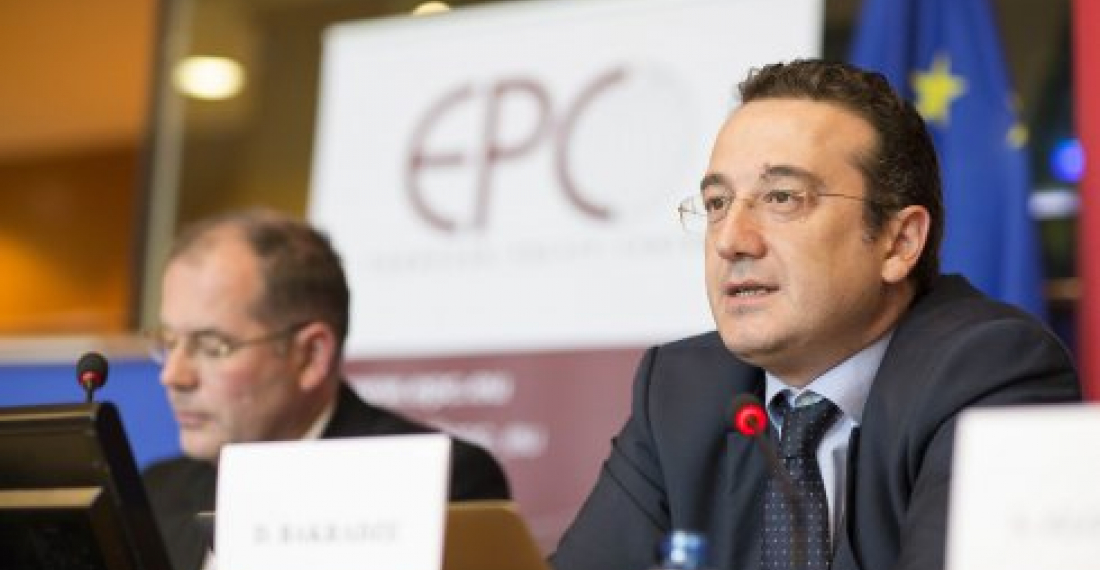
photo: Georgian State Minister David Bakradze addressing a policy dialogue at the European Parliament on Tuesday, 27 September 2016.


Related articles

Editor's choice
News
Council of Europe launches new International Claims Commission for Ukraine

Council of Europe launches new International Claims Commission for Ukraine

Thirty-four countries and the European Union have signed a new convention establishing an International Claims Commission for Ukraine at a diplomatic conference co-hosted by the 46-nation Council of Europe and the Netherlands in the Hague. The diplomatic conference was attended by leaders and high-level representatives from over 50 states, including the President of Ukraine, Volodymyr Zelenskyy, the President of the Republic of Moldova, Maia Sandu, and the Prime Minister of the Netherlands, Dick Schoof.  “Today marks a major step forward in ensuring accountability for Ukraine. The International Claims Commission represents justice and hope for tens of thousands of victims—our determination that those who have suffered will not be forgotten. I call for quick ratifications so we can get the commission rapidly up and running for the people of Ukraine,” said Council of Europe Secretary General Alain Berset. Ukrainian President Volodymyr Zelenskyy said: “We expect that every mechanism for compensation from the Register of Damage and Claims Commission to the actual payments – will start working and receive strong and sufficient international support, so that people can truly feel that any kind of damage caused by the war can be compensated. This war, and Russia’s responsibility for it, MUST become a clear example – so that others learn not to choose aggression.” “Accountability is about creating the conditions for peace that endures. And therefore, accountability is a condition of security – today and for the future. But accountability is not only about Ukraine. And it is not only about one aggressor and one victim. Accountability is about Europe. About every country in Europe. It is about whether Europe, as a whole, is willing to defend its peace,” said Maia Sandu, President of the Republic of Moldova, which currently holds the Presidency of the Council of Europe’s Committee of Ministers. The Prime Minister of the Netherlands, Dick Schoof, said: “Every day Russia is deliberately bombarding homes, destroying businesses and damaging infrastructure in Ukraine. Russia must compensate Ukraine for the damage caused. That is why we have launched the International Claims Commission for Ukraine and we are honoured to host it.” The International Claims Commission will be the second part of a comprehensive compensation mechanism related to Russia’s war of aggression, building on the existing Register of Damage for Ukraine. The claims commission will be established within the framework of the Council of Europe and will also be open to other countries. The Register of Damage for Ukraine, created in 2023, collects and records compensation claims submitted by individuals, organisations and public bodies in Ukraine. Forty-four states and the European Union have so far joined the Register, which has already received 86,000 claims. The International Claims Commission will review, assess and decide upon claims submitted to the Register of Damage for Ukraine and determine the amount of compensation, if any, which is due in each case. The convention establishing the commission will enter into force once it has been ratified by 25 signatories, as long as sufficient funds have been secured to support its initial work.

Popular

Editor's choice
News
Council of Europe launches new International Claims Commission for Ukraine

Council of Europe launches new International Claims Commission for Ukraine

Thirty-four countries and the European Union have signed a new convention establishing an International Claims Commission for Ukraine at a diplomatic conference co-hosted by the 46-nation Council of Europe and the Netherlands in the Hague. The diplomatic conference was attended by leaders and high-level representatives from over 50 states, including the President of Ukraine, Volodymyr Zelenskyy, the President of the Republic of Moldova, Maia Sandu, and the Prime Minister of the Netherlands, Dick Schoof.  “Today marks a major step forward in ensuring accountability for Ukraine. The International Claims Commission represents justice and hope for tens of thousands of victims—our determination that those who have suffered will not be forgotten. I call for quick ratifications so we can get the commission rapidly up and running for the people of Ukraine,” said Council of Europe Secretary General Alain Berset. Ukrainian President Volodymyr Zelenskyy said: “We expect that every mechanism for compensation from the Register of Damage and Claims Commission to the actual payments – will start working and receive strong and sufficient international support, so that people can truly feel that any kind of damage caused by the war can be compensated. This war, and Russia’s responsibility for it, MUST become a clear example – so that others learn not to choose aggression.” “Accountability is about creating the conditions for peace that endures. And therefore, accountability is a condition of security – today and for the future. But accountability is not only about Ukraine. And it is not only about one aggressor and one victim. Accountability is about Europe. About every country in Europe. It is about whether Europe, as a whole, is willing to defend its peace,” said Maia Sandu, President of the Republic of Moldova, which currently holds the Presidency of the Council of Europe’s Committee of Ministers. The Prime Minister of the Netherlands, Dick Schoof, said: “Every day Russia is deliberately bombarding homes, destroying businesses and damaging infrastructure in Ukraine. Russia must compensate Ukraine for the damage caused. That is why we have launched the International Claims Commission for Ukraine and we are honoured to host it.” The International Claims Commission will be the second part of a comprehensive compensation mechanism related to Russia’s war of aggression, building on the existing Register of Damage for Ukraine. The claims commission will be established within the framework of the Council of Europe and will also be open to other countries. The Register of Damage for Ukraine, created in 2023, collects and records compensation claims submitted by individuals, organisations and public bodies in Ukraine. Forty-four states and the European Union have so far joined the Register, which has already received 86,000 claims. The International Claims Commission will review, assess and decide upon claims submitted to the Register of Damage for Ukraine and determine the amount of compensation, if any, which is due in each case. The convention establishing the commission will enter into force once it has been ratified by 25 signatories, as long as sufficient funds have been secured to support its initial work.

