


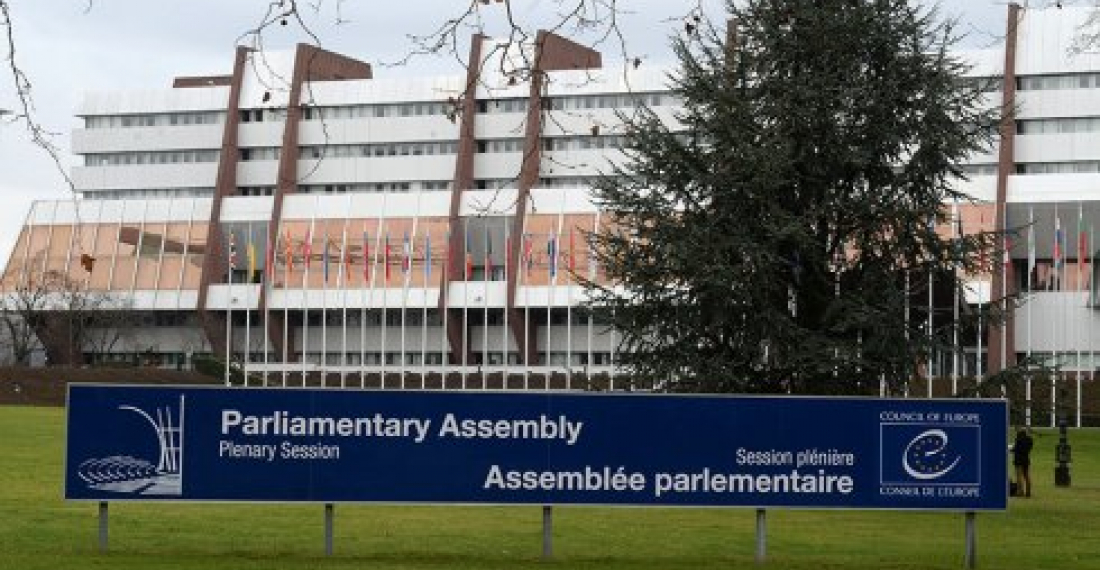
"Georgia has a pluralistic political and media landscape and a working legal framework"

A delegation of the Parliamentary Assembly of the Council of Europe (PACE) was in Tbilisi on 13 and 14 September 2016 to assess the pre-electoral climate of the parliamentary elections scheduled for 8 October 2016.

The delegation,was led by Emanuelis Zingeris (Lithuania, EPP/CD),and included Maryvonne Blondin (France, SOC),Jordi Xuclà (Spain, ALDE), Ingebjørg Godskesen (Norway, EC), Andrej Hunko (Germany, UEL)as well as the co-Rapporteurs of the Monitoring Committee: Boriss Cilevics (Latvia) and Kerstin Lundgren (Sweden).

In a statement the Delegation said it "felt that there was an environment for democratic elections in the country. It saw a pluralistic political and media landscape and a working legal framework. Although the delegation felt that the general climate was clearly less tense than it was during past elections, following discussions with various interlocutors, it considered necessary to underline that all parties should denounce all forms of campaign violence and harassment of opponents and that they should publicly call upon all their supporters to refrain from any actions that could undermine the democratic character of the elections".

The statement added:

"The delegation indeed heard allegations of unacceptable acts of violence, intimidation, harassment and blackmail directed at candidates and voters. In this context, such acts, even if isolated, against candidates, party members or supporters, as well as threats against journalists, must be prevented. Perpetrators of such acts must be identified and punished. The delegation also said that any misuse of administrative resources in the electoral campaign must not happen.

The delegation underlined that all parties should focus on the real issues and avoid questioning the election framework as a campaign strategy, as this could undermine public trust in the elections themselves.

The delegation called on all stakeholders, and in particular on the authorities, to avoid any actions that could increase the tensions in the political environment in the run-up to the elections. It expressed the hope that all political players would spare no efforts to pave the way towards building a genuine election culture, based on mutual respect between political forces of opposing orientations."

The PACE pre-electoral delegation was in Tbilisi at the invitation of the Minister of Foreign Affairs of Georgia. It met with the Prime Minister, with the Speaker of the Parliament and its first Deputy, with members of the delegation to PACE, with the Chairperson of the State Election Commission, with the Minister of Internal Affairs, with the Head of the National Communications Commission, with leaders and representatives of parliamentary and non-parliamentary parties running in the elections, with representatives of civil society and the media, with the Deputy Head of the OSCE/ODIHR election observation mission and with diplomats based in Tbilisi.

A full-fledged 32-member delegation from the Parliamentary Assembly of the Council of Europe will arrive in Georgia prior to the parliamentary elections to observe the vote.

source: commonspace.eu with the press service of the Parliamentary Assembly of the Council of Europe (PACE)


Related articles

Editor's choice
News
Borrell tells the European Parliament that the situation in Afghanistan was critical, but the EU will remain engaged

Borrell tells the European Parliament that the situation in Afghanistan was critical, but the EU will remain engaged

Borrell underlined that the European Union will make every effort to support the peace process and to remain a committed partner to the Afghan people. "Of course, we will have to take into account the evolving situation, but disengagement is not an option.  We are clear on that: there is no alternative to a negotiated political settlement, through inclusive peace talks.
Editor's choice
News
Germany accuses Russia of cyberattacks and disinformation campaign

Germany accuses Russia of cyberattacks and disinformation campaign

The German government holds Russia responsible for a cyberattack on German air traffic control, and for targeted disinformation campaigns before the last federal election. According to the German Foreign Office in Berlin, the incidents could be clearly attributed to the Russian military intelligence service, the GRU. In response, the Russian ambassador to Berlin was summoned to the Foreign Ministry. "We have been observing a massive increase in threatening hybrid activities by Russia for some time now," a spokesperson for the Foreign Ministry stated. These range from disinformation campaigns and espionage to cyberattacks and sabotage attempts. The aim is to divide society, sow distrust, and undermine confidence in democratic institutions. The spokesperson added that with these actions, Russia is "very concretely threatening our security, not only through its war of aggression against Ukraine, but also here in Germany."  The Foreign Ministry spokesperson explained that the cyberattack on air traffic control in August 2024 was clearly attributed to the hacker collective "APT28," known as "Fancy Bear," and to the responsibility of the Russian military intelligence service, the GRU. Furthermore, it could now be "conclusively stated" that Russia had attempted "to influence and destabilize both the last Federal election and the ongoing internal affairs of the Federal Republic of Germany." There was "absolutely irrefutable evidence" for this". The so-called "Storm 1516" campaign, which has been running since 2024, is allegedly backed by "reliable information" that the Moscow-based think tank "Center for Geopolitical Expertise" is behind it. The Center is also said to be supported by Russian military intelligence. Its primary aim is to influence democratic elections in the West. (Click the image to read more).

Popular

Editor's choice
News
Germany accuses Russia of cyberattacks and disinformation campaign

Germany accuses Russia of cyberattacks and disinformation campaign

The German government holds Russia responsible for a cyberattack on German air traffic control, and for targeted disinformation campaigns before the last federal election. According to the German Foreign Office in Berlin, the incidents could be clearly attributed to the Russian military intelligence service, the GRU. In response, the Russian ambassador to Berlin was summoned to the Foreign Ministry. "We have been observing a massive increase in threatening hybrid activities by Russia for some time now," a spokesperson for the Foreign Ministry stated. These range from disinformation campaigns and espionage to cyberattacks and sabotage attempts. The aim is to divide society, sow distrust, and undermine confidence in democratic institutions. The spokesperson added that with these actions, Russia is "very concretely threatening our security, not only through its war of aggression against Ukraine, but also here in Germany."  The Foreign Ministry spokesperson explained that the cyberattack on air traffic control in August 2024 was clearly attributed to the hacker collective "APT28," known as "Fancy Bear," and to the responsibility of the Russian military intelligence service, the GRU. Furthermore, it could now be "conclusively stated" that Russia had attempted "to influence and destabilize both the last Federal election and the ongoing internal affairs of the Federal Republic of Germany." There was "absolutely irrefutable evidence" for this". The so-called "Storm 1516" campaign, which has been running since 2024, is allegedly backed by "reliable information" that the Moscow-based think tank "Center for Geopolitical Expertise" is behind it. The Center is also said to be supported by Russian military intelligence. Its primary aim is to influence democratic elections in the West. (Click the image to read more).

