


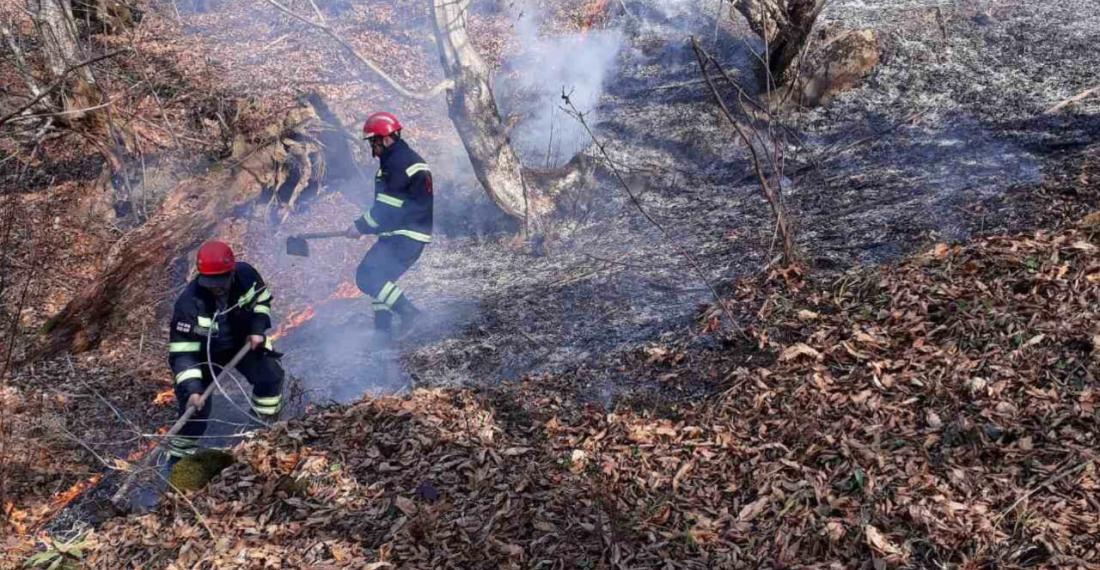
Over the last week, fires have blazed across central and western regions of Georgia. Agende.ge reports that 257 fires have been reported since Monday (4 January). Today (8 January) the Georgian Emergency Management Service (EMS) stated that the fires were under control, and that they have managed to contain three of the seven fires that remain in the regions of Samegrelo, Racha-Lechkhumi and Shida Kartli.
The fires are thought to have been caused by human negligence and the EMS has called on the populations to refrain from burning grass in fields and arable lands. It has warned that due to strong winds and dry weather in western Georgia, such fires can easily spread to forests and dwellings.
Fires have also spread to the Georgian separatist region of Abkhazia, with social media reports yesterday showing them as close as 150-metres from residential buildings in the town of Gagra. Teya Akhvlediani, Georgian State Minister for Reconciliation and Civil Equality, again today offered the de facto Abkhazian authorities Tbilisi’s support in eliminating the fires, but this was rejected. De facto secretary of the Security Council of Abkhazia, Sergei Shamba, told SOVA news:
“There is no such need. Our services are coping.”
The Ministry of Emergency Situations of the self-proclaimed Republic of Abkhazia today stated that the fires close to residential areas of Gagra had been extinguished, and the general fire site in the Gagra district was fragmented. The statement also included that fires remaining in coastal areas were isolated and low intensity.
Source commonspace.eu with Agenda.ge, SOVA and agencies
Photo: Georgian Emergency Management Service



