


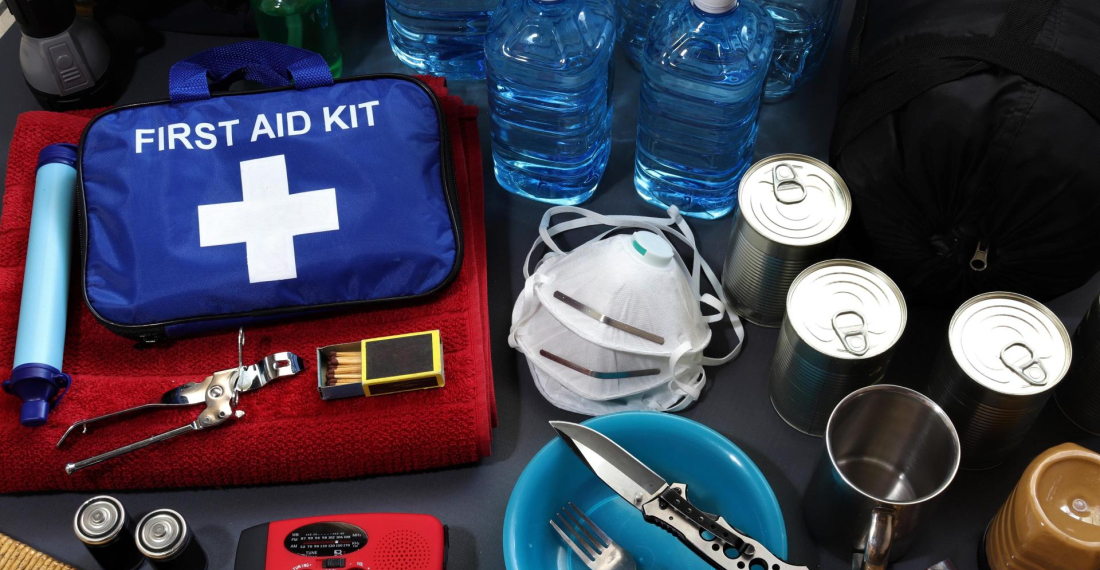
EU wants its citizens to have survival kits at home in case of crisis or war

Bottled water, energy bars, a flashlight and more: the European Union is pushing for every household in the 27-country bloc to have a three-day survival kit ready in case a crisis strikes - be it a war or natural disaster. EU crisis management commissioner Hadja Lahbib told AFP that the idea would be formally presented as part of a broader "preparedness strategy" for the European Union

In practice, Brussels would like every citizen to be equipped for 72 hours of self-sufficiency, said Lahbib, in line with a key report last year on strengthening Europe's civilian and military preparedness. "Knowing what to do in case of danger, gaming out different scenarios, that's also a way to prevent people from panicking," said Lahbib - recalling shelves being raided clean of toilet paper in the early days of the pandemic for instance.

Households would be urged to stock up on a dozen key items - also including matches and ID documents in a waterproof pouch for instance - as part of their "resilience" kit. And the EU wants to promote a "national preparedness day" - aimed at ensuring member states are on track with the plans. "All of this comes in addition to national strategies," Lahbib said. "It's about better coordinating, supporting member states in their strategies."

The "preparedness" strategy - and the survival kit in particular - draws on the recommendations of a report presented to the European Commission by Finland's former president Sauli Niinisto late last year.

It also takes inspiration from the example of Scandinavia, where Finland, Sweden and Denmark have all stepped up efforts to prepare households for the possibility of a future crisis or conflict - as Ukraine fights the grinding three-year Russian invasion.

In a letter to EU chief Ursula von der Leyen, three lawmakers from the European Parliament's centrist group Renew urged the commission to go further by sending a handbook to every household in the bloc on preparing for "various crises, from potential conflict to climate disasters, pandemics and cyberthreats."
Source: commonspace.eu with agencies. File photo: Shutterstock

Related articles

Editor's choice
News
Borrell tells the European Parliament that the situation in Afghanistan was critical, but the EU will remain engaged

Borrell tells the European Parliament that the situation in Afghanistan was critical, but the EU will remain engaged

Borrell underlined that the European Union will make every effort to support the peace process and to remain a committed partner to the Afghan people. "Of course, we will have to take into account the evolving situation, but disengagement is not an option.  We are clear on that: there is no alternative to a negotiated political settlement, through inclusive peace talks.
Editor's choice
News
Germany accuses Russia of cyberattacks and disinformation campaign

Germany accuses Russia of cyberattacks and disinformation campaign

The German government holds Russia responsible for a cyberattack on German air traffic control, and for targeted disinformation campaigns before the last federal election. According to the German Foreign Office in Berlin, the incidents could be clearly attributed to the Russian military intelligence service, the GRU. In response, the Russian ambassador to Berlin was summoned to the Foreign Ministry. "We have been observing a massive increase in threatening hybrid activities by Russia for some time now," a spokesperson for the Foreign Ministry stated. These range from disinformation campaigns and espionage to cyberattacks and sabotage attempts. The aim is to divide society, sow distrust, and undermine confidence in democratic institutions. The spokesperson added that with these actions, Russia is "very concretely threatening our security, not only through its war of aggression against Ukraine, but also here in Germany."  The Foreign Ministry spokesperson explained that the cyberattack on air traffic control in August 2024 was clearly attributed to the hacker collective "APT28," known as "Fancy Bear," and to the responsibility of the Russian military intelligence service, the GRU. Furthermore, it could now be "conclusively stated" that Russia had attempted "to influence and destabilize both the last Federal election and the ongoing internal affairs of the Federal Republic of Germany." There was "absolutely irrefutable evidence" for this". The so-called "Storm 1516" campaign, which has been running since 2024, is allegedly backed by "reliable information" that the Moscow-based think tank "Center for Geopolitical Expertise" is behind it. The Center is also said to be supported by Russian military intelligence. Its primary aim is to influence democratic elections in the West. (Click the image to read more).

Popular

Editor's choice
News
Germany accuses Russia of cyberattacks and disinformation campaign

Germany accuses Russia of cyberattacks and disinformation campaign

The German government holds Russia responsible for a cyberattack on German air traffic control, and for targeted disinformation campaigns before the last federal election. According to the German Foreign Office in Berlin, the incidents could be clearly attributed to the Russian military intelligence service, the GRU. In response, the Russian ambassador to Berlin was summoned to the Foreign Ministry. "We have been observing a massive increase in threatening hybrid activities by Russia for some time now," a spokesperson for the Foreign Ministry stated. These range from disinformation campaigns and espionage to cyberattacks and sabotage attempts. The aim is to divide society, sow distrust, and undermine confidence in democratic institutions. The spokesperson added that with these actions, Russia is "very concretely threatening our security, not only through its war of aggression against Ukraine, but also here in Germany."  The Foreign Ministry spokesperson explained that the cyberattack on air traffic control in August 2024 was clearly attributed to the hacker collective "APT28," known as "Fancy Bear," and to the responsibility of the Russian military intelligence service, the GRU. Furthermore, it could now be "conclusively stated" that Russia had attempted "to influence and destabilize both the last Federal election and the ongoing internal affairs of the Federal Republic of Germany." There was "absolutely irrefutable evidence" for this". The so-called "Storm 1516" campaign, which has been running since 2024, is allegedly backed by "reliable information" that the Moscow-based think tank "Center for Geopolitical Expertise" is behind it. The Center is also said to be supported by Russian military intelligence. Its primary aim is to influence democratic elections in the West. (Click the image to read more).

