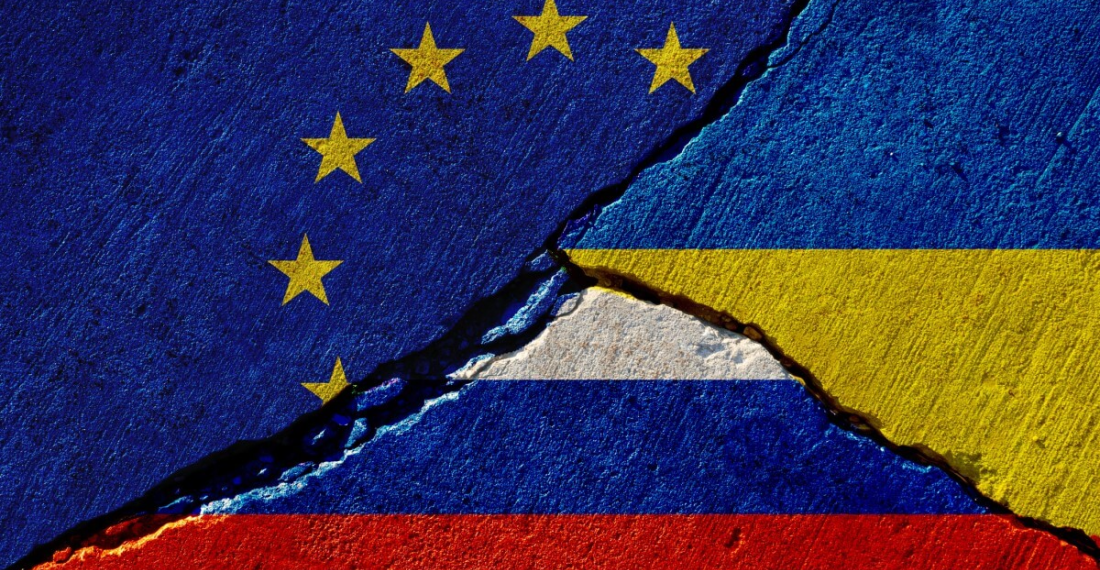
The European Union has announced a 10th round of sanctions to be placed on Russia as a result of its continuing full-scale invasion and occupation of Ukraine.
In a statement released on Wednesday (15 February), EU Vice-President Josep Borrell said, "Until today, Putin is escalating this illegal aggression, weaponising winter, food and hunger. Russia continues to show its inhuman face with brutal missile terror against civilian targets. The European Union has so far reacted with unprecedented support to Ukraine and nine sanctions packages. They are taking a heavy toll on the Russian economy and on the Kremlin’s ability to finance its aggression."
In the latest round of "significant" sanctions, which the EU aims to have in place by the one-year anniversary of Russia's full-scale invasion of Ukraine on 24 February, the European Commission is proposing €11bn of export bans "to deprive the Russian economy of critical technology and industrial goods".
"For maximum impact, we are targeting many industrial goods that Russia needs, and that it cannot get through backfilling by third countries. Vital goods such as electronics, specialized vehicles, machine parts, spare parts for trucks and jet engines. And we are targeting goods for the construction sector which can be directed to Russia's military, such as antennas or cranes," outlined President Ursula von der Leyen.
Iran also falling under sanctions over its support of Russia
The European Commission is also proposing to "further restrict the export of dual use goods and advanced tech goods", namely imposing controls on 47 new electronic components that can be used in Russian weapons systems, including drones, missiles, helicopters.
To prevent Russia obtaining the restricted goods via alternative routes, for the first time the EU will add "third country entities" to the Russia dual use sanctions. "Iran's Revolutionary Guards have been providing Russia with Shahed drones to attack civilian infrastructure in Ukraine," the statement read, announcing that the EU has therefore added seven Iranian entities to a complete ban on selling sensitive items to Russia.
Propagandists and oligarchs also targeted
The third and fourth areas to be targeted in the next round of EU sanctions against Russia concern propagandists and oligarchs. Josep Borrell announced that he has submitted a proposal sanctioning "almost 100 additional individuals and entities for their role in undermining sovereignty and territorial integrity of Ukraine", including those responsible for "military activities, for political decisions, propaganda, and disinformation".
Finally, President von der Leyen said that the EU will "will track oligarchs trying to hide or to sell their assets to escape sanctions". She added that the European Commission and EU member states would conduct an overview of Russian central bank assets frozen in the EU to establish their value and location. She said that this was "crucial in view of the possible use of public Russian assets to fund reconstruction in Ukraine".