EU joins appeal for global ceasefire

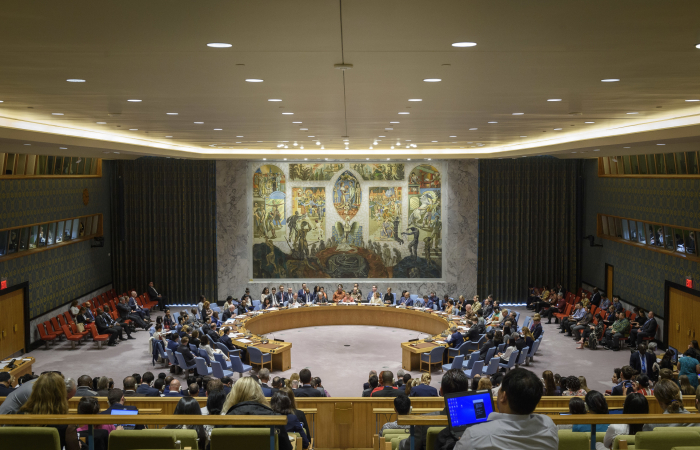
The European Union strongly supports the appeal by United Nations Secretary-General António Guterres for an immediate global ceasefire in light of the global coronavirus pandemic. This was stated in a statement issued on Friday 3 April, by the EU High Representative Josep Borrell on behalf of the European Union.

The fight against this global pandemic, which is taking so many lives and challenging the functioning of our societies, is an unprecedented challenge that requires global unity, cooperation, solidarity and compassion.

The challenges that the world was facing before the outbreak of the virus remain. The pandemic will most likely exacerbate some of them.

Now, more than ever, is the time to agree on a worldwide truce, to stop all armed conflicts and immediately halt the fighting. Terrorist groups, as designated by the United Nations, should not be allowed to take advantage of that truce. We urge all those involved in armed conflicts anywhere in the world to engage in efforts to find a political solution to the conflict. We also urge all warring parties to comply fully with International Humanitarian Law and guarantee unimpeded access for humanitarian aid. This is even more vital in light of the coronavirus pandemic. Now is the time for international solidarity. Now is the time to devote all our energy and resources to fight the world's common challenge - the coronavirus. It is time to focus on global health. Only together can we protect the most vulnerable people in our societies, both medically and economically, from this virus and the human suffering that it brings.

The European Union also stresses that sanctions should not impede the delivery of essential equipment and supplies necessary to fight the coronavirus and limit its spread worldwide.

The European Union underlines that UN and EU sanctions provide for humanitarian exceptions. Through application of these exceptions, the EU and its Member States will ensure that these sanctions do not obstruct the global fight against COVID-19, while stressing that they continue to play an indispensable role in countering breaches of international law, proliferation, staunching the flow of arms into war zones, combating human rights abuses, and targeting spoilers of peace processes. The EU also encourages other jurisdictions to provide the necessary clarifications to ensure that their respective sanctions are no obstacle to the global fight against the pandemic.

source: commonspace.eu with the press service of the European External Action Service
Related articles

Editor's choice
News
Women emerge favourite to lead United Nations from next year, after straw-poll of UN Security Council members

Women emerge favourite to lead United Nations from next year, after straw-poll of UN Security Council members

​ Two women have emerged as favourite to lead the United Nations as Secretary-General from 1 January 2027, when the term of the present incumbent, Antonio Gutteres, expires. A straw poll of the members of the UN Security Council, held on Thursday, 30 July showed that of the seven candidates, Rebecca Grynspan of Costa Rica and Carolyn Rodriguez-Birkett of Guyana received ten and nine positive endorsements respectively, by the 15 members UN Security Council Although the poll and its result are supposed to be secret, the result leaked within minutes, and was carried on world media outlets, such as Reuters. The result was as follows   Michelle Bachelet 6 encourage 5  discourage   4 no opinion María Fernanda Espinosa 5 2 8 Rafael Grossi 7 2 6 Rebeca Grynspan 10 1 4 Olara Otunnu 2 5 8 Carolyn Rodrigues-Birkett 9 2 4 Macky Sall 6 7 2   Article 97 of the UN Charter states that the “Secretary-General shall be appointed by the General Assembly upon the recommendation of the Security Council”. Straw polls are informal ballots used to determine the viability of Secretary-General candidates.  The seven current candidates are: Michelle Bachelet Jeria (Chile), who was nominated by Brazil, Chile, and Mexico on 2 February, with Chile withdrawing its nomination on 24 March; María Fernanda Espinosa Garcés (Ecuador), who was nominated by Antigua and Barbuda on 11 May; Rafael Mariano Grossi (Argentina), who was nominated by Argentina on 26 November 2025; Rebeca Grynspan Mayufis (Costa Rica), who was nominated by Costa Rica on 3 March; Olara Otunnu (Uganda), who was nominated by Uganda on 24 July; Carolyn Rodrigues Birkett (Guyana), who was nominated by Guyana on 15 June; and Macky Sall (Senegal), who was nominated by Burundi on 2 March. At Thursday's straw poll, there was no difference between the ballots presented to the five permanent members (P5) and the ten elected members (E10). Council members received one ballot per candidate, containing the candidate’s name followed by three options: “encouraged”, “discouraged”, and “no opinion expressed”.   It is ofcourse early days, and the straw poll is just an informal indication of the mood of the UN Security Council, but the strong showwing by the two womencandidates may be an indication that for the first time, the head of the UN can be a women. (click image to read more) ​

Popular

Editor's choice
Interview
Thursday Interview: Murad Muradov

Thursday Interview: Murad Muradov

Today, commonspace.eu starts a new regular weekly series. THURSDAY INTERVIEW, conducted by Lauri Nikulainen, will host  persons who are thinkers, opinion shapers, and implementors in their countries and spheres. We start the series with an interview with Murad Muradov, a leading person in Azerbaijan's think tank community. He is also the first co-chair of the Action Committee for a new Armenian-Azerbaijani Dialogue. Last September he made history by being the first Azerbaijani civil society activist to visit Armenia after the 44 day war, and the start of the peace process. Speaking about this visit Murad Muradov said: "My experience was largely positive. My negative expectations luckily didn’t play out. The discussions were respectful, the panel format bringing together experts from Armenia, Azerbaijan, and Turkey was particularly valuable during the NATO Rose-Roth Seminar in Yerevan, and media coverage, while varied in tone, remained largely constructive. Some media outlets though attempted to represent me as more of a government mouthpiece than an independent expert, which was totally misleading.  Overall, I see these initiatives as important steps in rebuilding trust and normalising professional engagement. The fact that soon a larger Azerbaijani civil society visits to Armenia followed, reinforces the sense that this process is moving in the right direction." (click the image to read the interview in full)