Eastern churches celebrate Christmas

Christian communities following the Orthodox tradition are celebrating Christmas today Sunday, 7 January. They include Churches in Georgia, Russia, Greece, Serbia, Moldova, Egypt, and a dozen or so other countries.

In Armenia, Christmas was celebrated on 6 January.

Orthodox Christians celebrate Chritmas later than other Christian churches because they follow the Julian Calander, created by Julius Caesar in 35AD, for religious festivals, whilst the rest of the Christian churches follow the Gregorian calander. The Gregorian calendar replaced the Julian calendar after Pope Gregory of Rome developed it in 1582. The Julian calendar miscalculated the length of a solar year, creating an 11-minute discrepancy each year, which built up over time and caused it to fall out of sync. However, while the Gregorian calendar replaced the Julian calendar many countries retained the historic Julian calendar dates to mark certain religious festivals including Christmas.

The Christmas celebration had particular significance this year in Egypt, where the Coptic Church has been under sustained terrorist attacks from Islamic fundamentalists. About 10% of Egypt's population are reported to be Coptic Christians, and there are around 20 million copts worldwide, although figures are disputed.

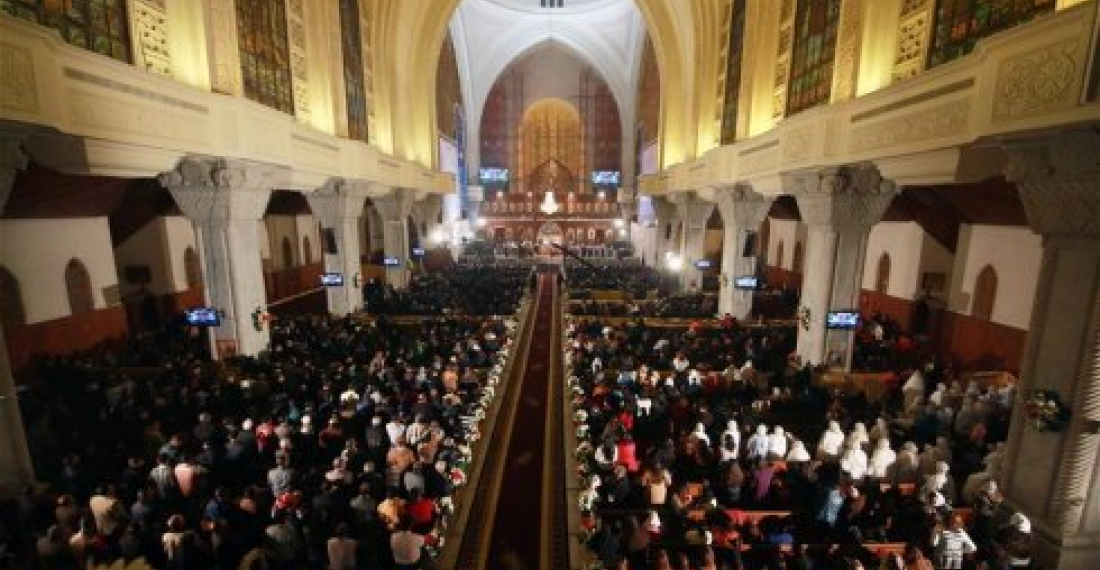
In a sign of solidarity with the Coptic Community, Egypt's president Sisi attended the Christmas service at the Coptic cathedral in Egypt's new administrative capital. This was the first Christmas Mass at the recently constructed Nativity of Christ Cathedral and it was led by Pope Tawadros II of Alexandria and Patriarch of Saint Mark's Diocese. The new Church is reported to be the largest one in the middle east with a capacity of 7,500 people.

source: commonspace.eu

Photo: Celebration of Christmas Mass at the Coptic Cathedral of the Nativity in Egypt on 7 January 2018 (picture courtesy of the Xinhua news agency)



Related articles

Editor's choice
News
Borrell tells the European Parliament that the situation in Afghanistan was critical, but the EU will remain engaged

Borrell tells the European Parliament that the situation in Afghanistan was critical, but the EU will remain engaged

Borrell underlined that the European Union will make every effort to support the peace process and to remain a committed partner to the Afghan people. "Of course, we will have to take into account the evolving situation, but disengagement is not an option.  We are clear on that: there is no alternative to a negotiated political settlement, through inclusive peace talks.
Editor's choice
News
Germany accuses Russia of cyberattacks and disinformation campaign

Germany accuses Russia of cyberattacks and disinformation campaign

The German government holds Russia responsible for a cyberattack on German air traffic control, and for targeted disinformation campaigns before the last federal election. According to the German Foreign Office in Berlin, the incidents could be clearly attributed to the Russian military intelligence service, the GRU. In response, the Russian ambassador to Berlin was summoned to the Foreign Ministry. "We have been observing a massive increase in threatening hybrid activities by Russia for some time now," a spokesperson for the Foreign Ministry stated. These range from disinformation campaigns and espionage to cyberattacks and sabotage attempts. The aim is to divide society, sow distrust, and undermine confidence in democratic institutions. The spokesperson added that with these actions, Russia is "very concretely threatening our security, not only through its war of aggression against Ukraine, but also here in Germany."  The Foreign Ministry spokesperson explained that the cyberattack on air traffic control in August 2024 was clearly attributed to the hacker collective "APT28," known as "Fancy Bear," and to the responsibility of the Russian military intelligence service, the GRU. Furthermore, it could now be "conclusively stated" that Russia had attempted "to influence and destabilize both the last Federal election and the ongoing internal affairs of the Federal Republic of Germany." There was "absolutely irrefutable evidence" for this". The so-called "Storm 1516" campaign, which has been running since 2024, is allegedly backed by "reliable information" that the Moscow-based think tank "Center for Geopolitical Expertise" is behind it. The Center is also said to be supported by Russian military intelligence. Its primary aim is to influence democratic elections in the West. (Click the image to read more).

Popular

Editor's choice
News
Germany accuses Russia of cyberattacks and disinformation campaign

Germany accuses Russia of cyberattacks and disinformation campaign

The German government holds Russia responsible for a cyberattack on German air traffic control, and for targeted disinformation campaigns before the last federal election. According to the German Foreign Office in Berlin, the incidents could be clearly attributed to the Russian military intelligence service, the GRU. In response, the Russian ambassador to Berlin was summoned to the Foreign Ministry. "We have been observing a massive increase in threatening hybrid activities by Russia for some time now," a spokesperson for the Foreign Ministry stated. These range from disinformation campaigns and espionage to cyberattacks and sabotage attempts. The aim is to divide society, sow distrust, and undermine confidence in democratic institutions. The spokesperson added that with these actions, Russia is "very concretely threatening our security, not only through its war of aggression against Ukraine, but also here in Germany."  The Foreign Ministry spokesperson explained that the cyberattack on air traffic control in August 2024 was clearly attributed to the hacker collective "APT28," known as "Fancy Bear," and to the responsibility of the Russian military intelligence service, the GRU. Furthermore, it could now be "conclusively stated" that Russia had attempted "to influence and destabilize both the last Federal election and the ongoing internal affairs of the Federal Republic of Germany." There was "absolutely irrefutable evidence" for this". The so-called "Storm 1516" campaign, which has been running since 2024, is allegedly backed by "reliable information" that the Moscow-based think tank "Center for Geopolitical Expertise" is behind it. The Center is also said to be supported by Russian military intelligence. Its primary aim is to influence democratic elections in the West. (Click the image to read more).