Don't underestimate the podcast

William Murray recommends a number of podcasts to listen to over the coming weeks and months in this short article for commonspace.eu

Whilst we all try to handle the stresses of COVID-19, movies and TV series are no doubt playing an important role as a form of escape, and this is certainly not something to feel guilty about. However, after having binge-watched the lion's share of on-demand streaming services, some will no doubt be looking for other ways to passively occupy themselves.

Just 16-years-ago, the Oxford English Dictionary got in touch with Ben Hammersley, a British journalist, to officially verify his coining of the word 'podcast' - a term he had suggested in an article during the emergence of the on-demand, internet-based, digital audio files [1].  Since then, podcasts have grown significantly in popularity, going from what Hammersley has described as "mostly unlistenable" MP3s, to an industry that is expected to pass $1 billion in advertising revenue by 2021 [2]. One of the attributes considered crucial to the growth of the podcasts is their accessibility - both the availability of a huge variety of programmes and the ease by which people can produce their own content. However, with such an abundance of options - and some podcasts, of course, being much better than others - it can be a little difficult to know where to start.

Below you will find a selection of some fantastic podcasts that we at commonspace.eu recommend to our readers. These range from serious journalistic offerings to relaxing, leisurely listens:

-          For those looking for an interesting perspective on many of the world's ongoing conflicts... Message Heard's 'Conflicted' is a series of detailed conversations between Jihadi bombmaker turned MI6 double agent, Aimen Dean, and Middle-East expert Thomas Small. From Dean's first-hand experience, this podcast looks at everything from the war in Iraq to the ongoing civil wars in Syria and Yemen [3].

-          For those looking to relax... Each episode of BBC Radio 4's 'Soul Music' looks at a different piece of music and what makes it so special. Its extensive back catalogue includes everything from Mozart's Requiem to Bob Marley's Redemption Song, alongside a variety of personal anecdotes by musicologists and everyday people, about what makes each piece so important to them [4].

-          For those interested in history... Dan Carlin's 'Hardcore History' is a series of longform podcasts, exploring major moments in world history. "Carlin's work weaves historical information with deep questions and Twilight Zone-style twists to help illustrate the power and continuing relevance of the past." [5]

-          For those interested in international criminal law... Recorded at The Hague Humanity Hub, Janet Anderson and Stephanie van den Berg's 'Asymmetrical Haircuts' is a podcast where two journalists speak to experts and commentators about international criminal justice [6]

-          For those looking to switch off... Produced by Headgum, 'The Complete Guide to Everything' (TCGTE) podcast is not quite what its title suggests. Described in one review as "like having friends without having actual obligations," TCGTE is a light-hearted, often sarcastic, conversation between two close friends over everyday topics [7].

-          For those looking to binge listen... Hosted by celebrated journalist, Sarah Koenig, 'Serial' is often hailed as being the podcast that made podcasts popular. To this day, it remains the world's most downloaded podcast. Koenig's investigative journalism shines spotlights on a 20-year-old murder case, a historic case of military justice, and the American justice system more generally [8].

What podcasts are you listening to? Do let us know @commonspace.eu

Source: William Murray, Project Officer and Coordinator at LINKS Europe, for commonspace.eu

Featured References:

[1] BBC News - 'How podcasts went from unlistenable to unmissable': https://www.bbc.com/news/business-49279177

[2] Forbes - 'Podcasting Is Going Mainstream': https://www.forbes.com/sites/bradadgate/2019/11/18/podcasting-is-going-mainstream/#686ee5cc1699

[3] Message Heard - 'Conflicted': https://messageheard.com/conflicted

[4] BBC - 'Soul Music': https://www.bbc.co.uk/programmes/b008mj7p/episodes/player

[5] Dan Carlin - 'Hardcore History': https://dchhaddendum.libsyn.com/

[6] 'Asymmetrical Haircuts' - https://www.asymmetricalhaircuts.com/what-about-asymmetrical-haircuts/

[7] Headgum - 'The Complete Guide to Everything': http://tcgte.com/

[8] 'Serial' - https://serialpodcast.org/


Related articles

Editor's choice
News
Russia adds pressure on Armenia ahead of key elections; recalls Ambassador in Yerevan for consultations

Russia adds pressure on Armenia ahead of key elections; recalls Ambassador in Yerevan for consultations

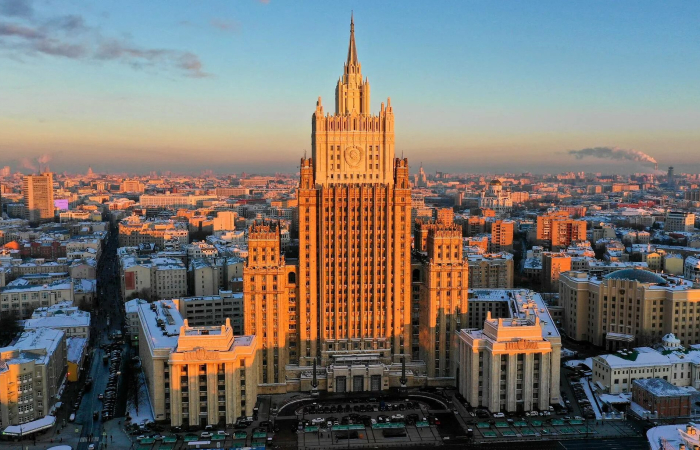
Ahead of key parliamentary elections,scheduled to be held in Armenia on Sunday, 7 June, Russia continues to attempt to put pressure on the Armenian Government led by prime minister Nikol Pashinyan. On 30 May, Russia recalled its Ambassador to Yerevan for consultations. A terse statement, published on the website of the Russian Foreign Ministry, said, "The Ambassador of the Russian Federation to the Republic of Armenia , S.P. Kopyrkin, has been summoned to Moscow for consultations in connection with the steps taken by the Armenian leadership to move closer to the European Union, which are detrimental to cooperation within the EAEU." This followed a statement issued the day before, by the leaders of the Eurasian Economic Union (EAEU) that challenges the Armenian trajectory towards approximating to the European Union. Vladimir Putin is undertood to have personally pushed the other four EAEU leaders to issue the statement, which said: "Taking into account the significant risks to the economic security of the member states of the Eurasian Economic Union (hereinafter referred to as the Union) arising in connection with the preparation of the Republic of Armenia for accession to the European Union, as well as the need to prevent the associated damage to the member states of the Union: decided that the members of the Eurasian Intergovernmental Council from the Republic of Belarus, the Republic of Kazakhstan, the Kyrgyz Republic and the Russian Federation will report at the next meeting of the Supreme Eurasian Economic Council in December 2026 on the possible consequences of the suspension of the Treaty on the Eurasian Economic Union with respect to the Republic of Armenia. We share the position on the need to hold a national referendum in the Republic of Armenia as soon as possible on joining the European Union or continuing to be part of the Eurasian Economic Union."
Editor's choice
News
The leaders of the states of the Eurasian Economic Union issued a tough statement warning fellow-member state Armenia of the consequences of its desire to join the European Union.

The leaders of the states of the Eurasian Economic Union issued a tough statement warning fellow-member state Armenia of the consequences of its desire to join the European Union.

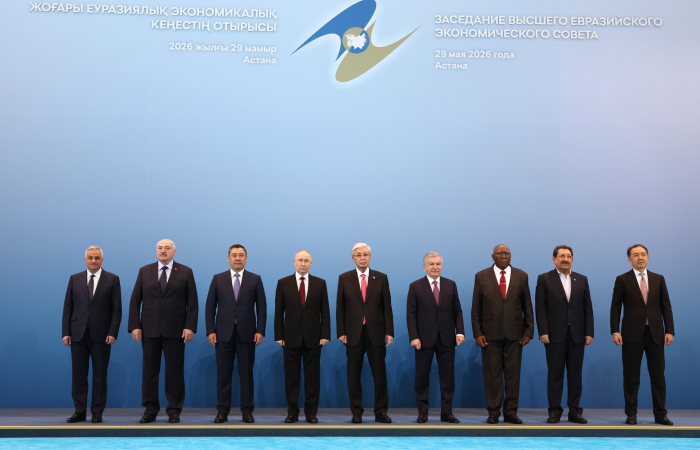
The leaders of the states of the Eurasian Economic Union (EEAS) issued a tough statement warning fellow-member state Armenia of the consequences of its desire to join the European Union. The stark, sharply worded,  warning, comes days before crucial parliamentary elections in Armenia, scheduled for 7 June. The full statement said, “We, the Presidents of the Republic of Belarus, the Republic of Kazakhstan, the Kyrgyz Republic and the Russian Federation, Taking into account the actions of the Republic of Armenia aimed at joining the European Union, including the approval in 2025 by the National Assembly of the Republic of Armenia and the signing by the President of the Republic of Armenia of the Law of the Republic of Armenia "On the Start of the Process of Accession of the Republic of Armenia to the European Union", as well as the confirmation by the European Union of the European aspirations of the Government of the Republic of Armenia, expressed in the joint declaration following the first Armenia-European Union summit, adopted on 5 May 2026, Taking into account the significant risks to the economic security of the member states of the Eurasian Economic Union (hereinafter referred to as the Union) arising in connection with the preparation of the Republic of Armenia for accession to the European Union, as well as the need to prevent the associated damage to the member states of the Union: decided that the members of the Eurasian Intergovernmental Council from the Republic of Belarus, the Republic of Kazakhstan, the Kyrgyz Republic and the Russian Federation will report at the next meeting of the Supreme Eurasian Economic Council in December 2026 on the possible consequences of the suspension of the Treaty on the Eurasian Economic Union with respect to the Republic of Armenia. We share the position on the need to hold a national referendum in the Republic of Armenia as soon as possible on joining the European Union or continuing to be part of the Eurasian Economic Union. Astana, May 29, 2026” A meeting of the Supreme Eurasian Economic Council was held in Astana, Kazakhstan, on May 29, 2026. The meeting of the Supreme Eurasian Economic Council in a restricted format was attended by Russian President Vladimir Putin, Belarusian President Alexander Lukashenko , Kazakh President Kassym-Jomart Tokayev , Kyrgyz President Sadyr Japarov , Armenian Deputy Prime Minister Mher Grigoryan, and Chairman of the Board of the Eurasian Economic Commission Bakytzhan Sagintayev. From the Russian side, the meeting was also attended by Deputy Prime Minister and member of the Council of the Eurasian Economic Commission Alexey Overchuk and Presidential Aide Yury Ushakov . The heads of delegations from EAEU observer states, including President of Uzbekistan Shavkat Mirziyoyev , Vice President of Cuba Salvador Valdés Mesa, Minister of Industry, Mines, and Trade of Iran Mohammad Atabak, and CIS Secretary General Sergei Lebedev, joined the expanded meeting . Following the meeting of the Supreme Eurasian Economic Council, a number of documents were signed .

Popular

Editor's choice
Interview
Thursday Interview: Murad Muradov

Thursday Interview: Murad Muradov

Today, commonspace.eu starts a new regular weekly series. THURSDAY INTERVIEW, conducted by Lauri Nikulainen, will host  persons who are thinkers, opinion shapers, and implementors in their countries and spheres. We start the series with an interview with Murad Muradov, a leading person in Azerbaijan's think tank community. He is also the first co-chair of the Action Committee for a new Armenian-Azerbaijani Dialogue. Last September he made history by being the first Azerbaijani civil society activist to visit Armenia after the 44 day war, and the start of the peace process. Speaking about this visit Murad Muradov said: "My experience was largely positive. My negative expectations luckily didn’t play out. The discussions were respectful, the panel format bringing together experts from Armenia, Azerbaijan, and Turkey was particularly valuable during the NATO Rose-Roth Seminar in Yerevan, and media coverage, while varied in tone, remained largely constructive. Some media outlets though attempted to represent me as more of a government mouthpiece than an independent expert, which was totally misleading.  Overall, I see these initiatives as important steps in rebuilding trust and normalising professional engagement. The fact that soon a larger Azerbaijani civil society visits to Armenia followed, reinforces the sense that this process is moving in the right direction." (click the image to read the interview in full)