


Council of Europe Congress adopts critical resolution on Georgia

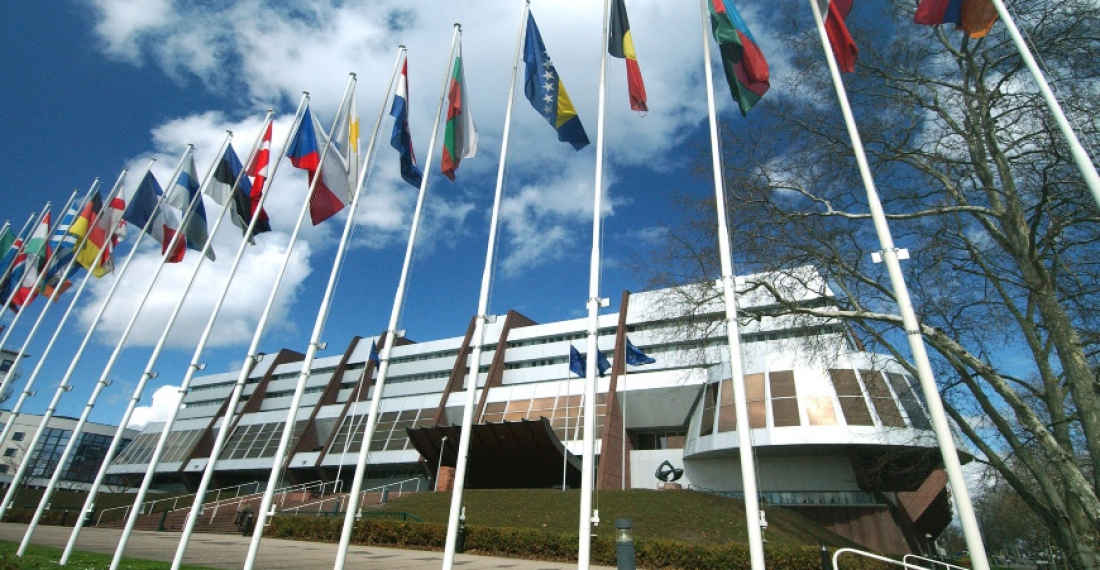
The Congress of Local and Regional Authorities of the Council of Europe meeting in Strasbourg has adopted a critical resolution on Georgia that expresses deep concern over clear signs of democratic backsliding and the weakening of human rights in the country. It points at the increasing polarisation in society and the adoption of legislation that contradicts Council of Europe standards. 101 members voted in favour and only 10 against. The Congress of Local and Regional Authorities is an institution of the Council of Europe, responsible for strengthening local and regional democracy in its 46 member states and assessing the application of the European Charter of Local Self-Government.

The following are the key elements of the resolution:

Amid deepening polarisation in Georgia, the rapid and dramatic democratic backsliding observed over the past two years, has affected local democracy in Georgia increasingly: this has intensified in the aftermath of the 2024 parliamentary election, which were rejected by all opposition parties, domestic and some international election observers, notably due to concerns over their integrity, and of the decision to halt Georgian EU accession on 28 November 2024.

The progressive marginalisation of the opposition from the political scene and the lack of dialogue between the authorities and the opposition has led to a de facto absence of political pluralism, including in municipal councils. This situation has led to anexcessive concentration of power by the ruling party, and has prompted the opposition to boycott all decision-making bodies, shrinking the space for negotiation and mediation.

Following the highly controversial adoption of the Law on Transparency of Foreign Influence and the Foreign Agents Registration Act (FARA) adopted in first reading, there has been increased intimidation and stigmatisation of NGOs and dissenting voices in the media, which work under increasingly challenging conditions, undermining their freedom of association and freedom of expression. In a democratic society, freedom of expression must be protected, supported and promoted irrespective of whether it is critical of the government, and even if it is influenced by international discourse.

Violent crackdowns by law enforcement on peaceful demonstrators and opposition figures, especially in Tbilisi, violate freedoms of expression and assembly. Recent amendments further restricting protests through harsher penalties and fines have compounded the problem.

The instrumentalisation of public institutions including at local level, has resulted in numerous reports of dismissals, intimidation and pressure on civil servants, facilitated by the adoption of amendments to the Law on Public Service.

The recent findings by both international and domestic observers have also raised concerns regarding the politicisation of public administration, widespread misuse of administrative resources and pressure on voters during electoral campaigns, unduly tilting the playing field between candidates and distorting voters’ will.

 The legal framework applicable to local elections in Georgia has been amended repeatedly, more than 20 times since the last elections without extensive consultations and broad consensus, which is not in line with the principle of stability of electoral law. The amendments have reinforced the dominant position of the ruling party in the Central Election Commission, undermining its independence, and have also wound back fundamental rules pertaining to the electoral system, gender quotas and the establishment of electoral districts.

The many shortcomings and challenges affecting the respect of democracy, rule of law and human rights have led to a collapse in public confidence in democratic institutions for large parts of the Georgian population, and notably the young people, and damaged local democracy, which is not conducive to holding the 2025 local elections in a trust-based environment; in fact, it risks exacerbating the situation.

The resolution urges the Georgian authorities to take the following steps:

Urgently resume political dialogue at all levels of government, through an inclusive political process which engages all stakeholders, including local authorities, opposition and civil society, to reduce polarisation, restore the checks and balances essential in a pluralist democracy and regulate the participation rights of the opposition.

Repeal legislation in breach of human rights, in particular the Law on Transparency of Foreign Influence, and refrain from enacting the FARA adopted in first reading, and avoid taking any actions that would further impede the indispensable work of civil society and have a chilling effect on media outlets or undermine the foundations of democracy, all of which would be detrimental to local self-government in Georgia.

Fully investigate cases of arbitrary detention and violence against peaceful protesters and journalists, as recommended by the UN High Commissioner for Human Rights; release all detainees, including journalist Mzia Amaghlobeli and ensure that any sanctions imposed for protest-related offences in municipalities meet the legal standards of necessity and proportionality.

Repeal the contentious amendments of the Law on Public Service and reintegrate employees of local public service dismissed on the basis of these provisions.

Source: commonspace.eu with agencies. Photo: Council of Europe in Strasbourg

Related articles

Editor's choice
News
Key European countries back Denmark in the face of Trump's continuing insistence on taking over Greenland

Key European countries back Denmark in the face of Trump's continuing insistence on taking over Greenland

 Six major European countries have declared their support to Denmark following renewed insistence by the US that it must have control over Greenland. "Greenland belongs to its people, and only Denmark and Greenland can decide on matters concerning their relations," said the leaders of the UK, France, Germany, Italy, Poland, and Spain, in a joint statement, issued on Tuesday (6 January), together with Denmark. On Sunday, Donald Trump said the US "needed" Greenland - a semi-autonomous region of fellow Nato member Denmark - for security reasons. He has refused to rule out the use of force to take control of the territory, and Danish Prime Minister Mette Frederiksen warned on Monday that an attack by the US would spell the end of Nato. The issue of Greenland's future resurfaced in the wake of the US military intervention in Venezuela, during which elite troops went in to seize the country's President Nicolás Maduro and take him to face drugs and weapons charges in New York. Following the raid, Trump said the US would "run" Venezuela for an unspecified period of time. He also said the US was returning to an 1823 policy of US supremacy in its sphere of influence in the Western hemisphere - and he warned a number of countries the US could turn its attention to them. The US military raid in Venezuela has reignited fears that the US may consider using force to secure control of Greenland. A day after the raid, Katie Miller - the wife of one of Trump's senior aides - posted on social media a map of Greenland in the colours of the American flag, alongside the word "SOON". On Monday, her husband Stephen Miller said it was "the formal position of the US government that Greenland should be part of the US". In an interview with CNN, he also said the US "is the power of Nato. For the US to secure the Arctic region, to protect and defend Nato and Nato interests, obviously Greenland should be part of the US." Asked repeatedly whether the US would rule out using force to annex it, Miller responded: "Nobody's going to fight the US over the future of Greenland." Stressing they were as keen as the US in Arctic security, the seven European signatories of Tuesday's joint statement said this must be achieved by Nato allies, including the US "collectively" - whilst "upholding the principles of the UN Charter, including sovereignty, territorial integrity and the inviolability of borders". Greenland's Prime Minister Jens-Frederik Nielsen welcomed the statement and called for "respectful dialogue". "The dialogue must take place with respect for the fact that Greenland's status is rooted in international law and the principle of territorial integrity," Nielsen said. Trump has claimed that making Greenland part of the US would serve American security interests due to its strategic location and its abundance of minerals critical to high-tech sectors. Greenland, which has a population of 57,000 people, has had extensive self-government since 1979, though defence and foreign policy remain in Danish hands. While most Greenlanders favour eventual independence from Denmark, opinion polls show overwhelming opposition to becoming part of the US.
Editor's choice
News
Donald Tusk: "One for all, and all for one! Otherwise we are finished."

Donald Tusk: "One for all, and all for one! Otherwise we are finished."

Europe is rattled by events in Venezuela, and there are serious concerns that US disregard for international law may have consequences close to home.  The BBC diplomatic correspondent, James Landale, said, the question is how Europe may respond in the longer term to America's military operation in Venezuela. Will it provide a catalyst for the continent to take greater responsibility for its own security in the face of so much instability from what many see as an unreliable ally? Polish prime minister, Donald Tusk, appears to have answered the question, saying on social media: "No-one will take seriously a weak and divided Europe: neither enemy nor ally. It is already clear now. "We must finally believe in our own strength, we must continue to arm ourselves, we must stay united like never before. One for all, and all for one. Otherwise, we are finished." The US seizing of Venezuela's leader has faced strong criticism from both America's friends and foes at an emergency meeting of the United Nations Security Council, held on Monday, 5 January. Many member states agreed with the US that Nicolás Maduro had been an illegitimate and repressive leader. But many also condemned the US military action as a breach of international law and the UN Charter, and they demanded a democratic transition that reflected the will of the Venezuelan people. (click the image to read the full article).

Popular

Editor's choice
News
Key European countries back Denmark in the face of Trump's continuing insistence on taking over Greenland

Key European countries back Denmark in the face of Trump's continuing insistence on taking over Greenland

 Six major European countries have declared their support to Denmark following renewed insistence by the US that it must have control over Greenland. "Greenland belongs to its people, and only Denmark and Greenland can decide on matters concerning their relations," said the leaders of the UK, France, Germany, Italy, Poland, and Spain, in a joint statement, issued on Tuesday (6 January), together with Denmark. On Sunday, Donald Trump said the US "needed" Greenland - a semi-autonomous region of fellow Nato member Denmark - for security reasons. He has refused to rule out the use of force to take control of the territory, and Danish Prime Minister Mette Frederiksen warned on Monday that an attack by the US would spell the end of Nato. The issue of Greenland's future resurfaced in the wake of the US military intervention in Venezuela, during which elite troops went in to seize the country's President Nicolás Maduro and take him to face drugs and weapons charges in New York. Following the raid, Trump said the US would "run" Venezuela for an unspecified period of time. He also said the US was returning to an 1823 policy of US supremacy in its sphere of influence in the Western hemisphere - and he warned a number of countries the US could turn its attention to them. The US military raid in Venezuela has reignited fears that the US may consider using force to secure control of Greenland. A day after the raid, Katie Miller - the wife of one of Trump's senior aides - posted on social media a map of Greenland in the colours of the American flag, alongside the word "SOON". On Monday, her husband Stephen Miller said it was "the formal position of the US government that Greenland should be part of the US". In an interview with CNN, he also said the US "is the power of Nato. For the US to secure the Arctic region, to protect and defend Nato and Nato interests, obviously Greenland should be part of the US." Asked repeatedly whether the US would rule out using force to annex it, Miller responded: "Nobody's going to fight the US over the future of Greenland." Stressing they were as keen as the US in Arctic security, the seven European signatories of Tuesday's joint statement said this must be achieved by Nato allies, including the US "collectively" - whilst "upholding the principles of the UN Charter, including sovereignty, territorial integrity and the inviolability of borders". Greenland's Prime Minister Jens-Frederik Nielsen welcomed the statement and called for "respectful dialogue". "The dialogue must take place with respect for the fact that Greenland's status is rooted in international law and the principle of territorial integrity," Nielsen said. Trump has claimed that making Greenland part of the US would serve American security interests due to its strategic location and its abundance of minerals critical to high-tech sectors. Greenland, which has a population of 57,000 people, has had extensive self-government since 1979, though defence and foreign policy remain in Danish hands. While most Greenlanders favour eventual independence from Denmark, opinion polls show overwhelming opposition to becoming part of the US.

