


Blinken and Lavrov discuss growing tensions Ukraine-Russia

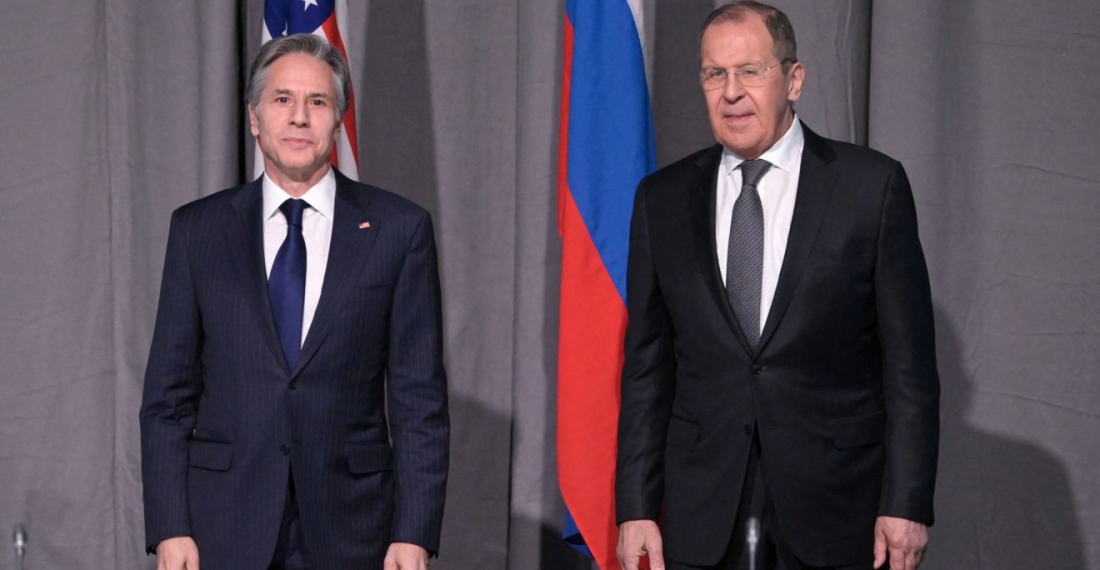
US Secretary of State, Anthony Blinken, and Russian Foreign Minister Sergei Lavrov met on the margins of the annual Ministerial Council of the Organization for Security and Cooperation in Europe (OSCE) in Stockholm, Sweden, on Thursday (2 December). The situation around Ukraine and the continued tensions with Russia were high on the agenda.  

The OSCE is holding its annual Ministerial Council meeting in the capital of this year's Chairmanship country, Sweden.

During the talks, Blinken reiterated the US position that a Russian invasion of Ukraine would be quickly answered, including with tough sanctions against Moscow. "The best way to avert the crisis is through diplomatic means and that is what I hope to discuss with Sergei", Blinken said ahead of the conversation.

Blinken stressed that both nations, Ukraine and Russia, should abide by the agreements set out in the 2015 Minsk Protocol agreement, which sought to end the war in the Donbas region of Ukraine. This includes removing heavy weapons along the frontline and the start of a dialogue between the Russian-supported separatists in eastern Ukraine and the Ukrainian government.

Lavrov said Russia also favours a diplomatic solution. "We do not want a conflict, as the president of Russia, Vladimir Putin has said", he reiterated. Earlier, Putin warned NATO against deploying its military forces and weapons in Ukraine, saying that this is a red line for Russia and would provoke a strong reaction.

On Wednesday (1 December), Putin also said that Moscow would seek Western guarantees to prevent further expansion of NATO eastwards and the deployment of its weapons near Russia's borders.

In recent months, Ukrainian and Western officials have been concerned that a Russian troop build-up near Ukraine could herald an invasion.

Speaking after the Blinken-Lavrov meeting, the spokesperson of the US State Department, Ned Price, said on record,

Secretary of State Antony J. Blinken met today with Russian Foreign Minister Sergey Lavrov in Stockholm on the margins of the OSCE Ministerial. Secretary Blinken addressed Russia’s aggression towards Ukraine, including its military movements near Ukraine’s borders. The Secretary reiterated the United States’ call for Russia to pull back its forces and return to a peacetime posture and to adhere to the Minsk agreements and a ceasefire in the Donbas. He underscored that the best path forward is diplomacy in conjunction with the full implementation of the Minsk agreements, a process the United States is willing and ready to support. Should Moscow choose the path of military escalation, the Secretary made clear that the United States and our allies are prepared to impose significant costs. The Secretary and the Foreign Minister noted the importance of continued coordination on issues in the bilateral relationship and where interests are aligned, including when it comes to blocking Iran’s pathways to a nuclear weapon. The two also discussed the Caucasus, and the Secretary welcomed the resumption of direct dialogue between the governments of Armenia and Azerbaijan. The Secretary also raised the unjust detentions of Paul Whelan and Trevor Reed and underscored the priority we attach to their prompt release.
source: commonspace.eu with agencies
photo: The US Secretary of State, Antony Blinken and his Russian colleague, Sergei Lavrov, at the start of their meeting in Stockholm. Getty Images

Related articles

Editor's choice
News
Council of Europe launches new International Claims Commission for Ukraine

Council of Europe launches new International Claims Commission for Ukraine

Thirty-four countries and the European Union have signed a new convention establishing an International Claims Commission for Ukraine at a diplomatic conference co-hosted by the 46-nation Council of Europe and the Netherlands in the Hague. The diplomatic conference was attended by leaders and high-level representatives from over 50 states, including the President of Ukraine, Volodymyr Zelenskyy, the President of the Republic of Moldova, Maia Sandu, and the Prime Minister of the Netherlands, Dick Schoof.  “Today marks a major step forward in ensuring accountability for Ukraine. The International Claims Commission represents justice and hope for tens of thousands of victims—our determination that those who have suffered will not be forgotten. I call for quick ratifications so we can get the commission rapidly up and running for the people of Ukraine,” said Council of Europe Secretary General Alain Berset. Ukrainian President Volodymyr Zelenskyy said: “We expect that every mechanism for compensation from the Register of Damage and Claims Commission to the actual payments – will start working and receive strong and sufficient international support, so that people can truly feel that any kind of damage caused by the war can be compensated. This war, and Russia’s responsibility for it, MUST become a clear example – so that others learn not to choose aggression.” “Accountability is about creating the conditions for peace that endures. And therefore, accountability is a condition of security – today and for the future. But accountability is not only about Ukraine. And it is not only about one aggressor and one victim. Accountability is about Europe. About every country in Europe. It is about whether Europe, as a whole, is willing to defend its peace,” said Maia Sandu, President of the Republic of Moldova, which currently holds the Presidency of the Council of Europe’s Committee of Ministers. The Prime Minister of the Netherlands, Dick Schoof, said: “Every day Russia is deliberately bombarding homes, destroying businesses and damaging infrastructure in Ukraine. Russia must compensate Ukraine for the damage caused. That is why we have launched the International Claims Commission for Ukraine and we are honoured to host it.” The International Claims Commission will be the second part of a comprehensive compensation mechanism related to Russia’s war of aggression, building on the existing Register of Damage for Ukraine. The claims commission will be established within the framework of the Council of Europe and will also be open to other countries. The Register of Damage for Ukraine, created in 2023, collects and records compensation claims submitted by individuals, organisations and public bodies in Ukraine. Forty-four states and the European Union have so far joined the Register, which has already received 86,000 claims. The International Claims Commission will review, assess and decide upon claims submitted to the Register of Damage for Ukraine and determine the amount of compensation, if any, which is due in each case. The convention establishing the commission will enter into force once it has been ratified by 25 signatories, as long as sufficient funds have been secured to support its initial work.

Popular

Editor's choice
News
Council of Europe launches new International Claims Commission for Ukraine

Council of Europe launches new International Claims Commission for Ukraine

Thirty-four countries and the European Union have signed a new convention establishing an International Claims Commission for Ukraine at a diplomatic conference co-hosted by the 46-nation Council of Europe and the Netherlands in the Hague. The diplomatic conference was attended by leaders and high-level representatives from over 50 states, including the President of Ukraine, Volodymyr Zelenskyy, the President of the Republic of Moldova, Maia Sandu, and the Prime Minister of the Netherlands, Dick Schoof.  “Today marks a major step forward in ensuring accountability for Ukraine. The International Claims Commission represents justice and hope for tens of thousands of victims—our determination that those who have suffered will not be forgotten. I call for quick ratifications so we can get the commission rapidly up and running for the people of Ukraine,” said Council of Europe Secretary General Alain Berset. Ukrainian President Volodymyr Zelenskyy said: “We expect that every mechanism for compensation from the Register of Damage and Claims Commission to the actual payments – will start working and receive strong and sufficient international support, so that people can truly feel that any kind of damage caused by the war can be compensated. This war, and Russia’s responsibility for it, MUST become a clear example – so that others learn not to choose aggression.” “Accountability is about creating the conditions for peace that endures. And therefore, accountability is a condition of security – today and for the future. But accountability is not only about Ukraine. And it is not only about one aggressor and one victim. Accountability is about Europe. About every country in Europe. It is about whether Europe, as a whole, is willing to defend its peace,” said Maia Sandu, President of the Republic of Moldova, which currently holds the Presidency of the Council of Europe’s Committee of Ministers. The Prime Minister of the Netherlands, Dick Schoof, said: “Every day Russia is deliberately bombarding homes, destroying businesses and damaging infrastructure in Ukraine. Russia must compensate Ukraine for the damage caused. That is why we have launched the International Claims Commission for Ukraine and we are honoured to host it.” The International Claims Commission will be the second part of a comprehensive compensation mechanism related to Russia’s war of aggression, building on the existing Register of Damage for Ukraine. The claims commission will be established within the framework of the Council of Europe and will also be open to other countries. The Register of Damage for Ukraine, created in 2023, collects and records compensation claims submitted by individuals, organisations and public bodies in Ukraine. Forty-four states and the European Union have so far joined the Register, which has already received 86,000 claims. The International Claims Commission will review, assess and decide upon claims submitted to the Register of Damage for Ukraine and determine the amount of compensation, if any, which is due in each case. The convention establishing the commission will enter into force once it has been ratified by 25 signatories, as long as sufficient funds have been secured to support its initial work.