


Balochi separatists attack Pakistani port of Gwadar, hub of Chinese Pakistani Economic Corridor

Baloch separatists armed with guns and bombs, on Wednesday (20 March) attacked the strategic port of Gwadar, key to the multi-billion dollar China-Pakistan Economic Corridor. Baloch Liberation Army (BLA), the most prominent of several separatist groups in Balochistan, claimed responsibility for the audacious assault which once more highlights controversy around Chinese backed infrastructural projects on the Belt and Road project.

Pakistani security forces later reported that they had killed eight Baloch Liberation Army militants who stormed a complex outside the strategic port of Gwadar. Armed with guns and bombs, the militants attacked the complex that houses offices of government departments, intelligence agencies and paramilitary forces. They detonated a number of bombs before opening fire, said Saeed Ahmed Umrani, a government commissioner.

The Pakistani government said two of its soldiers were killed. In a statement the military said that "Sepoy Bahar Khan, 35, a resident of Dera Ghazi Khan district, and Sepoy Imran Ali, 28, a resident of Khairpur district, “fought gallantly, sacrificed their lives” and were martyred in the exchange of fire."

China has invested heavily in the mineral-rich southwestern province of Balochistan, including developing Gwadar, despite a decades-long separatist insurgency. The deep-water port in the Gulf of Oman near the strategically important Strat of Hormuz is key to the China-Pakistan Economic Corridor, which also encompasses roads and energy projects and is part of Chinese President Xi Jinping's Belt and Road Initiative.

The Baloch Liberation Army, the most prominent of several separatist groups in Balochistan, has previously been involved in attacks on Pakistani and Chinese interests in the region and elsewhere.

Chinese targets have also come under attack by other Baloch militant groups in Pakistan, who have been fighting for decades for a larger share in the regional wealth of mines and minerals that they say is being denied by central government in Islamabad.

Belt and Road projects in Pakistan have been plagued by security concerns. In 2021, a bus carrying engineers to a construction site near a dam in northwestern Pakistan was hit by a bomb, killing 13 people including nine Chinese workers.


commonspace.eu with The Dawn (Islamabad) and agencies
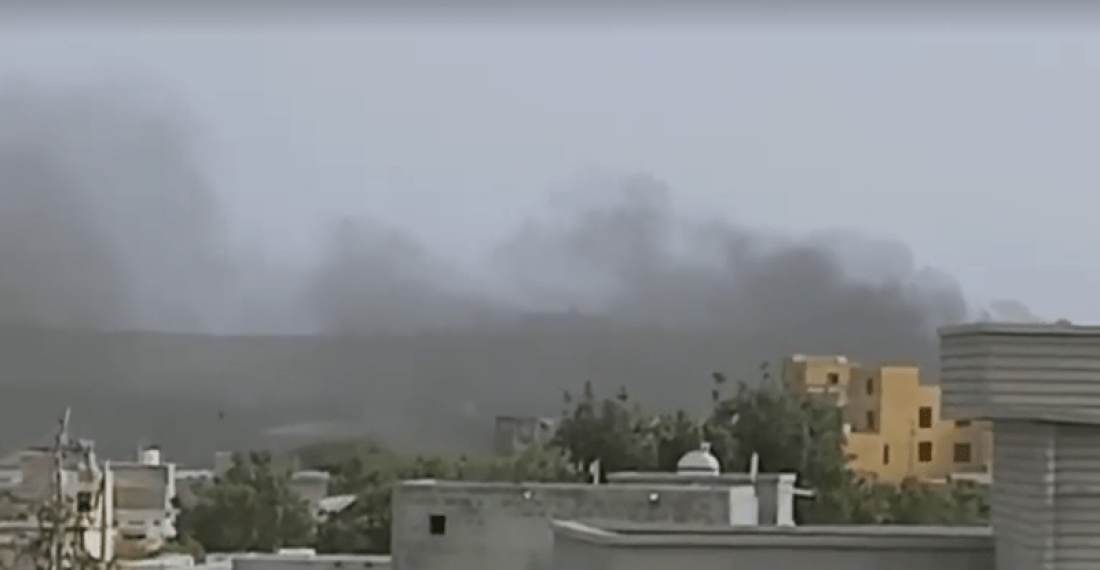
photo: Smoke comes up from the building of the Port Authority in Gwadar, Pakistan after an attack on Wednesday 20 March 2024)

Related articles

Editor's choice
News
Borrell tells the European Parliament that the situation in Afghanistan was critical, but the EU will remain engaged

Borrell tells the European Parliament that the situation in Afghanistan was critical, but the EU will remain engaged

Borrell underlined that the European Union will make every effort to support the peace process and to remain a committed partner to the Afghan people. "Of course, we will have to take into account the evolving situation, but disengagement is not an option.  We are clear on that: there is no alternative to a negotiated political settlement, through inclusive peace talks.
Editor's choice
News
Thai-Cambodia border clashes enter fourth day

Thai-Cambodia border clashes enter fourth day

Renewed fighting between Thailand and Cambodia has entered its fourth day, with both sides accusing one another of violating international law, as they await a promised phone call from United States President Donald Trump. Cambodia’s Ministry of Defence accused Thailand’s military of carrying out numerous attacks within the country in the early hours of Thursday morning, including deploying tanks and artillery to strike targets in the country’s Pursat, Banteay Meanchey, and Oddar Meanchey provinces. In one such attack, Cambodia accused Thai soldiers of violating international humanitarian law by firing on civilians in Prey Chan village in Banteay Meanchey province. In another, it accused Thai forces of shelling “into Khnar Temple area”, and said Thai forces had also “fired artillery and support fire into the O’Smach area”. “Cambodia urges that Thailand immediately stop all hostile activities and withdraw its forces from Cambodia’s territorial integrity, and avoid acts of aggression that threaten peace and stability in the region,” the Defence Ministry said. Clashes took place on Wednesday at more than a dozen locations along the contested colonial-era demarcated 817-kilometre (508-mile) Thai-Cambodian border, with some of the most intense fighting being reported since a five-day battle in July, which saw dozens killed on both sides. Cambodia’s Ministry of the Interior said homes, schools, roads, Buddhist pagodas and ancient temples had been damaged by “Thailand’s intensified shelling and F-16 air strikes targeting villages and civilian population centres up to 30km [18.6 miles] inside Cambodian territory”. (click the image to read the full story).

Popular

Editor's choice
News
Thai-Cambodia border clashes enter fourth day

Thai-Cambodia border clashes enter fourth day

Renewed fighting between Thailand and Cambodia has entered its fourth day, with both sides accusing one another of violating international law, as they await a promised phone call from United States President Donald Trump. Cambodia’s Ministry of Defence accused Thailand’s military of carrying out numerous attacks within the country in the early hours of Thursday morning, including deploying tanks and artillery to strike targets in the country’s Pursat, Banteay Meanchey, and Oddar Meanchey provinces. In one such attack, Cambodia accused Thai soldiers of violating international humanitarian law by firing on civilians in Prey Chan village in Banteay Meanchey province. In another, it accused Thai forces of shelling “into Khnar Temple area”, and said Thai forces had also “fired artillery and support fire into the O’Smach area”. “Cambodia urges that Thailand immediately stop all hostile activities and withdraw its forces from Cambodia’s territorial integrity, and avoid acts of aggression that threaten peace and stability in the region,” the Defence Ministry said. Clashes took place on Wednesday at more than a dozen locations along the contested colonial-era demarcated 817-kilometre (508-mile) Thai-Cambodian border, with some of the most intense fighting being reported since a five-day battle in July, which saw dozens killed on both sides. Cambodia’s Ministry of the Interior said homes, schools, roads, Buddhist pagodas and ancient temples had been damaged by “Thailand’s intensified shelling and F-16 air strikes targeting villages and civilian population centres up to 30km [18.6 miles] inside Cambodian territory”. (click the image to read the full story).

