Azerbaijan says it is committed to develop relations with the EU based on mutually agreed priorities

Azerbaijan has reiterated its committment to develop relations with the European Union.

Foreign Minister Elmar Mammadyarov highlighted the importance of the upcoming EU Eastern Partnership summit in Brussels in November, saying that it was "an important event" and and "that negotiations on the text of the Summit Declaration should be started at the earliest convenience".

"We expect the upcoming Brussels Summit Declaration to capture a united and coherent approach to the settlement of conflicts, as well as reflecting on the negative impacts of existing conflicts for full-scale implementation of the Eastern Partnership objectives", Mammadiarov said.

The Azerbaijani Foreign Minister was speaking at a Ministerial dialogue meeting of the Visegrad Four (V4) countries and Eastern Partnership countries in Budapest on Thursday (31 August). 

The Minister added,

"Azerbaijan has been a reliable EU partner, and the growing number of strategic partners among the EU member states and V4 Group inspires us to advance dialogue with the EU under the same conditions. We are interested in progressing our bilateral track through speedy negotiations on a new strategic agreement with the EU. Since official launch of the negotiations back in February we have engaged in a productive and constructive dialogue within different blocks of the agreement.

Azerbaijan is also interested in building its relations with EU based on mutually agreed priorities. Priority-driven cooperation tailored to the economic potential and specific goals of each country would be more efficient in realization of the principles of differentiation, flexibility, focus and greater ownership. The EU-Azerbaijan Partnership Priorities will translate these goals into concrete areas of cooperation."

source: commonspace.eu with the press service of the Ministry of Foreign Affairs pf Azerbaijan.

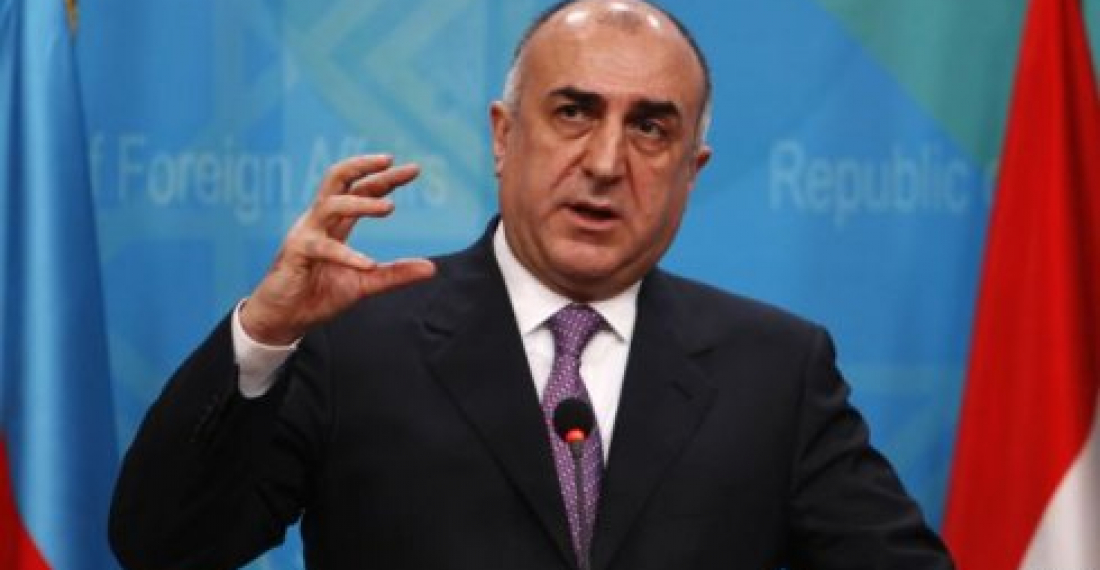
photo: Azerbaijani Foreign Minister Elmar Mammadyarov (archive picture).
Related articles

Editor's choice
News
The great American love-in in the South Caucasus has ended

The great American love-in in the South Caucasus has ended

US Vice President J.D, Vance has ended his whirlwind visit to the South Caucasus having been in Armenia on Monday (9th February), and Azerbaijan on Tuesday (10th February). It was a big success. Vance was on his best behavior, and went out of his way to be nice and complimentary to his hosts. In Yerevan, the Vice President and Armenia’s Prime Minister Nikol Pashinyan signed a joint statement on the completion of negotiations on a 123 Agreement, which establishes a legally binding framework for peaceful nuclear cooperation between the U.S. and partner countries. While in Azerbaijan, Vance and Azerbaijani President Ilham Aliyev signed a Strategic Partnership Charter between the U.S. and Azerbaijan that covers regional connectivity, economic investment, and security and defense issues.  The guests were happy, and the hosts were delighted. Now it is time to put what was agreed in practice. That will be more challenging.

Popular

Editor's choice
Interview
Thursday Interview: Murad Muradov

Thursday Interview: Murad Muradov

Today, commonspace.eu starts a new regular weekly series. THURSDAY INTERVIEW, conducted by Lauri Nikulainen, will host  persons who are thinkers, opinion shapers, and implementors in their countries and spheres. We start the series with an interview with Murad Muradov, a leading person in Azerbaijan's think tank community. He is also the first co-chair of the Action Committee for a new Armenian-Azerbaijani Dialogue. Last September he made history by being the first Azerbaijani civil society activist to visit Armenia after the 44 day war, and the start of the peace process. Speaking about this visit Murad Muradov said: "My experience was largely positive. My negative expectations luckily didn’t play out. The discussions were respectful, the panel format bringing together experts from Armenia, Azerbaijan, and Turkey was particularly valuable during the NATO Rose-Roth Seminar in Yerevan, and media coverage, while varied in tone, remained largely constructive. Some media outlets though attempted to represent me as more of a government mouthpiece than an independent expert, which was totally misleading.  Overall, I see these initiatives as important steps in rebuilding trust and normalising professional engagement. The fact that soon a larger Azerbaijani civil society visits to Armenia followed, reinforces the sense that this process is moving in the right direction." (click the image to read the interview in full)