Kazakhstan and Türkiye seal friendship and co-operation during Tokayev's visit to Ankara

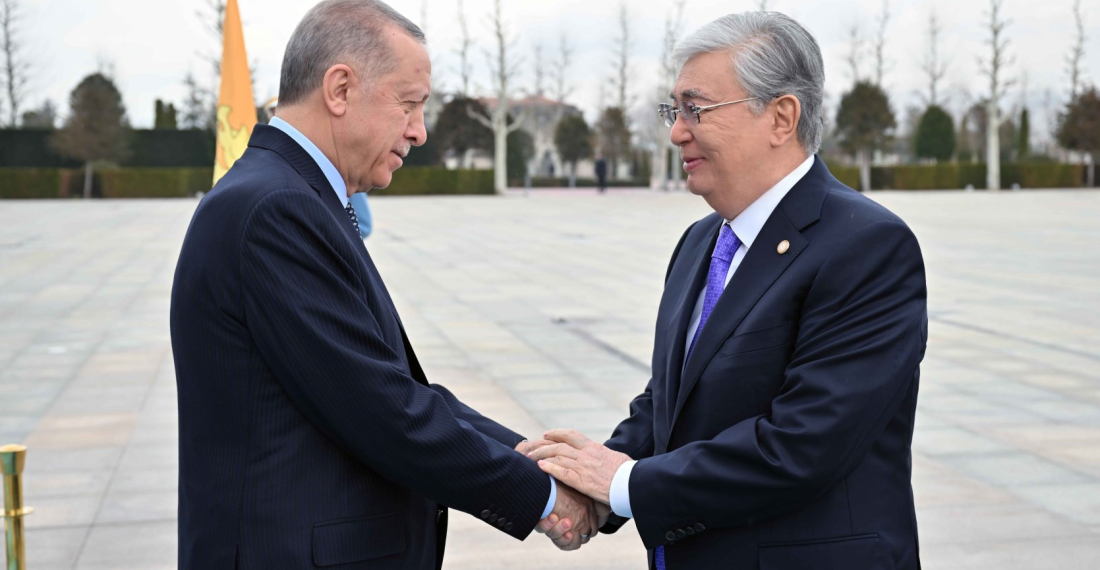
When Kazakh president Kassym-Jomart Tokayev flew into the Esenboğa international airport in Ankara, he was greeted there by President of Türkiye Recep Tayyip Erdoğan, a move full of symbolism, but also a rare one. The smiles and the long handshake that proceeded further and were captured nicely in photos speak a lot about the nature of relations between Kazakhstan and Türkiye wrote Astana Times. President Erdoğan greeted President Tokayev with the words “Welcome to your second home.”

During the visit Tokayev and Erdoğan co-chaired the 5th meeting of the High-Level Strategic Cooperation Council of the two countries. The visit resulted in the signing of 18 intergovernmental agreements covering energy, transport, mining, agriculture, defence, education, and digital cooperation.

During the visit, the leaders agreed on measures to expand Kazakh oil exports via the Baku–Tbilisi–Ceyhan (BTC) pipeline. Approximately 1.4 million tonnes are already transported annually, and both sides aim to increase this volume with the support of the Turkish Petroleum company in Kazakhstan. Both leaders also committed to strengthening cooperation in the development of rare earth and strategic minerals, critical for green technology and high-tech manufacturing.

In addition, collaboration extends to the Middle Corridor, the Trans-Caspian International Transport Route, connecting Europe and Asia. Kazakhstan handles nearly 85% of the overland transportation of goods between China and Europe, while Türkiye’s ports provide Mediterranean and European access. Combined infrastructure upgrades aim to streamline logistics and reduce transit times for regional trade.

Educational and technological cooperation was also highlighted. Both countries plan to launch Maarif Foundation schools and university branches across Kazakhstan. Joint tech initiatives include partnerships in information technology and logistics services, further integrating digital systems in both markets

Bilateral trade currently stands at $5 billion. Tokayev and Erdoğan aim to raise this figure to $15 billion, while Turkish investments in Kazakhstan now total around $5 billion and Kazakh investments in Türkiye exceed $1.5 billion. Some 4,000 Turkish companies operate in Kazakhstan, supporting sectors from construction to agriculture and healthcare.

Source: commonspace.eu with Astana Times, The Times of Central Asia and other agencies.

Photo: Turkish President Erdogan greeting Kazakh President Tokayev at Ankara airport
 

Related articles

Editor's choice
News
Situation in South Yemen strains relations between Saudi Arabia and UAE

Situation in South Yemen strains relations between Saudi Arabia and UAE

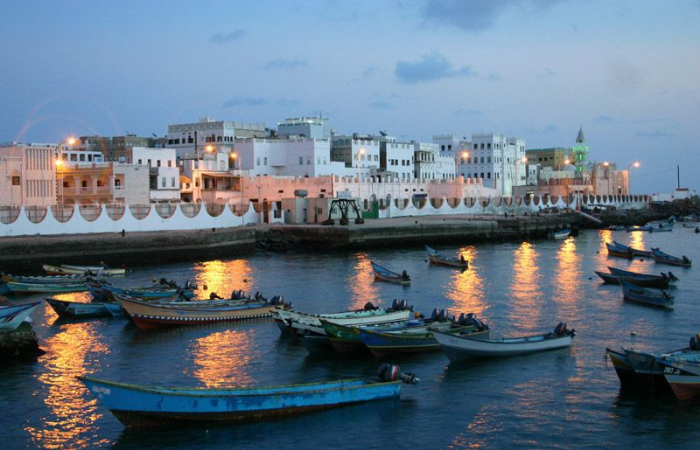
The relations between Saudi Arabia and the United Arab Emirates (UAE) are increasingly strained as a result of the different approach of the two countries towards Yemen. Whilst both countries were initially together in resisting the Houthi take over in Yemen, the UAE subsequently focused on the South of the country, backing the Southern Movement (STC), which seeks to restore the independence of South Yemen. South Yemen became an independent country in 1967, at the end of British rule, and only unified with the north in 1990. The Saudi-led “Coalition to Support Legitimacy in Yemen” on Tuesday, 30 December, said it conducted a “limited” airstrike targeting two ships “that smuggled weapons and other military hardware into Mukalla in southern Yemen”. The ships originated in the UAE port of Furjeirah. In a statement carried by the Saudi Press Agency (SPA), the Coalition Forces spokesman, Major General Turki Al-Maliki, said that two ships coming from the port of Fujairah in the United Arab Emirates entered the Port of Mukalla in Hadramaut without obtaining official permits from the Joint Forces Command of the Coalition. He stressed the Coalition's "continued commitment to de-escalation and enforcing calm in the governorates of Hadramawt and Al-Mahra, and to prevent any military support from any country to any Yemeni faction without coordination with the legitimate Yemeni government and the Coalition. The Southern Transitional Council (STC), launched a sweeping military campaign early in December, seizing the governorates of Hadramaut along the Saudi border and the eastern governorate of Al-Mahra in Yemen’s border with Oman. The UAE-backed STC forces captured the city of Seiyun, including its international airport and the presidential palace. They also took control of the strategic PetroMasila oilfields, which account for a massive portion of Yemen’s remaining oil wealth. (click the image to read the article in full).

Popular

Editor's choice
News
Situation in South Yemen strains relations between Saudi Arabia and UAE

Situation in South Yemen strains relations between Saudi Arabia and UAE

The relations between Saudi Arabia and the United Arab Emirates (UAE) are increasingly strained as a result of the different approach of the two countries towards Yemen. Whilst both countries were initially together in resisting the Houthi take over in Yemen, the UAE subsequently focused on the South of the country, backing the Southern Movement (STC), which seeks to restore the independence of South Yemen. South Yemen became an independent country in 1967, at the end of British rule, and only unified with the north in 1990. The Saudi-led “Coalition to Support Legitimacy in Yemen” on Tuesday, 30 December, said it conducted a “limited” airstrike targeting two ships “that smuggled weapons and other military hardware into Mukalla in southern Yemen”. The ships originated in the UAE port of Furjeirah. In a statement carried by the Saudi Press Agency (SPA), the Coalition Forces spokesman, Major General Turki Al-Maliki, said that two ships coming from the port of Fujairah in the United Arab Emirates entered the Port of Mukalla in Hadramaut without obtaining official permits from the Joint Forces Command of the Coalition. He stressed the Coalition's "continued commitment to de-escalation and enforcing calm in the governorates of Hadramawt and Al-Mahra, and to prevent any military support from any country to any Yemeni faction without coordination with the legitimate Yemeni government and the Coalition. The Southern Transitional Council (STC), launched a sweeping military campaign early in December, seizing the governorates of Hadramaut along the Saudi border and the eastern governorate of Al-Mahra in Yemen’s border with Oman. The UAE-backed STC forces captured the city of Seiyun, including its international airport and the presidential palace. They also took control of the strategic PetroMasila oilfields, which account for a massive portion of Yemen’s remaining oil wealth. (click the image to read the article in full).