ARAZ AZIMOV: "Azerbaijan is not interested in any crisis".

The key aim of the conflict resolution is to normalize ties between Azerbaijan and Armenia based on principles of international law.

The statement came from Deputy Foreign Minister of Azerbaijan Araz Azimov in his interview with Ukraine-based Den newspaper.

This implies unconditional recognition of territorial integrity of Azerbaijan, 20% lands of which is currently occupied, Azimov said.

Azerbaijan is ready to continue its political efforts to resolve the conflict, the deputy minister noted.

'This prompts a question about lack of outcome in negotiating process which was conducted and still is still being conducted within the Minsk Group involving intensified efforts by Russian President Dmitry Medvedev. Unfortunately, no results were achieved in Kazan and there seems to be a pause following this. Nevertheless, Sochi hosted a meeting of Presidents Ilham Aliyev and Dmitry Medvedev this August, and we hope that Russia will correct its actions based on this meeting and try to intensify the process along with two other co-chairs of the Minsk Group,' he added.

'Armenian side seeks to provoke a crisis in negotiations on purpose. We hear more and more statements of offensive nature by the Armenian President which seem to be speculative. This refers to his recent statement in New York about the need to recognize independence of Nagorno-Karabakh.

We also see intensified efforts by Armenia to procure weapons of offensive nature (I am talking about the scandal over purchase of weapons from Moldova through front companies from the Baltic region; commander of the national army, Chief of Staff of Moldova, Brigadier-General Yuri Dominik was dismissed as a result). I think that they deliberately try to provoke a crisis, hoping for an early involvement of Russian peacekeepers, as it happened in a neighboring country (Georgia) in August 2008. Such a crisis, it is easy to predict, can lead to extremely negative consequences,' he said.

Azerbaijan is not interested in any crisis, the deputy foreign minister said.

"We are interested in quiet, normal arrangements that would ensure integrity and inviolability of our territory, return of population to occupied areas, restoration of communications and cooperation with our neighbors with the settlement of political problems in the next step," he continued.

Asked whether Azerbaijan considers it important to change the format of negotiations and look for other platforms to find a solution to the conflict, Azimov noted that OSCE Minsk Group which acts based on the Helsinki Act of 1975 deals with resolution of the Nagorno-Karabakh conflict.

"The US, France and Russia are members of the Minsk Group, and they have been tasked with powers of co-chairs. On the other hand, these countries are permanent members of UN Security Council. If not the Minsk Group, then Security Council – I do not see much difference.

The Minsk Group is the recognized forum for the negotiating process on Nagorno-Karabakh conflict. Security Council resolutions adopted in 1993 were aimed at liberation of occupied territories, return of refugees and a number of other measures. Therefore, we believe that problems should be discussed and resolved within the framework of the Minsk Group. In this context, Azerbaijan stands for implementation of these resolutions, but they must be accepted in their entirety.

Naturally, we are not going to change the format of the Minsk Group. It provides flexibility, in which the existing status of participant states makes participation of representatives of the Nagorno-Karabakh region, both Armenians and Azerbaijanis, possible. This has not been taken into account in the format of the Minsk Group.

There are speculations in Yerevan that we allegedly avoid contacts with Armenians of Karabakh. We do not avoid such contacts, but this will happen only when the negotiating process will cover issues directly related to the Armenians and the Azerbaijanis of Nagorno-Karabakh. Then this format will be ensured within the Minsk Group.”

Ukraine is a friend and partner of Azerbaijan, Azimov noted.

"We have been working as close strategic partners, as two independent states in the last 20 years. We are also members of the regional organization GUAM. Ukraine is a member of the OSCE like Azerbaijan. That is why Ukraine has every reason to be interested in speedy settlement of this problem from all standpoints based on interests of partnership and cooperation. We know that Ukraine supports resolution of the conflict based on territorial integrity of Azerbaijan. Ukraine has given guarantees to our country that it is ready to participate in peacekeeping operation among OSCE multinational force if such an operation is conducted.

“Moreover, Ukraine has every reason to be interested in resolving this conflict and clearer prospects for a settlement of other conflicts in Europe. Ukraine will chair the OSCE in a short time. Here I would like to wish every success to Ukraine, although there are some difficulties. My long experience (almost 20 years) of fairly close cooperation with the previous OSCE chairs, which take up the post for one-year term and do not always have time to deal with the problems of the organization closely, is not always positive.”

“On the other hand, much depends on Ukraine, a country that has enough political resources in the context of formulating the position of the organization. We look forward to a positive contribution of Ukraine to settlement of Nagorno-Karabakh conflict. It has all the possibilities for this," said Azimov.

source news.az/1news.az

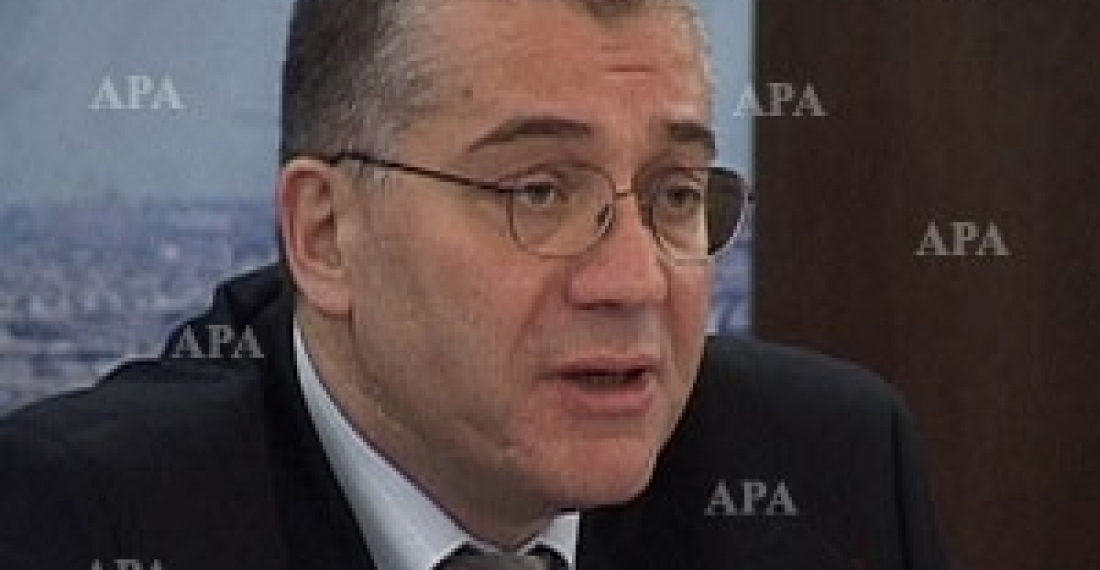
photo: Azerbaijan Deputy Foreign Minister Araz Azimov (picture courtesy of APA)
Related articles

Editor's choice
News
UAE says it will withdraw from Yemen, but division emerges in Yemeni presidential council

UAE says it will withdraw from Yemen, but division emerges in Yemeni presidential council

In a move seen as an attempt to de-escalate a crises with Saudi Arabia, the United Arab Emirates, on Tuesday (30th December) announced that it was heeding a call to withdraw its troops from Southern Yemen. UAE says that its presence included counter-terrorism teams that were crucial in fighting against Islamist groups. UAE sources said that parts of Yemen not controlled by the Houthis have had Al Qaeda in the Arab Peninsula (AQAP) operatives using the territory to launch attacks on Europe, the US and Middle East. UAE teams have co-ordinated with American and British special forces and intelligence. The sources added that Emirati forces and their Yemeni allies also helped reverse Houthi gains in the south. including the liberation of Aden port. The small UAE contingent has remained in place since the UAE withdrew most of its military personnel in 2019. The leading English-language newspaper in Abu Dhabi, The National, said that the main UAE force was based at Riyan Mukalla International Airport, with access to fixed-wing aircraft and helicopters, but also operated smaller contingents in the port town Balhaf and Shabwa. "It is understood it also flew a number of drones from the airbase that were able to track terrorist movements, pass information back to its allies and assisted special forces' missions." Meanwhile a division has emerged in Yemen's presidential council after four members denounced what they called the 'unilateral decisions' by the chairman. Four of Yemen’s eight Presidential Leadership Council members on Tuesday denounced an announcement by the council’s chairman accusing him of breaching the governing agreement. Tension between Yemeni leaders has been rising for weeks, underscoring the fragility of the country's already fractured political landscape and further complicating efforts to confront the Iran-backed Houthi rebels. The latest rift took an unprecedented turn on Tuesday morning, marked by a Saudi-led coalition “limited operation” striking combat vehicles Riyadh linked to the Southern Transitional Council, which has three members in the PLC. The PLC Chairman, Rashad al Alimi, on Tuesday said that he was seeking to cancel the joint defence agreement with the UAE. “What has been issued … constitutes a clear violation of the Declaration of the Transfer of Power [agreement], which explicitly stipulates that the Presidential Leadership Council is a collective body whose decisions are taken by consensus, or by majority when consensus is not possible,” the statement by the four members said. “It does not, under any circumstances, allow for unilateral decision-making on sovereign, military, or major political matters." The statement was signed by STC chief Aidarous Al Zubaidi, Faraj Al Bahsani, Tariq Saleh and Abu Zaraa al Muharrami. (click the picture to read the full article).

Popular

Editor's choice
News
UAE says it will withdraw from Yemen, but division emerges in Yemeni presidential council

UAE says it will withdraw from Yemen, but division emerges in Yemeni presidential council

In a move seen as an attempt to de-escalate a crises with Saudi Arabia, the United Arab Emirates, on Tuesday (30th December) announced that it was heeding a call to withdraw its troops from Southern Yemen. UAE says that its presence included counter-terrorism teams that were crucial in fighting against Islamist groups. UAE sources said that parts of Yemen not controlled by the Houthis have had Al Qaeda in the Arab Peninsula (AQAP) operatives using the territory to launch attacks on Europe, the US and Middle East. UAE teams have co-ordinated with American and British special forces and intelligence. The sources added that Emirati forces and their Yemeni allies also helped reverse Houthi gains in the south. including the liberation of Aden port. The small UAE contingent has remained in place since the UAE withdrew most of its military personnel in 2019. The leading English-language newspaper in Abu Dhabi, The National, said that the main UAE force was based at Riyan Mukalla International Airport, with access to fixed-wing aircraft and helicopters, but also operated smaller contingents in the port town Balhaf and Shabwa. "It is understood it also flew a number of drones from the airbase that were able to track terrorist movements, pass information back to its allies and assisted special forces' missions." Meanwhile a division has emerged in Yemen's presidential council after four members denounced what they called the 'unilateral decisions' by the chairman. Four of Yemen’s eight Presidential Leadership Council members on Tuesday denounced an announcement by the council’s chairman accusing him of breaching the governing agreement. Tension between Yemeni leaders has been rising for weeks, underscoring the fragility of the country's already fractured political landscape and further complicating efforts to confront the Iran-backed Houthi rebels. The latest rift took an unprecedented turn on Tuesday morning, marked by a Saudi-led coalition “limited operation” striking combat vehicles Riyadh linked to the Southern Transitional Council, which has three members in the PLC. The PLC Chairman, Rashad al Alimi, on Tuesday said that he was seeking to cancel the joint defence agreement with the UAE. “What has been issued … constitutes a clear violation of the Declaration of the Transfer of Power [agreement], which explicitly stipulates that the Presidential Leadership Council is a collective body whose decisions are taken by consensus, or by majority when consensus is not possible,” the statement by the four members said. “It does not, under any circumstances, allow for unilateral decision-making on sovereign, military, or major political matters." The statement was signed by STC chief Aidarous Al Zubaidi, Faraj Al Bahsani, Tariq Saleh and Abu Zaraa al Muharrami. (click the picture to read the full article).