


15 civilians killed in an attack on a baptism in Burkina Faso; prime minister declares “fight against terrorism cannot be exclusively military”

15 civilians were killed and one was injured on Tuesday (18 May) during a terrorist attack in a village situated in the extreme North of Burkina-Faso, security forces have announced. 

The attack occurred in Adjarara, a village located 7 kilometres away from Tin-Akoff in the North-Eastern province of Oudalan, taking the lives of 15 men, Colonel-Major Salfo Kaboré, the governor of the Sahel region, wrote in a statement on Wednesday. The victims were attending a baptism, when armed individuals burst into the village before opening fire. It is unclear who carried out the attack, however, Islamist groups are in control of large swathes of the area. 

The commune of Tin-Akoff has been shaken these past few weeks by terrorist attacks, despite the dismantling of the terrorist base in the locality. On 8 May 2021, three civilians died, and several suffered injuries when insurgents swept through Menzouri, a village located 5 kilometers from Tin-Akoff.

Burkina Faso has faced increasingly frequent and deadly attacks since 2015, both against civilians and military forces. On 11 November 2020, 14 Burkinabè soldiers from a convoy from the Tin-Akoff military detachment were killed in a terrorist ambush and eight were injured, 11 days from the legislative and presidential elections.

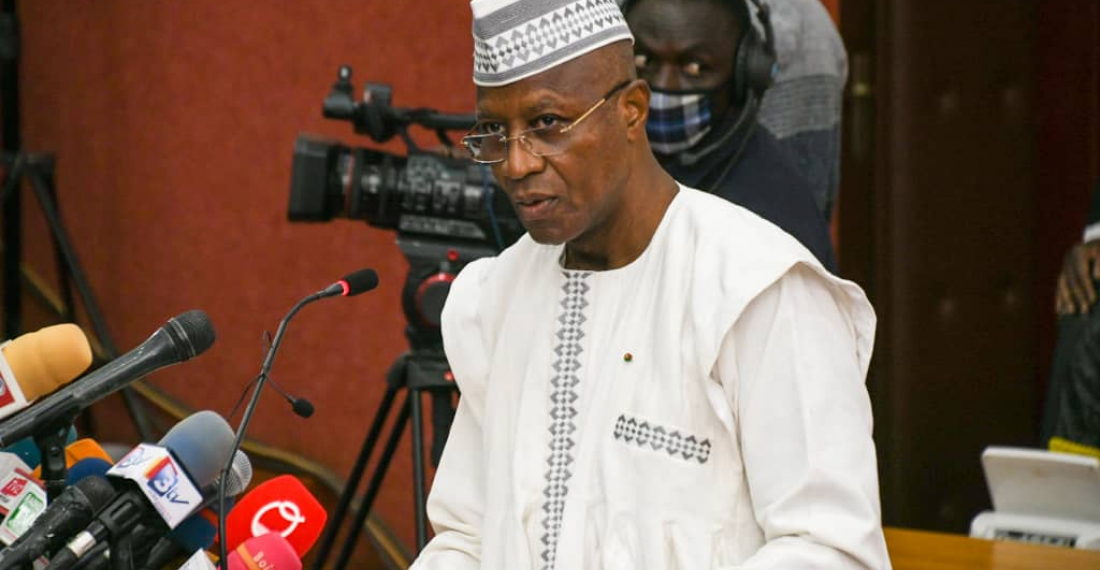
During his 2021 speech on the State of the Nation yesterday (20 May), the prime minister of Burkina Faso, Christophe Dabiré, called on his country to “bring the Burkinabè combatants back home” – referring to those that had been influenced to join armed terrorist groups. To do this, the prime minister declared that he was counting on “the patriotic action of opinion leaders, religious, customary figures and other competent people from their communities of origin”. Through this statement, the executive highlighted the crucial role that the Burkinabè population play in countering terrorism, as Mr. Dabiré declared yesterday, “the fight against terrorism cannot be exclusively military”.

Additionally, the prime minister invited all Burkinabè citizens to “mobilise to fight against radicalisation and violent extremism, to fight stigmatisation and to ban identity withdrawal which are sources of deadly conflicts”. By addressing the origins of radicalisation and political violence in the country, Mr. Dabiré highlighted the importance of social cohesion in the state, which the government has tried to improve since 2017 with the 'Programme d’urgence pour le Sahel élargi' (an emergency program for the extended Sahel) and the 'Programme de développement des économies locales (PADEL)' (a local economy development program).

Financed at more than 63 billion FCFA (95,8 million euros) since 2017, the PADEL has enabled building economic infrastructures, supporting promoters of informal production units and providing financial support for the inclusion of vulnerable people in regions facing security challenges.
 

Source: commonspace.eu with France 24 (Paris) and RTI (Côte d'Ivoire) and agencies
Photo: The prime minister of Burkina Faso, Christophe Dabiré, delivers his State of the Nation 2021 speech; Service d'Information du Gouvernement du Burkina Faso

Related articles

Editor's choice
News
Council of Europe launches new International Claims Commission for Ukraine

Council of Europe launches new International Claims Commission for Ukraine

Thirty-four countries and the European Union have signed a new convention establishing an International Claims Commission for Ukraine at a diplomatic conference co-hosted by the 46-nation Council of Europe and the Netherlands in the Hague. The diplomatic conference was attended by leaders and high-level representatives from over 50 states, including the President of Ukraine, Volodymyr Zelenskyy, the President of the Republic of Moldova, Maia Sandu, and the Prime Minister of the Netherlands, Dick Schoof.  “Today marks a major step forward in ensuring accountability for Ukraine. The International Claims Commission represents justice and hope for tens of thousands of victims—our determination that those who have suffered will not be forgotten. I call for quick ratifications so we can get the commission rapidly up and running for the people of Ukraine,” said Council of Europe Secretary General Alain Berset. Ukrainian President Volodymyr Zelenskyy said: “We expect that every mechanism for compensation from the Register of Damage and Claims Commission to the actual payments – will start working and receive strong and sufficient international support, so that people can truly feel that any kind of damage caused by the war can be compensated. This war, and Russia’s responsibility for it, MUST become a clear example – so that others learn not to choose aggression.” “Accountability is about creating the conditions for peace that endures. And therefore, accountability is a condition of security – today and for the future. But accountability is not only about Ukraine. And it is not only about one aggressor and one victim. Accountability is about Europe. About every country in Europe. It is about whether Europe, as a whole, is willing to defend its peace,” said Maia Sandu, President of the Republic of Moldova, which currently holds the Presidency of the Council of Europe’s Committee of Ministers. The Prime Minister of the Netherlands, Dick Schoof, said: “Every day Russia is deliberately bombarding homes, destroying businesses and damaging infrastructure in Ukraine. Russia must compensate Ukraine for the damage caused. That is why we have launched the International Claims Commission for Ukraine and we are honoured to host it.” The International Claims Commission will be the second part of a comprehensive compensation mechanism related to Russia’s war of aggression, building on the existing Register of Damage for Ukraine. The claims commission will be established within the framework of the Council of Europe and will also be open to other countries. The Register of Damage for Ukraine, created in 2023, collects and records compensation claims submitted by individuals, organisations and public bodies in Ukraine. Forty-four states and the European Union have so far joined the Register, which has already received 86,000 claims. The International Claims Commission will review, assess and decide upon claims submitted to the Register of Damage for Ukraine and determine the amount of compensation, if any, which is due in each case. The convention establishing the commission will enter into force once it has been ratified by 25 signatories, as long as sufficient funds have been secured to support its initial work.

Popular

