The Catholic Church has a new leader. Robert Prevost was not discussed by the media before being announced as the new Pope on Friday. He will follow the Church’s mantra, which has served it well over two thousand years, to be as flexible as necessary and as rigid as possible Europe has fresh energy in the person of the new German chancellor, Friedrich Merz. Despite the wobbly start in the German Parliament, Merz in the four days after his swearing-in met key European leaders, and laid the basis for his Chancellorship. Meanwhile, Donald Trump's statements continue to hanker for the past. His call for the re-opening of the prison on Alcatraz is a case in point. Trump marks the end of the “American era”. The US will remain a rich and powerful country, but its global role will be much diminished.
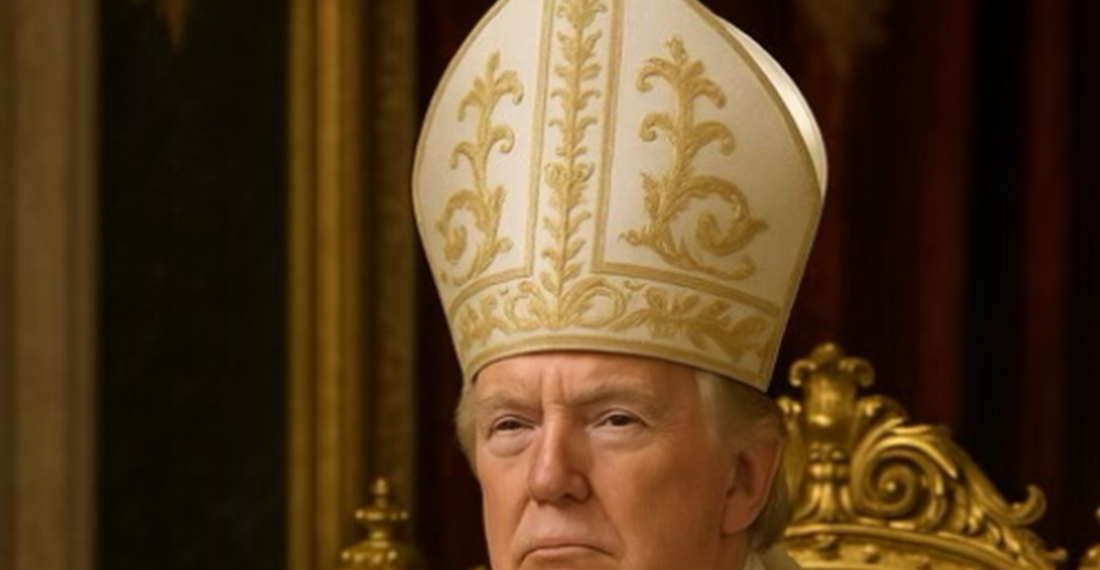
We have a new Pope, Cardinal Robert Prevost
A week of speculation after the death of Pope Francis saw a media frenzy around the names of those considered “papabile”. In the programmes I listened to, or the articles I read, the name of Robert Prevost did not feature amongst those with a chance of becoming Pope. In the one hour between the white smoke coming out of the Sistine Chapel, a sign that a new Pope had been chosen, and the name of the new Pope being announced, the BBC interviewed one Vatican expert who speculated, that given the relatively short time taken to choose a new Pope, he was probably a Vatican insider. In the end, the media had to eat humble pie, and admit that it had gotten it all wrong, and scramble to find out who Robert Prevost was.
I will not repeat the same mistake, and will not speculate whether he will continue, perhaps accelerate, the reforms initiated by Pope Francis, or whether he will prefer to consolidate around the established teachings of the Roman church.
The Roman Catholic Church is a large institution, deeply embedded in tradition, and parts of it are very corrupt. It has survived for two thousand years by being as flexible as necessary and as rigid as possible. Cardinal Robert Prevost will follow this mantra. How the world will remember Pope Leo will depend on how he and his retinue will decide on presenting themselves.
The new Pope knows the world. He was born and raised in Chicago, but lived for a long time in Peru, where he saw poverty first hand. Apart from English he also speaks fluently Spanish and Italian. One suspects he will quickly become very popular amongst the 1.4 billion Catholics and beyond. But he will have to manage the labyrinth and intrigue of the Vatican, and that is no mean task.
During the 1946 Potsdam Conference Stalin reportedly interrupted Churchill who was speaking about Poland, and the need not to displease the Pope, asking “How many divisions does the Pope have?”
Pope Leo will soon learn that whilst he does not have army divisions at his behest, his word carries moral authority. Thus, he will shape global opinion and thinking on multiple issues. One suspects that the new Pope has the skills to do this efficiently and effectively.
Despite a wobbly start, Chancellor Friedrich Merz, brings a fresh energy to Europe
The other person who came on the world stage in the last week is Friedrich Merz, who on Tuesday became the Chancellor of Germany. Untypical of Germany, the process in the German Parliament was messy. Merz could not be elected in the first round of voting in a secret ballot, and there was a lot of finger-pointing. Some blamed the JUSOS, the youth wing of the coalition social democratic partner, the SPD. Others however said that it was disgruntled members of Merz’s own party (CDU/CSU) who were left out of cabinet posts and other government appointments, who derailed the plans. However, a second vote was hastily called for later in the day, and Merz duly received the votes necessary, and was sworn in minutes later by the German President. CDU General Secretary Carsten Linnemann said it was important to press ahead. "Europe needs a strong Germany, that's why we can't wait for days," he told German TV.
As if to press the point that this was an election for Europe, as much as for Germany, the following day Merz visited Paris for meetings with French President, Emanuel Macron, and Warsaw for meetings with Polish Prime Minister, Donald Tusk. Poland also at the moment has the presidency of the EU. German leaders normally visit Paris early in their term, but Merz's decision to visit Poland on the same days adds a new twist to German diplomacy.
And before the week was out, Merz was in Brussels for a whirlwind six hours of meetings with European leaders, including with European Council President Antonio Costa, European Commission President Ursula von der Leyen, European Parliament President Roberta Metsola, and NATO Secretary-General Mark Rutte.
Antonio Costa summed the situation best, referring to the fresh energy Merz brought to Brussels. In Brussels, Merz, speaking mostly in German in his public utterings, highlighted four priorities: New trade deals; strengthening European defence, curbing irregular migration and managing and de-escalating the tariff conflict with the United States.
Conscious that Germany still carries on its shoulders the burden of history, Merz emphasised that his country wanted to be a reliable partner, including by doing more on defence. But he was also careful to point out the role of the US, saying that "America is indispensable for Europe’s security, now and for the long term". Chancellor Merz expressed hope that the upcoming NATO summit in The Hague in June would result in a "shared strategy" with Washington. From Brussels, Merz went to Kyiv, were together with Macron, Tusk and British Prime Minister Starmer he reiterated once more support for Ukraine, and for the leadership of President Zelensky.
On the whole, the first days of the Merz chancellorship were a good preview of what was to come. In the coming years, Merz and his Germany, will be at the forefront of European processes, and will be instrumental in the forging of the new world order.
Trump’s presidency marks the end of the “American era”
Donald Trump is not the beginning of something, but the end. The 20th century has often been called the American century. It ended with the US being the only superpower, and with the American order being supreme across the world. In the 21st century, China has risen, Russia broke loose from the world order, and many countries in the global south cheered. Trump put the final nail in the American coffin. But to be fair the process had started before. Many think that America could have done this more elegantly. Under Trump the process has been crude, and in many cases nasty. And he has only been in office for a little more than a hundred days. The decline is now irreversible. The US will remain a rich and powerful country, but its global role will be much diminished.
Trump himself is a symbol of the past. A US president who seriously thinks that re-opening the prison on Alcatraz is a good idea is not the future, but the faraway ugly past. An American leader, that alienates with his statements and actions the two closest neighbours, Canada and Mexico, raises question marks across the world. Most of the world, China apart, is being polite. But the US has already lost its moral authority.
This week Trump goes on his first trip abroad in his second term, apart from a quick trip to Rome to attend the funeral of Pope Francis. He will go to Saudi Arabia, Qatar and the United Arab Emirates. Of course, he will be greeted and feted. But the three countries have long ago decided not to put all their eggs in the American basket. They want to talk business with Trump, which is a language that he understands. But when it comes to regional and global issues: Iran, Gaza, and China to name a few, the differences are big, and they are likely to agree to disagree. Trump wants his “deal”, so he will acquiesce.
The Catholic Church has a new leader. Europe has fresh energy in the person of the new German chancellor. The United States has opted for Donald Trump whose statements hanker for the past. He symbolises the end of the American era.
Please click here to download this week's Monday Commentary.