Georgia's new political reality

This is a commentary by the political editor of commonspace.eu

The final results in last Saturday's parliamentary elections in Georgia have been announced by the Central Elections Commission, after all votes have been counted.  Georgian Dream has won 48.65%, United National Movement 27.13%, and Patriots Alliance has 5%. No other party has passed the threshold.

The result brings to Georgia a new political reality.

For the first time Georgian Dream will govern on its own, and not in coalition. This will give it more room for political manoeuvre, but it takes away the restraining aspects that coalitions inevitably bring about. The absence of the Republican Party, and particularly its leader Davit Usupashvili, the outgoing Chairman of Parliament, will be felt both in policy, as well as in the prestige of the parliament, to which he contributed much in the last four years

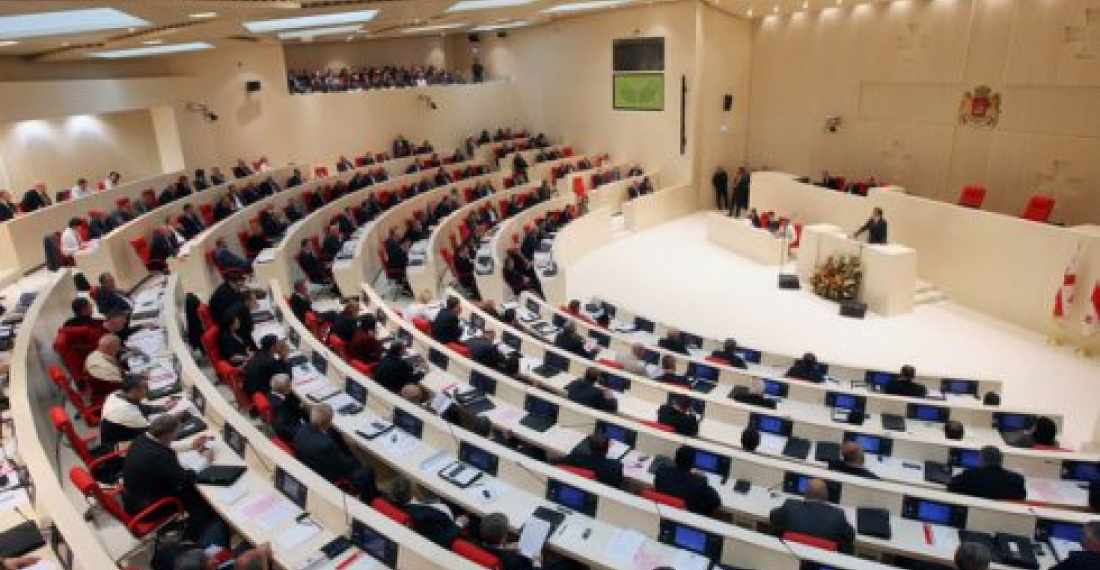
Only three parties have won enough votes to secure seats in parliament through the proportional list. As things stand now, Georgian Dream will get 44 out of the 77 seats under this system, United National Movement 27 and Patriots Alliance, 6.  They will be joined by the 73 MPs elected in the single mandate constituency elections. Many of these are yet to be chosen, since they need to go to a run off after failing to secure 50% of the votes cast in the first round. Georgian Dream is expected to win most of them.

One party that will no longer be in the Parliament is the pro-western Free Democrats, whose leader, Irakli Alasania said on Monday he was taking time off from politics after the party just missed the 5% threshold, securing only 4.6% of the vote.

The new party in parliament is the Patriotic Alliance, an unknown political quantity, but one whose rhetoric during the campaign has caused some concerns due to its xenophobic character. Their role will be larger than their numeric size suggests, since they will play a role between GD government and the main opposition force the UNM. Their presence in parliament is an opportunity for them to show their political responsibility.

The UNM remain undecided how to play their next political move. Their leader in exile, Mikheil Saakashvili has asked for a boycott of parliament. In the rest of the party this idea is not liked by everybody. Key party leaders have emphasised that they will pursue tough opposition to the government, but within the constitutional order. That needs to be an unambiguous commitment. There is no space in Georgia for parties in the twilight zone of democracy.

This has been a good election, despite the isolated incidents of violence that stopped it short of being called exemplary. This was well articulated in the statements of the Parliamentary Assemblies (OSCE, NATO, Council of Europe and European parliament), as well as credible local NGOs. Any attempt to throw open its legitimacy is unlikely to have much credence. Georgia needs a stable government and a strong and articulate opposition that is able to hold it to account. The country has big and important challenges ahead. Politicians need to regroup and re-adjust to new realities, but they must remember that their first duty is to their country and its people and not to their egos.

This is a commentary prepared by the political editor of ocmmonspace.eu.


Related articles

Editor's choice
News
Borrell tells the European Parliament that the situation in Afghanistan was critical, but the EU will remain engaged

Borrell tells the European Parliament that the situation in Afghanistan was critical, but the EU will remain engaged

Borrell underlined that the European Union will make every effort to support the peace process and to remain a committed partner to the Afghan people. "Of course, we will have to take into account the evolving situation, but disengagement is not an option.  We are clear on that: there is no alternative to a negotiated political settlement, through inclusive peace talks.
Editor's choice
News
Germany accuses Russia of cyberattacks and disinformation campaign

Germany accuses Russia of cyberattacks and disinformation campaign

The German government holds Russia responsible for a cyberattack on German air traffic control, and for targeted disinformation campaigns before the last federal election. According to the German Foreign Office in Berlin, the incidents could be clearly attributed to the Russian military intelligence service, the GRU. In response, the Russian ambassador to Berlin was summoned to the Foreign Ministry. "We have been observing a massive increase in threatening hybrid activities by Russia for some time now," a spokesperson for the Foreign Ministry stated. These range from disinformation campaigns and espionage to cyberattacks and sabotage attempts. The aim is to divide society, sow distrust, and undermine confidence in democratic institutions. The spokesperson added that with these actions, Russia is "very concretely threatening our security, not only through its war of aggression against Ukraine, but also here in Germany."  The Foreign Ministry spokesperson explained that the cyberattack on air traffic control in August 2024 was clearly attributed to the hacker collective "APT28," known as "Fancy Bear," and to the responsibility of the Russian military intelligence service, the GRU. Furthermore, it could now be "conclusively stated" that Russia had attempted "to influence and destabilize both the last Federal election and the ongoing internal affairs of the Federal Republic of Germany." There was "absolutely irrefutable evidence" for this". The so-called "Storm 1516" campaign, which has been running since 2024, is allegedly backed by "reliable information" that the Moscow-based think tank "Center for Geopolitical Expertise" is behind it. The Center is also said to be supported by Russian military intelligence. Its primary aim is to influence democratic elections in the West. (Click the image to read more).

Popular

Editor's choice
News
Germany accuses Russia of cyberattacks and disinformation campaign

Germany accuses Russia of cyberattacks and disinformation campaign

The German government holds Russia responsible for a cyberattack on German air traffic control, and for targeted disinformation campaigns before the last federal election. According to the German Foreign Office in Berlin, the incidents could be clearly attributed to the Russian military intelligence service, the GRU. In response, the Russian ambassador to Berlin was summoned to the Foreign Ministry. "We have been observing a massive increase in threatening hybrid activities by Russia for some time now," a spokesperson for the Foreign Ministry stated. These range from disinformation campaigns and espionage to cyberattacks and sabotage attempts. The aim is to divide society, sow distrust, and undermine confidence in democratic institutions. The spokesperson added that with these actions, Russia is "very concretely threatening our security, not only through its war of aggression against Ukraine, but also here in Germany."  The Foreign Ministry spokesperson explained that the cyberattack on air traffic control in August 2024 was clearly attributed to the hacker collective "APT28," known as "Fancy Bear," and to the responsibility of the Russian military intelligence service, the GRU. Furthermore, it could now be "conclusively stated" that Russia had attempted "to influence and destabilize both the last Federal election and the ongoing internal affairs of the Federal Republic of Germany." There was "absolutely irrefutable evidence" for this". The so-called "Storm 1516" campaign, which has been running since 2024, is allegedly backed by "reliable information" that the Moscow-based think tank "Center for Geopolitical Expertise" is behind it. The Center is also said to be supported by Russian military intelligence. Its primary aim is to influence democratic elections in the West. (Click the image to read more).