Georgian Parliament approves important legislation to strengthen the electoral process

The Georgian Parliament has adopted a number of important changes to legislation governing elections that are expected to strengthen the electoral process.The first bill which has now been approved in its third reading by the parliament, forbids the opening of special polling stations at the Ministry of Defense, the Ministry of Internal Affairs, the Ministry of Correctional Facilities, the State Security Service and the Intelligence Service.

This addresses a major concern about Georgian elections in past. Closed polling stations, especially in military establishments often resulted in coercion by senior officers on the way soldiers voted. There were often accusations that voting was not secret. The elimination of these polling stations is expected to be welcomed by international observers.

The changes to the electoral code also regulate the opening of special polling stations in exceptional circumstances in places such as penitentiary institutions, homes for the elderly and hospitals.

In further changes to the electoral code, the Parliament approved a proposal by the Committee for Legal Affairs that extended the possibility of free television advertising to a wider number of political parties than had been envisaged so far.

source: commonspace.eu

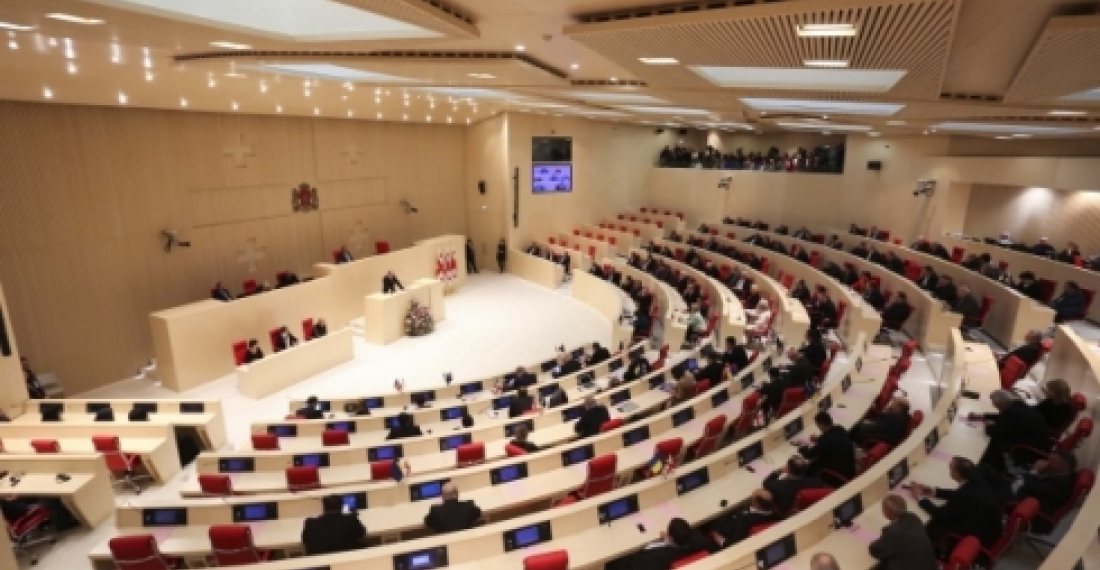
image: The Parliament of Georgia
 

Related articles

Popular

Editor's choice
Interview
Thursday Interview: Murad Muradov

Thursday Interview: Murad Muradov

Today, commonspace.eu starts a new regular weekly series. THURSDAY INTERVIEW, conducted by Lauri Nikulainen, will host  persons who are thinkers, opinion shapers, and implementors in their countries and spheres. We start the series with an interview with Murad Muradov, a leading person in Azerbaijan's think tank community. He is also the first co-chair of the Action Committee for a new Armenian-Azerbaijani Dialogue. Last September he made history by being the first Azerbaijani civil society activist to visit Armenia after the 44 day war, and the start of the peace process. Speaking about this visit Murad Muradov said: "My experience was largely positive. My negative expectations luckily didn’t play out. The discussions were respectful, the panel format bringing together experts from Armenia, Azerbaijan, and Turkey was particularly valuable during the NATO Rose-Roth Seminar in Yerevan, and media coverage, while varied in tone, remained largely constructive. Some media outlets though attempted to represent me as more of a government mouthpiece than an independent expert, which was totally misleading.  Overall, I see these initiatives as important steps in rebuilding trust and normalising professional engagement. The fact that soon a larger Azerbaijani civil society visits to Armenia followed, reinforces the sense that this process is moving in the right direction." (click the image to read the interview in full)