EU foreign policy chief, MEPs, discuss Karabakh

The status quo in Nagorno-Karabakh is “unsustainable,” Federica Mogherini told the European Parliament on Tuesday in the aftermath of fierce fighting between Armenia and Azerbaijan.

The European Union’s foreign policy chief addressed the disputed province in a speech to the parliament in Strasbourg, which was followed by a question and answer session with parliamentarians. 

Clashes last week, described by Mogherini as the worst fighting between Armenia and Azerbaijan since a 1994 ceasefire, killed dozens.

“We are increasing our efforts towards a settlement of the conflict. It has already inflicted much suffering,” said Mogherini, who said she has been in phone contact with the foreign ministers of the two countries this week. 

“[The conflict] continues to pose a threat to regional security in our neighbourhood, and it is an obstacle to the development of both countries and our region,” she said.

While Mogherini was careful in choosing her words, some parliamentarians took the opportunity in the question and answer session to apportion blame.

Heidi Hautala, a Finnish Green MEP, said “most of the conflict area belongs to Azerbaijan”, and said Armenia should give the “occupied territories”. She also called for UN peacekeepers to enter the region. 

Several other members of the European Parliament (MEPs) voiced their support for the Armenian cause, singling out Azerbaijan as responsible. These included Jaromír Štětina of the Czech Republic, Angel Dzhambazki of Bulgaria,Frank Engel of Luxembourg and Eleni Theocharous of Cyprus, who called for sanctions on Azerbaijan. 

Charles Tannock, a British MEP, blamed Azerbaijan for starting hostilities by attempting to retake territory on of April 2, and argued that President Aliyev is using the conflict to distract his population from the economic difficulties brought about by low oil prices.

"The use of advanced Russian weaponry by Azeri forces, such as rocket launchers shows us that the politics of Putin are at play in his so called sphere of influence,” Tannock said.

Others MEPs also criticised the involvement of Russia, which sells arms to both sides, is a member of the Collective Security Treaty Organisation alongside Armenia, and is a co-chair of the OSCE Minsk Group, which is trying to find a solution to the dispute.

“How can Russia be a peacebroker and at the same time the biggest arms supplier to both countries?” said Andi Cristea, a Romanian MEP.

Russia has been stirring up ‘frozen conflicts’ across Eastern Europe, in hotspots including South Ossetia, Transnistria, eastern Ukraine and now Nagorno-Karabakh, argued Cristian Dan Preda, another Romanian MEP.

Others criticised Turkey, a close ally of Azerbaijan. Jean-Luc Schaffhauser, a French nationalist MEP, said President Recep Erdogan “finances terrorism” and is “blackmailing Europe”.

Herbert Salber, EU Special Representative for the South Caucasus, will be in the Caucasus this week, and is in constant contact with both parties, said Mogherini.

“A large scale conflict is not in the interests of anyone and can lead nowhere,” she said. “At the end of the day only the political will of the parties themselves can move things towards a peaceful settlement.”

Mogherini reiterated the EU’s support for the Minsk Group, and a settlement to the conflict on the basis of the ‘Madrid principles’. Armenia and Azerbaijan must make “reasonable compromises” to bring about peace, she said.

SOURCE: http://www.europarl.europa.eu/

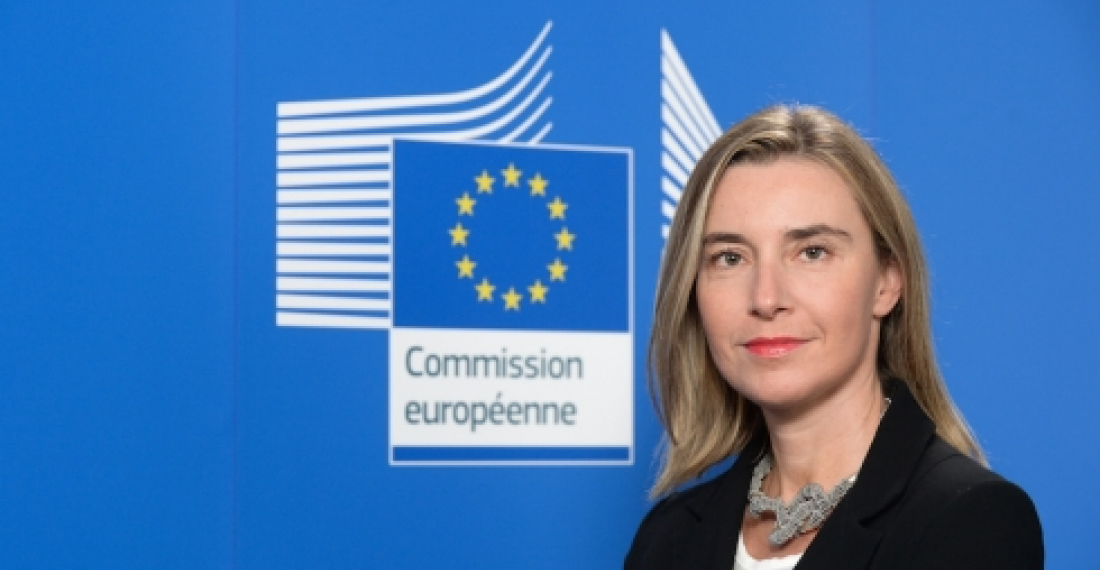
PHOTO: Federica Mogherini 
Related articles

Editor's choice
News
Council of Europe launches new International Claims Commission for Ukraine

Council of Europe launches new International Claims Commission for Ukraine

Thirty-four countries and the European Union have signed a new convention establishing an International Claims Commission for Ukraine at a diplomatic conference co-hosted by the 46-nation Council of Europe and the Netherlands in the Hague. The diplomatic conference was attended by leaders and high-level representatives from over 50 states, including the President of Ukraine, Volodymyr Zelenskyy, the President of the Republic of Moldova, Maia Sandu, and the Prime Minister of the Netherlands, Dick Schoof.  “Today marks a major step forward in ensuring accountability for Ukraine. The International Claims Commission represents justice and hope for tens of thousands of victims—our determination that those who have suffered will not be forgotten. I call for quick ratifications so we can get the commission rapidly up and running for the people of Ukraine,” said Council of Europe Secretary General Alain Berset. Ukrainian President Volodymyr Zelenskyy said: “We expect that every mechanism for compensation from the Register of Damage and Claims Commission to the actual payments – will start working and receive strong and sufficient international support, so that people can truly feel that any kind of damage caused by the war can be compensated. This war, and Russia’s responsibility for it, MUST become a clear example – so that others learn not to choose aggression.” “Accountability is about creating the conditions for peace that endures. And therefore, accountability is a condition of security – today and for the future. But accountability is not only about Ukraine. And it is not only about one aggressor and one victim. Accountability is about Europe. About every country in Europe. It is about whether Europe, as a whole, is willing to defend its peace,” said Maia Sandu, President of the Republic of Moldova, which currently holds the Presidency of the Council of Europe’s Committee of Ministers. The Prime Minister of the Netherlands, Dick Schoof, said: “Every day Russia is deliberately bombarding homes, destroying businesses and damaging infrastructure in Ukraine. Russia must compensate Ukraine for the damage caused. That is why we have launched the International Claims Commission for Ukraine and we are honoured to host it.” The International Claims Commission will be the second part of a comprehensive compensation mechanism related to Russia’s war of aggression, building on the existing Register of Damage for Ukraine. The claims commission will be established within the framework of the Council of Europe and will also be open to other countries. The Register of Damage for Ukraine, created in 2023, collects and records compensation claims submitted by individuals, organisations and public bodies in Ukraine. Forty-four states and the European Union have so far joined the Register, which has already received 86,000 claims. The International Claims Commission will review, assess and decide upon claims submitted to the Register of Damage for Ukraine and determine the amount of compensation, if any, which is due in each case. The convention establishing the commission will enter into force once it has been ratified by 25 signatories, as long as sufficient funds have been secured to support its initial work.

Popular

Editor's choice
News
Council of Europe launches new International Claims Commission for Ukraine

Council of Europe launches new International Claims Commission for Ukraine

Thirty-four countries and the European Union have signed a new convention establishing an International Claims Commission for Ukraine at a diplomatic conference co-hosted by the 46-nation Council of Europe and the Netherlands in the Hague. The diplomatic conference was attended by leaders and high-level representatives from over 50 states, including the President of Ukraine, Volodymyr Zelenskyy, the President of the Republic of Moldova, Maia Sandu, and the Prime Minister of the Netherlands, Dick Schoof.  “Today marks a major step forward in ensuring accountability for Ukraine. The International Claims Commission represents justice and hope for tens of thousands of victims—our determination that those who have suffered will not be forgotten. I call for quick ratifications so we can get the commission rapidly up and running for the people of Ukraine,” said Council of Europe Secretary General Alain Berset. Ukrainian President Volodymyr Zelenskyy said: “We expect that every mechanism for compensation from the Register of Damage and Claims Commission to the actual payments – will start working and receive strong and sufficient international support, so that people can truly feel that any kind of damage caused by the war can be compensated. This war, and Russia’s responsibility for it, MUST become a clear example – so that others learn not to choose aggression.” “Accountability is about creating the conditions for peace that endures. And therefore, accountability is a condition of security – today and for the future. But accountability is not only about Ukraine. And it is not only about one aggressor and one victim. Accountability is about Europe. About every country in Europe. It is about whether Europe, as a whole, is willing to defend its peace,” said Maia Sandu, President of the Republic of Moldova, which currently holds the Presidency of the Council of Europe’s Committee of Ministers. The Prime Minister of the Netherlands, Dick Schoof, said: “Every day Russia is deliberately bombarding homes, destroying businesses and damaging infrastructure in Ukraine. Russia must compensate Ukraine for the damage caused. That is why we have launched the International Claims Commission for Ukraine and we are honoured to host it.” The International Claims Commission will be the second part of a comprehensive compensation mechanism related to Russia’s war of aggression, building on the existing Register of Damage for Ukraine. The claims commission will be established within the framework of the Council of Europe and will also be open to other countries. The Register of Damage for Ukraine, created in 2023, collects and records compensation claims submitted by individuals, organisations and public bodies in Ukraine. Forty-four states and the European Union have so far joined the Register, which has already received 86,000 claims. The International Claims Commission will review, assess and decide upon claims submitted to the Register of Damage for Ukraine and determine the amount of compensation, if any, which is due in each case. The convention establishing the commission will enter into force once it has been ratified by 25 signatories, as long as sufficient funds have been secured to support its initial work.