The debate about Europe's role in the neighbourhood and the world

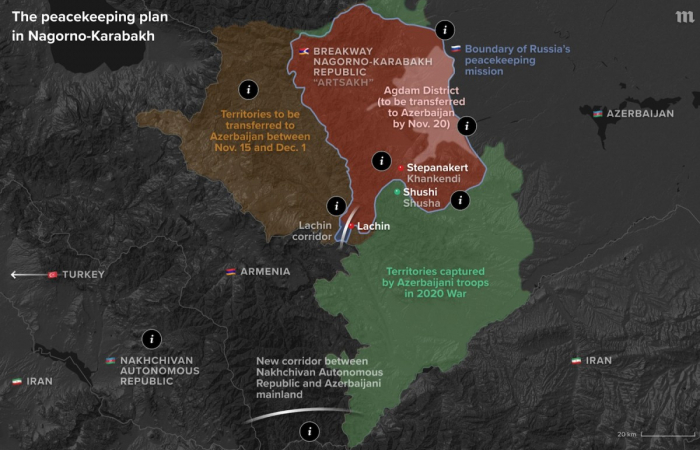
commonspace.eu is evolving. We are stepping up as part of our mission to contribute to the debate about Europe’s future role in the world, and we are expanding our coverage to include the whole European neighbourhood to the East and to the South. We aim to provide accurate news and original analysis, and offer a forum for diverse views and opinions.

We are pleased to launch today our newly branded website, which has many new features. To complement our website, we are also adding additional outreach tools and improving our existing ones. We launch today our first podcast series: Global Europe Unpacked. We are also rebranding our newsletter Caucasus Concise. From the new year, we will also launch additional fortnightly newsletters in the Concise series: Central Asia Concise, Arabia Concise and Karabakh Concise will be launched early in 2021, and others may follow.

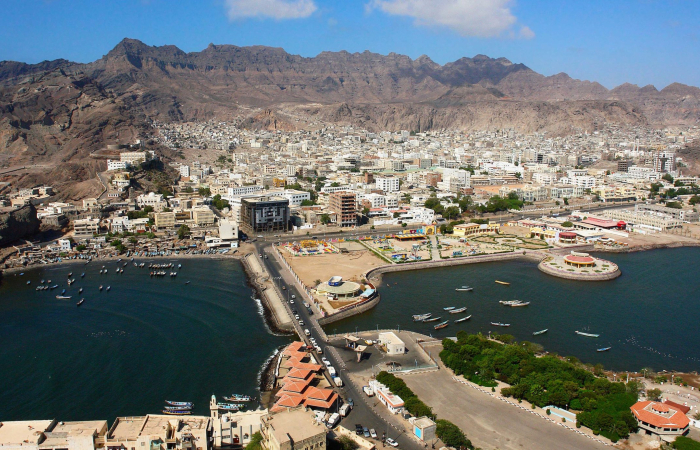
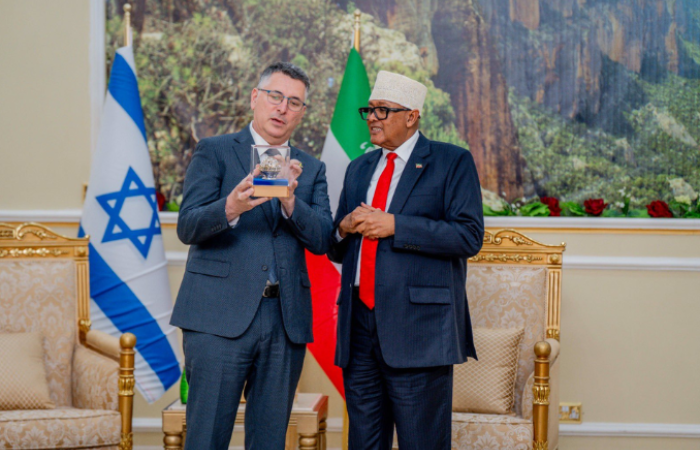
Since it was launched in 2011, commonspace.eu has focused primarily on providing news and analysis, and a space for diverse opinion about Europe’s Eastern neighbourhood, with particular emphasis on the Caucasus region. From today we are adding other regions, including Central Asia, Russia and Eastern Europe, the Gulf and Red Sea Regions, Turkey and the Levant, and North Africa and the Sahel. Our EU plus section will cover the EU and other European countries, including EFTA countries (Iceland, Liechtenstein, Norway and Switzerland), the United Kingdom and the Balkans.

We are responding to what we think is an urgent need for more information and analysis on how the European Union is managing its relations with its neighbourhood, and how it proposes to do that in the context of the stated ambition of the Von der Leyen Commission for a geopolitical Commission spearheading the thrust for Global Europe.

Unpacking Global Europe

Global Europe is a term often used to describe a geopolitically assertive European Union, representing the collective interests and values of its member-states with a single voice and strategy. It is an idea that is getting increasing traction among the foreign policy community and decision-makers in both Brussels and the European capitals. For most European citizens, however, it remains an abstract concept of no immediate relevance to  their daily realities.

In 2009, with the adoption of the Lisbon treaty, the EU introduced for the first time what could be considered an EU Foreign Minister – the High Representative of the Union for Foreign Affairs and Security Policy. But whilst the Lisbon Treaty gave the EU some of the machinery of an international actor, its ability to develop and pursue foreign policy remains cumbersome, characterised by the need for unanimous consent of member-states in EU foreign and security policymaking; and disjointed, sometimes contradictory strategies by the foreign offices across the European capitals.

In the period of relative stability at the end of the Cold War, Europe appeared as a benign force of good that could exert influence through soft power, such as trade, education, innovation and generous support packages. But as global turmoil has increased, so has the resurgence of old empires such as Russia, China and Turkey who often see European values as a threat, and an attempt to assert Western hegemony, which they now increasingly challenge.

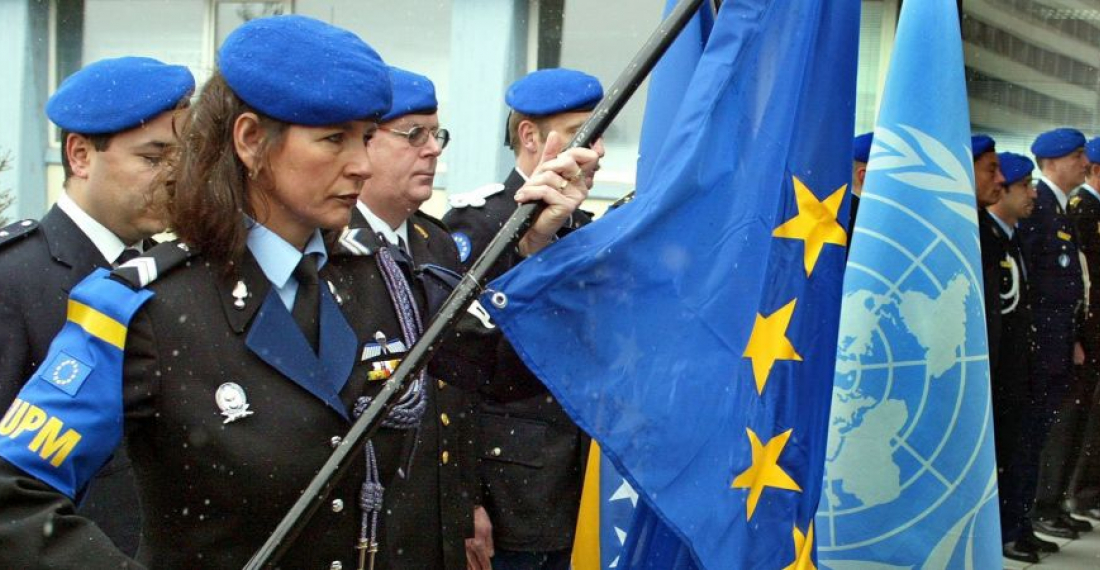
Dealing with these challenges requires agility and a strategic direction and the traditional approaches to EU foreign policy no longer appear to be fit for purpose. Recently, we have seen this reality lead to the growing ambition for a more efficient approach to EU collective foreign and security policy, including adjustment to the way decisions on foreign policy are adopted by the European Council.  This will inevitably in the future also lead to the development of a robust military capability, opening the debate about the relations between the EU and NATO.

Support for the vision of a global Europe based on four considerations

We support the vision of global Europe since we think that Europe remains essentially a force for good in the world. But there are four important considerations that need to be factored in the debate:

  • Europe’s soft power potential has not been exhausted. Whilst we recognise that a European military capacity in the future is inevitable, we also see it as the instrument of last resort. Europe’s soft power tools need not be discarded, they should, on the contrary, be developed and sharpened;
  • Europe’s power projection, hard or soft, will be tested first and foremost in the European neighbourhood. Global ambitions are all well and good, and justifiable for a political and economic giant as the EU, but it is in the neighbourhood – East and South – that the EU will be tested. The focus must therefore remain there for many years to come;
  • Europe, not least because of the baggage of its colonial past, must remain committed to multilateralism. To its credit, during the Trump years particularly, the European Union has remained committed to multilateralism. Its intervention and support ensured that a number of UN agencies survived unjustified US onslaughts. Closer to home, however, the EU has not been able to ensure that the continent’s leading forum on security – the OSCE – is fit for purpose. The Vienna based organisation is in the middle of an institutional crisis, and this year it has been marginalised on issues on which it should have been at the forefront, including the Covid-19 pandemic, Belarus and Karabakh;
  • Finally, the concept of Global Europe can only succeed if it is in the final analysis owned by the European citizens. Foreign and security issues are not easy topics for mass engagement, and indeed, populism can be a negative factor in determining policy. But citizens oversight through professional analysis by think tanks, media and elected representatives is absolutely essential. Brussels needs to be ready to engage genuinely in this process.

As the much-awaited and much-delayed Conference on the Future of Europe starts taking shape, these issues around the EU foreign and security policy will surely be at the centre of discussion. commonspace.eu is committed to contributing to this debate which is crucial for the future of our continent.
 

Related articles

Editor's choice
News
Council of Europe launches new International Claims Commission for Ukraine

Council of Europe launches new International Claims Commission for Ukraine

Thirty-four countries and the European Union have signed a new convention establishing an International Claims Commission for Ukraine at a diplomatic conference co-hosted by the 46-nation Council of Europe and the Netherlands in the Hague. The diplomatic conference was attended by leaders and high-level representatives from over 50 states, including the President of Ukraine, Volodymyr Zelenskyy, the President of the Republic of Moldova, Maia Sandu, and the Prime Minister of the Netherlands, Dick Schoof.  “Today marks a major step forward in ensuring accountability for Ukraine. The International Claims Commission represents justice and hope for tens of thousands of victims—our determination that those who have suffered will not be forgotten. I call for quick ratifications so we can get the commission rapidly up and running for the people of Ukraine,” said Council of Europe Secretary General Alain Berset. Ukrainian President Volodymyr Zelenskyy said: “We expect that every mechanism for compensation from the Register of Damage and Claims Commission to the actual payments – will start working and receive strong and sufficient international support, so that people can truly feel that any kind of damage caused by the war can be compensated. This war, and Russia’s responsibility for it, MUST become a clear example – so that others learn not to choose aggression.” “Accountability is about creating the conditions for peace that endures. And therefore, accountability is a condition of security – today and for the future. But accountability is not only about Ukraine. And it is not only about one aggressor and one victim. Accountability is about Europe. About every country in Europe. It is about whether Europe, as a whole, is willing to defend its peace,” said Maia Sandu, President of the Republic of Moldova, which currently holds the Presidency of the Council of Europe’s Committee of Ministers. The Prime Minister of the Netherlands, Dick Schoof, said: “Every day Russia is deliberately bombarding homes, destroying businesses and damaging infrastructure in Ukraine. Russia must compensate Ukraine for the damage caused. That is why we have launched the International Claims Commission for Ukraine and we are honoured to host it.” The International Claims Commission will be the second part of a comprehensive compensation mechanism related to Russia’s war of aggression, building on the existing Register of Damage for Ukraine. The claims commission will be established within the framework of the Council of Europe and will also be open to other countries. The Register of Damage for Ukraine, created in 2023, collects and records compensation claims submitted by individuals, organisations and public bodies in Ukraine. Forty-four states and the European Union have so far joined the Register, which has already received 86,000 claims. The International Claims Commission will review, assess and decide upon claims submitted to the Register of Damage for Ukraine and determine the amount of compensation, if any, which is due in each case. The convention establishing the commission will enter into force once it has been ratified by 25 signatories, as long as sufficient funds have been secured to support its initial work.

Popular

Editor's choice
News
Council of Europe launches new International Claims Commission for Ukraine

Council of Europe launches new International Claims Commission for Ukraine

Thirty-four countries and the European Union have signed a new convention establishing an International Claims Commission for Ukraine at a diplomatic conference co-hosted by the 46-nation Council of Europe and the Netherlands in the Hague. The diplomatic conference was attended by leaders and high-level representatives from over 50 states, including the President of Ukraine, Volodymyr Zelenskyy, the President of the Republic of Moldova, Maia Sandu, and the Prime Minister of the Netherlands, Dick Schoof.  “Today marks a major step forward in ensuring accountability for Ukraine. The International Claims Commission represents justice and hope for tens of thousands of victims—our determination that those who have suffered will not be forgotten. I call for quick ratifications so we can get the commission rapidly up and running for the people of Ukraine,” said Council of Europe Secretary General Alain Berset. Ukrainian President Volodymyr Zelenskyy said: “We expect that every mechanism for compensation from the Register of Damage and Claims Commission to the actual payments – will start working and receive strong and sufficient international support, so that people can truly feel that any kind of damage caused by the war can be compensated. This war, and Russia’s responsibility for it, MUST become a clear example – so that others learn not to choose aggression.” “Accountability is about creating the conditions for peace that endures. And therefore, accountability is a condition of security – today and for the future. But accountability is not only about Ukraine. And it is not only about one aggressor and one victim. Accountability is about Europe. About every country in Europe. It is about whether Europe, as a whole, is willing to defend its peace,” said Maia Sandu, President of the Republic of Moldova, which currently holds the Presidency of the Council of Europe’s Committee of Ministers. The Prime Minister of the Netherlands, Dick Schoof, said: “Every day Russia is deliberately bombarding homes, destroying businesses and damaging infrastructure in Ukraine. Russia must compensate Ukraine for the damage caused. That is why we have launched the International Claims Commission for Ukraine and we are honoured to host it.” The International Claims Commission will be the second part of a comprehensive compensation mechanism related to Russia’s war of aggression, building on the existing Register of Damage for Ukraine. The claims commission will be established within the framework of the Council of Europe and will also be open to other countries. The Register of Damage for Ukraine, created in 2023, collects and records compensation claims submitted by individuals, organisations and public bodies in Ukraine. Forty-four states and the European Union have so far joined the Register, which has already received 86,000 claims. The International Claims Commission will review, assess and decide upon claims submitted to the Register of Damage for Ukraine and determine the amount of compensation, if any, which is due in each case. The convention establishing the commission will enter into force once it has been ratified by 25 signatories, as long as sufficient funds have been secured to support its initial work.