


Eastern Orthodox Christians Celebrate Easter

This commentary was prepared by Joseph Alexander Smith

In Georgia, where over 80% of the population belong to the Orthodox Church, Church bells rang out at midnight services to celebrate the Feast of the Resurrection. Georgians customarily observe Easter by boiling eggs and dying them red. The faithful will often hold picnics by the graves of deceased relatives in the week following Easter, where they will roll the dyed eggs on the gravesite and make toasts to the departed. 

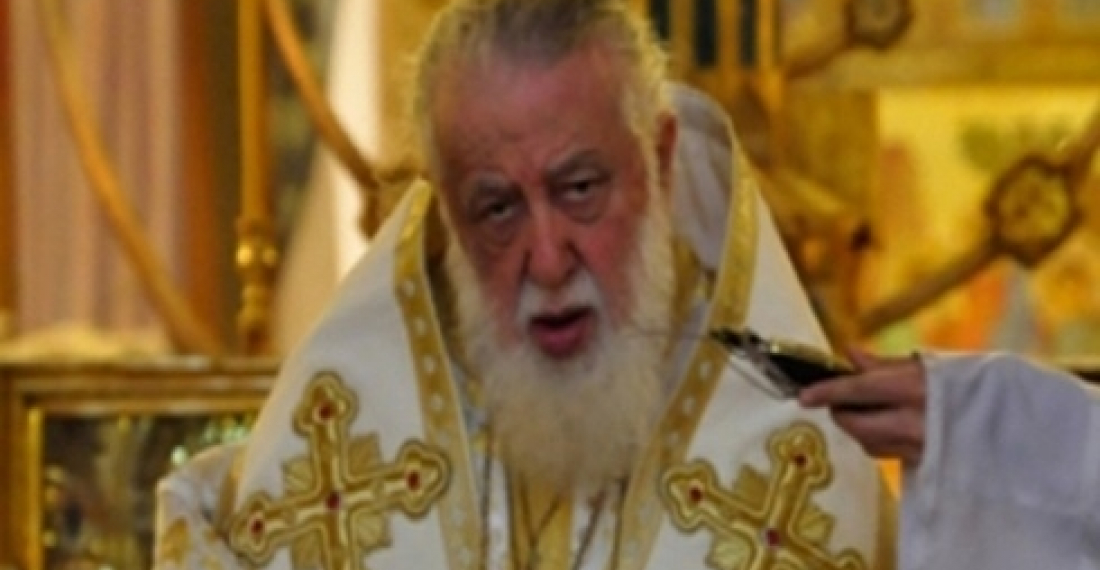
The spiritual head of the Georgian Orthodox Church, Patriarch-Catholicos Ilia II broke with recent tradition and celebrated the Easter services in the ancient capital of Mtskheta, rather than the main Holy Trinity Cathedral in Tbilisi. Last year, Patriarch Ilia bestowed the title of ‘Holy City’ on Mtskheta in recognition of its importance to Georgian Christians. 

St Nino baptized King Mirian III and his wife Queen Nana in Mtskheta in 332, making Georgia the second state in the world after Armenia to officially accept Christianity. The national Church of Armenia, the Armenian Apostolic Church, celebrated Easter on April 5 along with Western Churches. 

As in many other Orthodox countries, Georgians awaited the arrival of the ‘Holy Flame’ from Jerusalem. According to Orthodox tradition, a blue flame spontaneously forms on the tomb of Christ around midday on the Saturday before Orthodox Easter every year. 

After being checked for matches or lighters by Israeli police, the Greek Orthodox Patriarch of Jerusalem enters the small chapelbuilt around the Tomb with a bunch of 33 candles. After a few minutes he emerges carrying the flame – which some believe miraculously doesn’t burn them – which is then transported by special flights to Orthodox countries and ultimately to every parish church. 

Easter is also being celebrated by ethnic Russians in both Azerbaijan and Armenia. There are two Orthodox Churches in the Azerbaijani capital Baku serving the city’s Russian community, which dates back to the period of imperial expansion in the early 19th century. 

There is also a small Russian Orthodox Church in Yerevan, as well as a military chapel at the Russian 102nd Military Base in Gyumri, where tensions were raised this year after the murder of a local family by a serving soldier on the base. There are also as many as 3,500 Russian military personnel serving in Abkhazia, and up to 4,000 in South Ossetia. 

South Ossetia’s president, Leonid Tibilov offered his congratulations to Orthodoc in South Ossetia, saying: “Not by chance in the Basic Law of the Republic of South Ossetia cites Orthodoxy as a traditional religion of the Ossetians.”

Source: commonspace.eu by Joseph Alexander Smith 

Picture: Catholicos-Patriarch of All Georgia, the Archbishop of Mtskheta-Tbilisi. and Metropolitan bishop of Abkhazia and Bichvinta, His Holiness and Beatitude Ilia II (picture courtesy of http://pia.ge)

Related articles

Editor's choice
News
Borrell tells the European Parliament that the situation in Afghanistan was critical, but the EU will remain engaged

Borrell tells the European Parliament that the situation in Afghanistan was critical, but the EU will remain engaged

Borrell underlined that the European Union will make every effort to support the peace process and to remain a committed partner to the Afghan people. "Of course, we will have to take into account the evolving situation, but disengagement is not an option.  We are clear on that: there is no alternative to a negotiated political settlement, through inclusive peace talks.
Editor's choice
News
NATO Chief says war is on Europe's doorstep, and warns against complacency

NATO Chief says war is on Europe's doorstep, and warns against complacency

Russia could attack a Nato country within the next five years, the Secretary General of NATO, Mark Rutte, said in a stark new warning. "Nato's own defences can hold for now," Rutte warned in Berlin, but conflict was "next door" to Europe and he feared "too many are quietly complacent, and too many don't feel the urgency, too many believe that time is on our side. "Russia is already escalating its covert campaign against our societies," Rutte said in a speech in Germany. "We must be prepared for the scale of war our grandparents or great-grandparents endured." Earlier this month, Russia's President Vladimir Putin said his country was not planning to go to war with Europe, but it was ready "right now" if Europe wanted to - or started a war. But similar reassurances were given by Moscow in 2022, just before 200,000 Russian troops crossed the border and invaded Ukraine. Putin has accused European countries of hindering US efforts to bring peace in Ukraine - a reference to the role Ukraine's European allies have recently played in trying to change a US peace plan to end the war, whose initial draft was seen as favouring Russia. But Putin was not sincere, Nato's secretary-general said in the German capital, Berlin. Supporting Ukraine, he added, was a guarantee for European security. "Just imagine if Putin got his way; Ukraine under the boot of Russian occupation, his forces pressing against a longer border with Nato, and the significantly increased risk of an armed attack against us." Russia's economy has been on a war footing for more than three years now - its factories churn out ever more supplies of drones, missiles and artillery shells. According to a recent report by the Kiel Institute for the World Economy, Russia has been producing each month around 150 tanks, 550 infantry fighting vehicles, 120 Lancet drones and more than 50 artillery pieces. The UK, and most of its Western allies, are simply not anywhere near this point. Analysts say it would take years for Western Europe's factories to come close to matching Russia's mass-production of weapons. "Allied defence spending and production must rise rapidly, our armed forces must have what they need to keep us safe," the Nato chief said.

Popular

Editor's choice
News
NATO Chief says war is on Europe's doorstep, and warns against complacency

NATO Chief says war is on Europe's doorstep, and warns against complacency

Russia could attack a Nato country within the next five years, the Secretary General of NATO, Mark Rutte, said in a stark new warning. "Nato's own defences can hold for now," Rutte warned in Berlin, but conflict was "next door" to Europe and he feared "too many are quietly complacent, and too many don't feel the urgency, too many believe that time is on our side. "Russia is already escalating its covert campaign against our societies," Rutte said in a speech in Germany. "We must be prepared for the scale of war our grandparents or great-grandparents endured." Earlier this month, Russia's President Vladimir Putin said his country was not planning to go to war with Europe, but it was ready "right now" if Europe wanted to - or started a war. But similar reassurances were given by Moscow in 2022, just before 200,000 Russian troops crossed the border and invaded Ukraine. Putin has accused European countries of hindering US efforts to bring peace in Ukraine - a reference to the role Ukraine's European allies have recently played in trying to change a US peace plan to end the war, whose initial draft was seen as favouring Russia. But Putin was not sincere, Nato's secretary-general said in the German capital, Berlin. Supporting Ukraine, he added, was a guarantee for European security. "Just imagine if Putin got his way; Ukraine under the boot of Russian occupation, his forces pressing against a longer border with Nato, and the significantly increased risk of an armed attack against us." Russia's economy has been on a war footing for more than three years now - its factories churn out ever more supplies of drones, missiles and artillery shells. According to a recent report by the Kiel Institute for the World Economy, Russia has been producing each month around 150 tanks, 550 infantry fighting vehicles, 120 Lancet drones and more than 50 artillery pieces. The UK, and most of its Western allies, are simply not anywhere near this point. Analysts say it would take years for Western Europe's factories to come close to matching Russia's mass-production of weapons. "Allied defence spending and production must rise rapidly, our armed forces must have what they need to keep us safe," the Nato chief said.

