


Senior Russian and American diplomats yesterday met in Moscow to discuss the situation in the Caucasus.
Itar-Tass reported that Russian Deputy Foreign Minister Grigory Karassin and US Under Secretary of State for Political Affairs, William Burns discussed Russian-American collaboration in South Caucasus at a meeting in Moscow. The news agency quoted a source at the Russian Foreign Ministry as saying that "The pressing issues of Russian-U.S. collaboration, including in the area of South Caucasus, as well as in settling the conflicts in Moldova's Dniester region and the Azerbaijani region of Nagorno-Karabakh, were discussed."
The meeting took place on the eve of a meeting between the Presidents of Armenia and Azerbaijan together with the President of Russia, scheduled to take place in Sochi next week.
It was also reported that earlier this week Grigory Karassin had a meeting with a group of influential U.S. political scientists - Fiona Hill of the Brookings Institution, Angela Stent of Georgetown University, Damon Wilson of the Atlantic Council, and William Hill of the National War College.
In the meantime, NATO's Secretary General Anders Fogh Rasmussen, currently on a tour of the three Baltic States - Estonia, Latvia and Lithuania, has been speaking of improvement in relations between Russia and NATO. He said at a lecture at the University of Tallinn that NATO and Russia still differ on many issues, but these differences do not change the fact that relations between the North-Atlantic alliance and Russia have seen real improvement.
Rasmussen said NATO remains committed to building a strategic partnership with Russia on the principles of security and mutual trust as specified by the agreements the sides reached in November 20, 2010 in Lisbon. Earlier in the day, Rasmussen spoke in much the same tone in the Lithuanian capital Vilnius. He said Russia and NATO are not adversaries and they cherish the hope for peaceful cooperation that would bring benefits only to everyone. Rasmussen said that NATO invites Russia to join an open dialogue on the problems of security and a search for reasonable answers.
Commonspace.eu political editor said in a comment: "It has taken several years for the impact of President Obama's policy of resetting the west's relations with Russia to be felt in the Caucasus region. Relations between the two sides were particularly damaged after the 2008 Georgia-Russia war. It seems however that the two sides are now engaged in a constructive dialogue on ways forward to the resolution of the problems of the region. This process will likely take time before it can give tangible results, but this dialogue is essential to create the right international conditions in which progress could be made in negotiations on the settlement of regional conflicts in Karabakh, in the territories that seceded from Georgia and in Transdniestr."
source: commonspace.eu
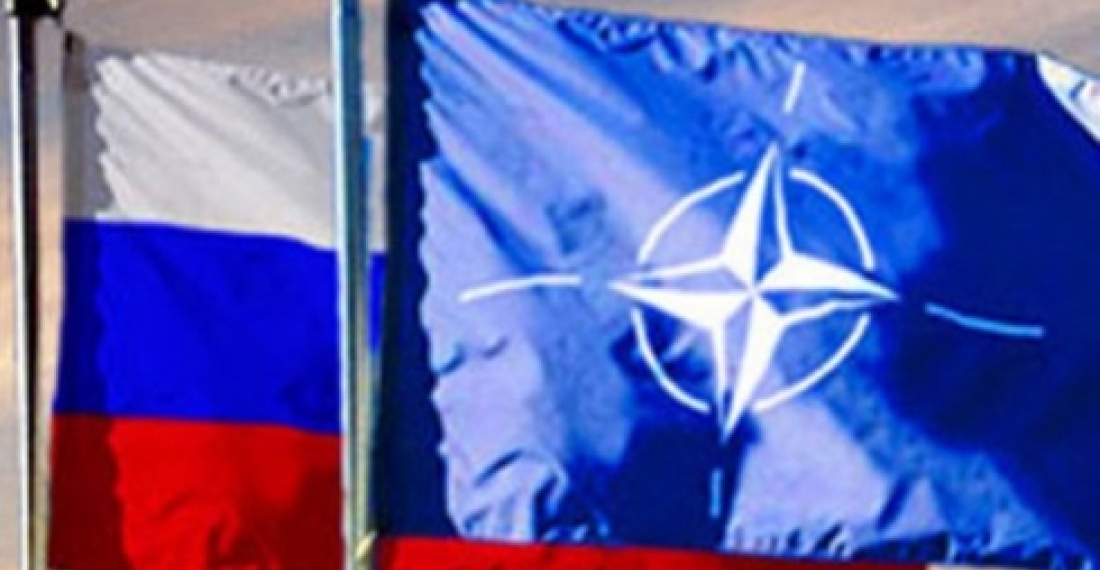
photo: Russian and NATO flags



