Erdogan snubs Putin, as Russian-Turkish relations cool.

Turkish President Recip Tayip Erdogan has turned down an invitation from Russian President Vladimir Putin to attend this year's victory parade on Moscow's Red Square. Turkish sources say that Turkey will be represented instead by its Ambassador in Mosocw, Umit Yardin.

Turkish-Russian relations were reported to have reached new heights in January when President Putin visited Ankara in what was described as the start of a new strategic relationship between the two countries. Relations however deteriorated suddenly last month when President Putin attended the Armenian genocide celebrations in Yerevan. The Turkish government was also upset with the choice of words used by the Kremlin on that occasion. 

"April 24, 1915 is a melancholy date, related to one of the most horrendous and dramatic events in human history, the genocide of the Armenian people," Putin said in a letter to the World Without Genocide commemorative event on April 23, the text of which was also posted on the Kremlin website. The Russian State Duma voted on April 24 to pass a resolution that described the 1915 events as "genocide."

Media reports suggest that only 12 leaders out of 68 invited countries will attend Russia's Victory Day Parade, including from China, India, South Africa, Greece, Serbia and Cyprus, as well as Armenia and Azerbaijan.  It is understood that some leaders, including the leaders of some EU countries have decided to be present in Moscow for the celebrations marking the victory over fascism, but not to participate in the military parade on Red Square.

When asked why so many world leaders had not accepted the invtiation, Russian Foreign Minister, Sergei Lavrov said, "It is an invitation, not a military call-up". 

Commonspace.eu political editor said in a comment that "Turkish Russian relations have certainly cooled down following Putin's genocide remarks, but both sides are interested in playing down the differences. For the Turkish leadership however Russian wholehearted endorsement of the "genocide agenda" creates problems for their own narrative in describing genocide recognition as a western conspiracy. As a result Turkey may in the future be more vocal in criticisng Russian actions, especially in Crimea, where Erdogan is often accused of abandoning the interests of the Tartar indigenous population of the peninsula. However some of the more strategic areas in the relationship, such as energy, are likely to be less affected by the controversy. Here other factors come into play. Turkey may indeed find it convenient in the future to use the "genocide agenda" as an excuse to back track on some of the agreements that it has reached with Russia, and which it may find not to have been so convenient after all".

source: commonspace.eu

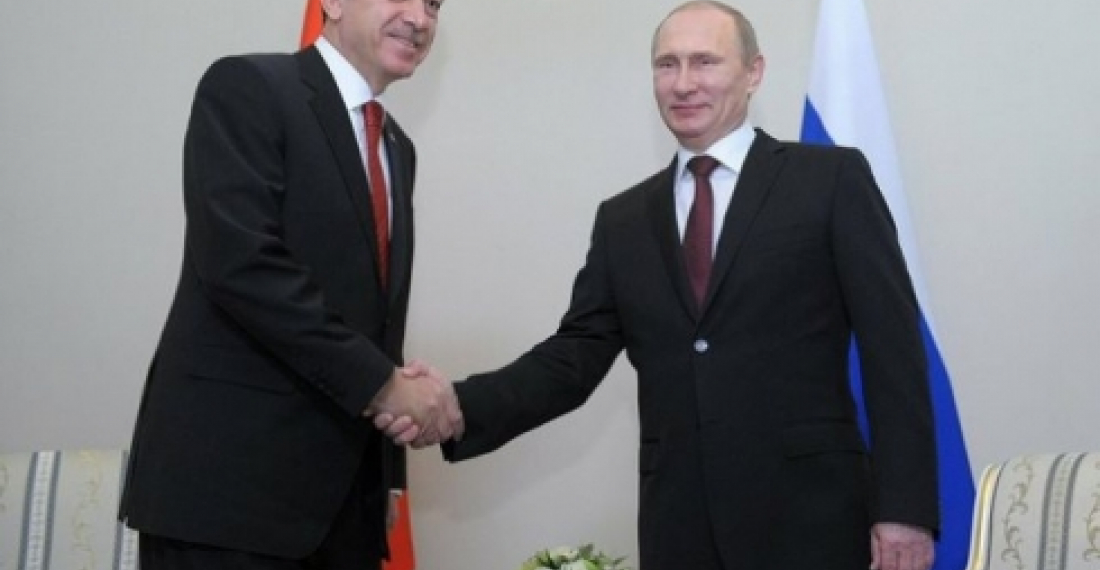
photo: President Erdogan of Turkey and President Putin of Russia. (archive picture)

Related articles

Editor's choice
News
Council of Europe launches new International Claims Commission for Ukraine

Council of Europe launches new International Claims Commission for Ukraine

Thirty-four countries and the European Union have signed a new convention establishing an International Claims Commission for Ukraine at a diplomatic conference co-hosted by the 46-nation Council of Europe and the Netherlands in the Hague. The diplomatic conference was attended by leaders and high-level representatives from over 50 states, including the President of Ukraine, Volodymyr Zelenskyy, the President of the Republic of Moldova, Maia Sandu, and the Prime Minister of the Netherlands, Dick Schoof.  “Today marks a major step forward in ensuring accountability for Ukraine. The International Claims Commission represents justice and hope for tens of thousands of victims—our determination that those who have suffered will not be forgotten. I call for quick ratifications so we can get the commission rapidly up and running for the people of Ukraine,” said Council of Europe Secretary General Alain Berset. Ukrainian President Volodymyr Zelenskyy said: “We expect that every mechanism for compensation from the Register of Damage and Claims Commission to the actual payments – will start working and receive strong and sufficient international support, so that people can truly feel that any kind of damage caused by the war can be compensated. This war, and Russia’s responsibility for it, MUST become a clear example – so that others learn not to choose aggression.” “Accountability is about creating the conditions for peace that endures. And therefore, accountability is a condition of security – today and for the future. But accountability is not only about Ukraine. And it is not only about one aggressor and one victim. Accountability is about Europe. About every country in Europe. It is about whether Europe, as a whole, is willing to defend its peace,” said Maia Sandu, President of the Republic of Moldova, which currently holds the Presidency of the Council of Europe’s Committee of Ministers. The Prime Minister of the Netherlands, Dick Schoof, said: “Every day Russia is deliberately bombarding homes, destroying businesses and damaging infrastructure in Ukraine. Russia must compensate Ukraine for the damage caused. That is why we have launched the International Claims Commission for Ukraine and we are honoured to host it.” The International Claims Commission will be the second part of a comprehensive compensation mechanism related to Russia’s war of aggression, building on the existing Register of Damage for Ukraine. The claims commission will be established within the framework of the Council of Europe and will also be open to other countries. The Register of Damage for Ukraine, created in 2023, collects and records compensation claims submitted by individuals, organisations and public bodies in Ukraine. Forty-four states and the European Union have so far joined the Register, which has already received 86,000 claims. The International Claims Commission will review, assess and decide upon claims submitted to the Register of Damage for Ukraine and determine the amount of compensation, if any, which is due in each case. The convention establishing the commission will enter into force once it has been ratified by 25 signatories, as long as sufficient funds have been secured to support its initial work.

Popular

Editor's choice
News
Council of Europe launches new International Claims Commission for Ukraine

Council of Europe launches new International Claims Commission for Ukraine

Thirty-four countries and the European Union have signed a new convention establishing an International Claims Commission for Ukraine at a diplomatic conference co-hosted by the 46-nation Council of Europe and the Netherlands in the Hague. The diplomatic conference was attended by leaders and high-level representatives from over 50 states, including the President of Ukraine, Volodymyr Zelenskyy, the President of the Republic of Moldova, Maia Sandu, and the Prime Minister of the Netherlands, Dick Schoof.  “Today marks a major step forward in ensuring accountability for Ukraine. The International Claims Commission represents justice and hope for tens of thousands of victims—our determination that those who have suffered will not be forgotten. I call for quick ratifications so we can get the commission rapidly up and running for the people of Ukraine,” said Council of Europe Secretary General Alain Berset. Ukrainian President Volodymyr Zelenskyy said: “We expect that every mechanism for compensation from the Register of Damage and Claims Commission to the actual payments – will start working and receive strong and sufficient international support, so that people can truly feel that any kind of damage caused by the war can be compensated. This war, and Russia’s responsibility for it, MUST become a clear example – so that others learn not to choose aggression.” “Accountability is about creating the conditions for peace that endures. And therefore, accountability is a condition of security – today and for the future. But accountability is not only about Ukraine. And it is not only about one aggressor and one victim. Accountability is about Europe. About every country in Europe. It is about whether Europe, as a whole, is willing to defend its peace,” said Maia Sandu, President of the Republic of Moldova, which currently holds the Presidency of the Council of Europe’s Committee of Ministers. The Prime Minister of the Netherlands, Dick Schoof, said: “Every day Russia is deliberately bombarding homes, destroying businesses and damaging infrastructure in Ukraine. Russia must compensate Ukraine for the damage caused. That is why we have launched the International Claims Commission for Ukraine and we are honoured to host it.” The International Claims Commission will be the second part of a comprehensive compensation mechanism related to Russia’s war of aggression, building on the existing Register of Damage for Ukraine. The claims commission will be established within the framework of the Council of Europe and will also be open to other countries. The Register of Damage for Ukraine, created in 2023, collects and records compensation claims submitted by individuals, organisations and public bodies in Ukraine. Forty-four states and the European Union have so far joined the Register, which has already received 86,000 claims. The International Claims Commission will review, assess and decide upon claims submitted to the Register of Damage for Ukraine and determine the amount of compensation, if any, which is due in each case. The convention establishing the commission will enter into force once it has been ratified by 25 signatories, as long as sufficient funds have been secured to support its initial work.