Commentary: Will South Ossetia be Russia's next territorial acquisition?

Commentary:


The self-declared Republic of South Ossetia which seceded from Georgia shortly after the collapse of the Soviet Union, and which was at the centre of a short but bloody war between Russia and Georgia in 2008, held parliamentary elections during the weekend. Reports from the capital Tskhinvali, quoting sources close to the Central Elections Commission of the territory, say that 21,129 persons voted in the election - 60.4% of the total electorate. The reports suggested that the outright winner was the United Ossetia Party led by Anatoly Bibilov. Bibilov campaigned on a platform of complete unity with Russia and his victory will again raise questions about the status of the territory.


The poll has been dismissed as irrelevant both by the Georgian Government as well as the international community in general. South Ossetia's independence is only recognised by Russia and a handful of small countries. However, South Ossetian lilliputian politics have a habit of spiraling quickly into international crisis as happened in 2008. Many see that the platform of the winning party for total unity with Russia may be the percursor for a Russian attempt to formally annexe the territory. South Ossetia is already de facto a Russian protectorate - dependant on Russia for both financial and economic issues, as well as for its defence. Russia's decision to recognise South Ossetia as independent in 2008 caused concerns even inside the Kremlin since the territory is seen as not viable as an indepedent state, and is unlikely to ever be. Russia hoped that by recognising South Ossetia as independent it will resolve the issue of the status of the territory, yet South Ossetian politics - based on family and clan loyalties rather than policy or ideology - have over the last six years proven to be a headache for the Kremlin.


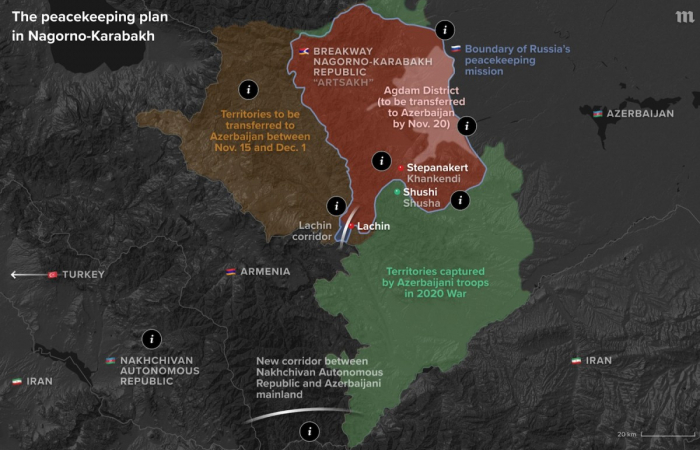
People in South Ossetia also consider themselves to be part of the Ossetian nation, most of which is located in the Russian North Caucasus. Calls for unity have been a consistant feature of Ossetian politics. Yet the international context has changed considerably. Until recently hardly anybody would have thought that Russia would provoke international condemnation by changing its international borders and adding territory to its lands. Yet Crimea has proven the extent to which the current leadership in the Kremlin is ready to go in support of its "Great Russia" policy. South Ossetia will hardly constitute a prize addition since Russia effectively controls it anyway. But for the Kremlin the trouble of managing this miniscule state has been considerable. A further complication will emerge once the new Customs Union comes into being later this year. South Ossetia will not be in the Union, yet it is not imaginable that territory can survive if Russia imposes a customs regime with it. Connecting South Ossetia with the Customs Union is going to be necessary and this will raise questions about the position of Nagorno-Karabakh - a territory that is similarly working outside the international system as an unrecognised self-declared Republic. There is increasing controversy and confusion in Armenia about what will happen once Armenia joins the Customs Union. Other members of the Customs Union, such as Belarus and Kazakhstan, are increasingly concerned about the involvement of the self-declared entities into the Customs Union and some fear that their ambiguous status may be abused to flaunt the rules of the new Union.


For Russia therefore annexing South Ossetia would be a clean solution, and one that is clearly supported by the tiny population that still lives in the territory. Yet this is unlikely to happen since Russia is wary of further provoking the anger of the international community. South Ossetia is therefore likely to remain in a state of limbo for a long time - an irritant for Georgia, a headache for the Kremlin and a puzzle for diplomats to argue on.


source: This commentary was prepared by the editorial team of commonspace.eu


Photo: Ossetians displaying a Russian and Ossetian flag during celebrations following Russia's recognition of South Ossetian independence in 2008. (p[icture courtesy of Radio Free Europe/Radio Liberty).


Related articles

Editor's choice
News
Aden under curfew, as problem in Yemen's south deepens

Aden under curfew, as problem in Yemen's south deepens

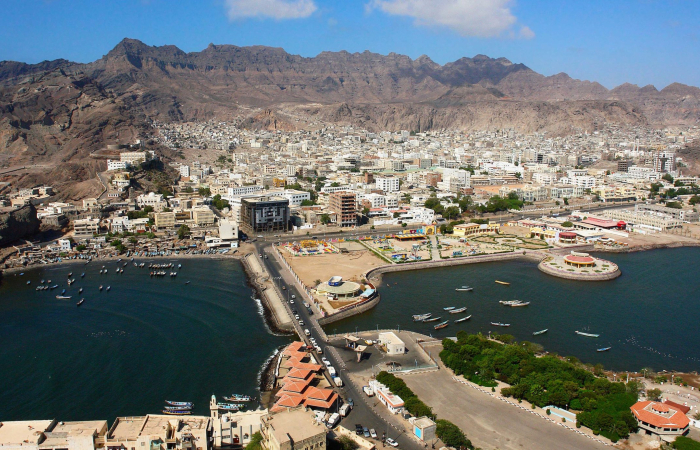
The port city of Aden, in Yemen's south, has been put under curfew, as the rift in the country between  the Saudi led coalition which  backs Yemen's presidential governing council, and the southern forces led by the Southern Transitional Council (STC), deepens. Abdul Rahman al-Mahrami, a member of the Yemeni Presidential Governing Council and commander of the al-Amalik brigades, has ordered a curfew in the temporary capital, Aden, "to maintain security". "A curfew has been imposed throughout Aden Governorate from 9:00 p.m. to 6:00 a.m., in accordance with the instructions of Commander Abdul Rahman al-Mahrami, a member of the Presidential Management Council," the statement said. It states that only security and military personnel, as well as medical and technical teams with approved permits, will be allowed to move in the area during these hours. Yemen's presidential council, which is backed by Saudi Arabia and which already is in a struggle with the Houthi Movement in the north of the country who also occupy the capital Sanaa, two days ago issued an order for the arrest of the head of the Southern Transitional Council (STC),, Aidarous al Zubaidi. The STC have wide support among people in the South, and advocate that South Yemen restores its independence. The coalition warned of further escalation in Aden, long regarded as an STC stronghold, as the Presidential Leadership Council (PLC) chief accused STC leader Aidarous Al Zubaidi of “high treason” and announced the revocation of his membership in the governing body. The moves mark a sharp escalation in tensions within the anti-Houthi camp, despite National Shield Forces, rivals of the STC and former allies, having recently retaken control of Hadhramaut and Mahra from southern fighters. The STC’s takeover of the two regions last month angered Saudi Arabia and contributed to igniting the current internal conflict. (click the picture to read more)

Popular

Editor's choice
News
Aden under curfew, as problem in Yemen's south deepens

Aden under curfew, as problem in Yemen's south deepens

The port city of Aden, in Yemen's south, has been put under curfew, as the rift in the country between  the Saudi led coalition which  backs Yemen's presidential governing council, and the southern forces led by the Southern Transitional Council (STC), deepens. Abdul Rahman al-Mahrami, a member of the Yemeni Presidential Governing Council and commander of the al-Amalik brigades, has ordered a curfew in the temporary capital, Aden, "to maintain security". "A curfew has been imposed throughout Aden Governorate from 9:00 p.m. to 6:00 a.m., in accordance with the instructions of Commander Abdul Rahman al-Mahrami, a member of the Presidential Management Council," the statement said. It states that only security and military personnel, as well as medical and technical teams with approved permits, will be allowed to move in the area during these hours. Yemen's presidential council, which is backed by Saudi Arabia and which already is in a struggle with the Houthi Movement in the north of the country who also occupy the capital Sanaa, two days ago issued an order for the arrest of the head of the Southern Transitional Council (STC),, Aidarous al Zubaidi. The STC have wide support among people in the South, and advocate that South Yemen restores its independence. The coalition warned of further escalation in Aden, long regarded as an STC stronghold, as the Presidential Leadership Council (PLC) chief accused STC leader Aidarous Al Zubaidi of “high treason” and announced the revocation of his membership in the governing body. The moves mark a sharp escalation in tensions within the anti-Houthi camp, despite National Shield Forces, rivals of the STC and former allies, having recently retaken control of Hadhramaut and Mahra from southern fighters. The STC’s takeover of the two regions last month angered Saudi Arabia and contributed to igniting the current internal conflict. (click the picture to read more)