Commentary: A shaken EU fires opening shots in long war of attrition with Belarus

By EU standards it was swift and strong. The united European response to the brazen Belarusian snatching of an opposition figure from a commercial airplane of a European airline flying between two European capitals came only within a day of the incident.

On Sunday, Belarus ordered a civilian Ryanair plane flying from Athens to Vilnius to land in Minsk citing a bomb threat. Belarusian military aircraft buzzed the plane in case the pilot decided not to comply. On the ground several passengers, including one known critic of the regime of Alexandre Lukashenko were taken off the plane and arrested. Governments and public opinion across the world were outraged. The condemnation within the EU was swift and universal.

read more: Editorial On Belarus the EU must now act quickly and decisively 

By Monday, EU leaders attending a scheduled summit in Brussels had agreed to turn the words into action: they demanded the immediate release of Raman Pratasevich and Sofia Sapega and that their freedom of movement be guaranteed; they called on the International Civil Aviation Organization to urgently investigate this unprecedented and unacceptable incident; they decided to start the process of implementing targeted sanctions, including further economic sanctions; and they started the process of isolating Belarus from the world of aviation calling on all EU-based carriers to avoid overflight of Belarus and launching measures to ban overflight of EU airspace by Belarusian airlines and prevent access to EU airports of flights operated by such airlines.

Nothing dramatic will happen overnight as a result, but make no mistake about it, this was the opening shot of what is likely to be a long and messy war of attrition against Belarus that may last for years. Like a big elephant the European Union is a strong international player, but moves rather awkwardly. But on Belarus now, the EU's mind is set. The process will start and will be sustained.

The impact on Belarus will, despite all of Lukashenko's bravado, be severe. It will not be fatal for one simple reason: Russia does not want Belarus to drift towards the west. They will therefore always throw a lifeline to Lukashenko - at least until they can find a reliable substitute. But the relationship between Moscow and Minsk will not get any better as a result of this crisis. Belarus, increasingly isolated will become even more dependant on Russia than has been the case so far. Moscow on its part is trying to manage an already complicated situation with the west. This latest drama may or may not have been part of Putin's script, but even if it was, may have already escalated more than anticipated.

For the moment, Raman Pratasevich remains in a Belarus prison. A televised confession released by the Belarus authorities on Monday, shows clearly it was done under duress. His abduction may however be a game-changer for Belarus. But it will take time.

source: This is a commentary prepared by the editorial team of commonspace.eu
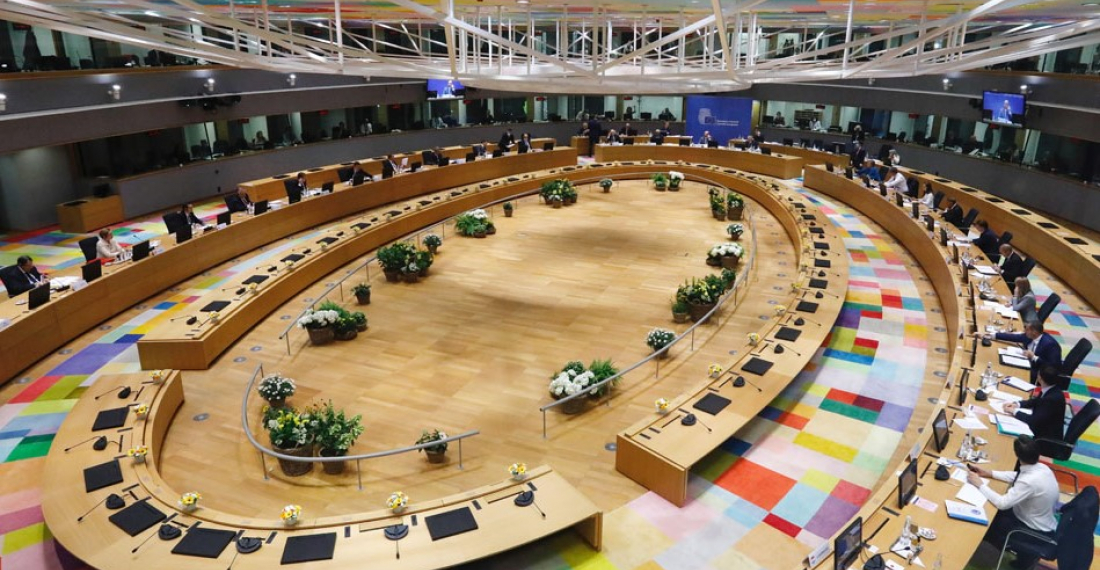
photo: The leaders of the 27 member states of the EU meeting at a European Council meeting in Brussels on 24 May 2021
The views expressed in opinion pieces and commentaries do not necessarily reflect the position of commonspace.eu or its partners


Related articles

Editor's choice
News
Council of Europe launches new International Claims Commission for Ukraine

Council of Europe launches new International Claims Commission for Ukraine

Thirty-four countries and the European Union have signed a new convention establishing an International Claims Commission for Ukraine at a diplomatic conference co-hosted by the 46-nation Council of Europe and the Netherlands in the Hague. The diplomatic conference was attended by leaders and high-level representatives from over 50 states, including the President of Ukraine, Volodymyr Zelenskyy, the President of the Republic of Moldova, Maia Sandu, and the Prime Minister of the Netherlands, Dick Schoof.  “Today marks a major step forward in ensuring accountability for Ukraine. The International Claims Commission represents justice and hope for tens of thousands of victims—our determination that those who have suffered will not be forgotten. I call for quick ratifications so we can get the commission rapidly up and running for the people of Ukraine,” said Council of Europe Secretary General Alain Berset. Ukrainian President Volodymyr Zelenskyy said: “We expect that every mechanism for compensation from the Register of Damage and Claims Commission to the actual payments – will start working and receive strong and sufficient international support, so that people can truly feel that any kind of damage caused by the war can be compensated. This war, and Russia’s responsibility for it, MUST become a clear example – so that others learn not to choose aggression.” “Accountability is about creating the conditions for peace that endures. And therefore, accountability is a condition of security – today and for the future. But accountability is not only about Ukraine. And it is not only about one aggressor and one victim. Accountability is about Europe. About every country in Europe. It is about whether Europe, as a whole, is willing to defend its peace,” said Maia Sandu, President of the Republic of Moldova, which currently holds the Presidency of the Council of Europe’s Committee of Ministers. The Prime Minister of the Netherlands, Dick Schoof, said: “Every day Russia is deliberately bombarding homes, destroying businesses and damaging infrastructure in Ukraine. Russia must compensate Ukraine for the damage caused. That is why we have launched the International Claims Commission for Ukraine and we are honoured to host it.” The International Claims Commission will be the second part of a comprehensive compensation mechanism related to Russia’s war of aggression, building on the existing Register of Damage for Ukraine. The claims commission will be established within the framework of the Council of Europe and will also be open to other countries. The Register of Damage for Ukraine, created in 2023, collects and records compensation claims submitted by individuals, organisations and public bodies in Ukraine. Forty-four states and the European Union have so far joined the Register, which has already received 86,000 claims. The International Claims Commission will review, assess and decide upon claims submitted to the Register of Damage for Ukraine and determine the amount of compensation, if any, which is due in each case. The convention establishing the commission will enter into force once it has been ratified by 25 signatories, as long as sufficient funds have been secured to support its initial work.

Popular

Editor's choice
News
Council of Europe launches new International Claims Commission for Ukraine

Council of Europe launches new International Claims Commission for Ukraine

Thirty-four countries and the European Union have signed a new convention establishing an International Claims Commission for Ukraine at a diplomatic conference co-hosted by the 46-nation Council of Europe and the Netherlands in the Hague. The diplomatic conference was attended by leaders and high-level representatives from over 50 states, including the President of Ukraine, Volodymyr Zelenskyy, the President of the Republic of Moldova, Maia Sandu, and the Prime Minister of the Netherlands, Dick Schoof.  “Today marks a major step forward in ensuring accountability for Ukraine. The International Claims Commission represents justice and hope for tens of thousands of victims—our determination that those who have suffered will not be forgotten. I call for quick ratifications so we can get the commission rapidly up and running for the people of Ukraine,” said Council of Europe Secretary General Alain Berset. Ukrainian President Volodymyr Zelenskyy said: “We expect that every mechanism for compensation from the Register of Damage and Claims Commission to the actual payments – will start working and receive strong and sufficient international support, so that people can truly feel that any kind of damage caused by the war can be compensated. This war, and Russia’s responsibility for it, MUST become a clear example – so that others learn not to choose aggression.” “Accountability is about creating the conditions for peace that endures. And therefore, accountability is a condition of security – today and for the future. But accountability is not only about Ukraine. And it is not only about one aggressor and one victim. Accountability is about Europe. About every country in Europe. It is about whether Europe, as a whole, is willing to defend its peace,” said Maia Sandu, President of the Republic of Moldova, which currently holds the Presidency of the Council of Europe’s Committee of Ministers. The Prime Minister of the Netherlands, Dick Schoof, said: “Every day Russia is deliberately bombarding homes, destroying businesses and damaging infrastructure in Ukraine. Russia must compensate Ukraine for the damage caused. That is why we have launched the International Claims Commission for Ukraine and we are honoured to host it.” The International Claims Commission will be the second part of a comprehensive compensation mechanism related to Russia’s war of aggression, building on the existing Register of Damage for Ukraine. The claims commission will be established within the framework of the Council of Europe and will also be open to other countries. The Register of Damage for Ukraine, created in 2023, collects and records compensation claims submitted by individuals, organisations and public bodies in Ukraine. Forty-four states and the European Union have so far joined the Register, which has already received 86,000 claims. The International Claims Commission will review, assess and decide upon claims submitted to the Register of Damage for Ukraine and determine the amount of compensation, if any, which is due in each case. The convention establishing the commission will enter into force once it has been ratified by 25 signatories, as long as sufficient funds have been secured to support its initial work.