


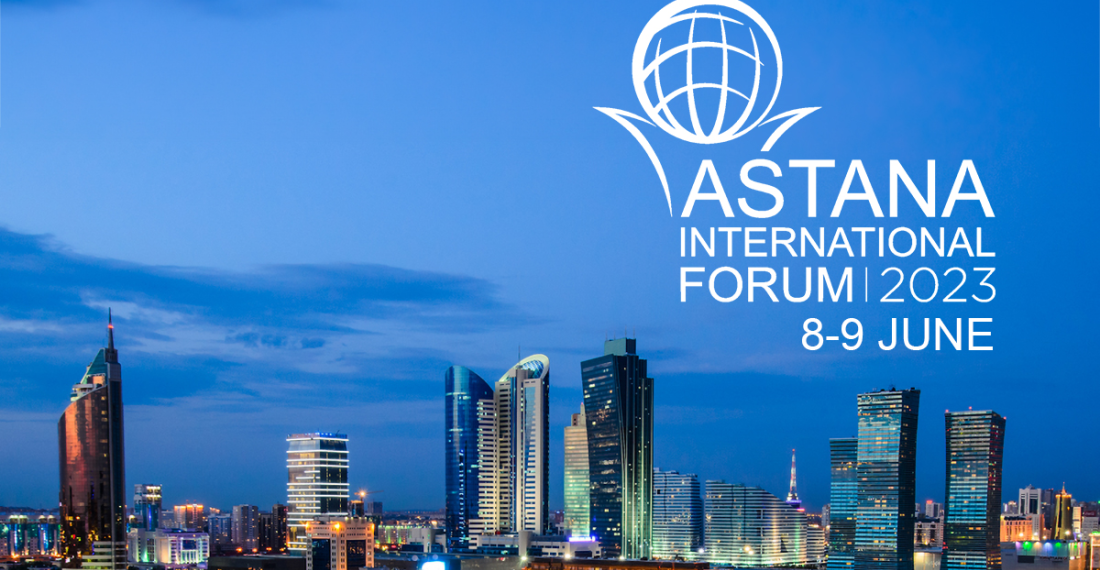
Commentary: Kazakhstan throws a lavish party in honour of multilateralism

This commentary first appeared in the 13 June 2023 issue of our newsletter, Central Asia Concise. If you would like to subscribe to Central Asia Concise, or any other of our newsletters, please click here.

"Such big jamborees as the Astana International Forum happen often, and are – more often than not – considered as talking shops with limited results. They are usually a part of a branding exercise by countries that can afford them. Most participants forget about them the moment they leave, and the impact beyond that is often negligible," writes commonspace.eu in this commentary. However, "the Astana International Forum marks the emergence of a new Kazakhstan on the international stage. This year’s event was the first. Future forums will be a good gauge for how this new Kazakhstan is performing."

Over a thousand delegates from more than seventy countries from across the world gathered in the Kazakh capital, Astana, on 8 and 9 June, for the first Astana International Forum.

For months, the Kazakh government had built up the hype for this big jamboree, that brought together several global movers and shakers, and many more hangers on who can be seen often on the global conference circuit. Shaken by the events around the coup attempt against his government in January 2022, and the international crisis resulting from the full-scale invasion of Ukraine by Russia a month later, Kazakh President, Kassym-Jomart Tokayev, launched the idea of the Astana International Forum to showcase his government’s new assertiveness, both domestically and internationally. The government of Kazakhstan put in a lot of effort and resources for the success of the event.

Writing for a blog on Al Jazeera on the eve of the opening of the forum, Kazakh Deputy Prime Minister, Serik Zhumangarin described the Astana International Forum as “a global event aimed at renewing the culture of multilateralism”, and said that it was a part of Kazakhstan’s multi-vector foreign policy which seeks to engage countries in the north, south, east and west. “The forum will bring people together from across the world and give participants an opportunity to address global challenges and chart a new way forward”, he added.

"The voices of the middle powers in the UN Security Council need to be amplified and heard"

The message was even more forcefully made by Kazakh President Tokayev in his opening speech, saying that the forum can help the international community “to candidly review the global situation, identify the leading challenges and crises that confront the world, tackle those challenges through dialogue in the spirit of cooperation, renew and rebuild a common culture of multilateralism, and amplify voices for peace, progress, and solidarity.”

“This forum explicitly promotes greater engagement at a time when we need it more than ever – a period of unprecedented geopolitical tension. For it to survive, the global system must work for everyone, bringing peace and prosperity to the many, rather than the few,” Tokayev emphasised.

He pointed out that the world is witnessing the erosion of the foundation of the world order that has been built since the creation of the UN, which remains the only universal global organisation that unites everyone together.

“At the same time, we will not succeed in tackling these challenges without a comprehensive reform of the Security Council. The voices of the middle powers in the UN Security Council need to be amplified and heard,” he said.

With geopolitical pressures pushing the world apart, the international community faces a clear, strong imperative to come together, engage, collaborate, and align with one another, Tokayev said. “Only by meeting together, taking counsel together, and being mutually honest about our problems, concerns and hopes, can the international community address these issues,” Tokayev added, calling it the only way humanity can shape a shared future and return to the gradual building of a more stable, equitable, and prosperous world for all.

The hefty ideal of multilateralism

Such big jamborees as the Astana International Forum happen often, and are – more often than not – considered as talking shops with limited results. They are usually a part of a branding exercise by countries that can afford them. Most participants forget about them the moment they leave, and the impact beyond that is often negligible. In some ways this could be said for the Astana International Forum too. Except that this Kazakh initiative was propagating a very important theme, that of multilateralism. 

This theme is very actual and needs to be debated in as many contexts and forums as possible. In a sense the biggest shortcoming in Astana was that many who should have been there because they are on the forefront of the current debate on multilateralism were not, and some hot topics that need to be properly aired if multilateralism in the current world is to be discussed seriously, were either not discussed at all, or not appropriately addressed. 

This is not to reduce the value of the Astana event. Kazakhstan has until recently been largely in the shadow of Russia. It did have its moments in international exposure, for example when it chaired the Organisation for Security and Co-operation in Europe (OSCE) in 2010, but even on those occasions its performance was reserved and subdued. The Astana International Forum marks the emergence of a new Kazakhstan on the international stage. This year’s event was the first. Future forums will be a good gauge for how this new Kazakhstan is performing.
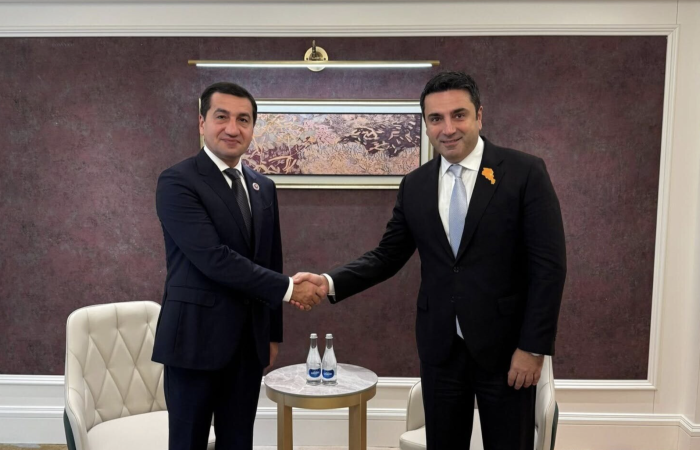
source: commonspace.eu editorial team
photo: Astana International Forum
The views expressed in opinion pieces and commentaries do not necessarily reflect the position of commonspace.eu or its partners 

Related articles

Editor's choice
News
Borrell tells the European Parliament that the situation in Afghanistan was critical, but the EU will remain engaged

Borrell tells the European Parliament that the situation in Afghanistan was critical, but the EU will remain engaged

Borrell underlined that the European Union will make every effort to support the peace process and to remain a committed partner to the Afghan people. "Of course, we will have to take into account the evolving situation, but disengagement is not an option.  We are clear on that: there is no alternative to a negotiated political settlement, through inclusive peace talks.
Editor's choice
News
NATO Chief says war is on Europe's doorstep, and warns against complacency

NATO Chief says war is on Europe's doorstep, and warns against complacency

Russia could attack a NATO country within the next five years, the Secretary General of NATO, Mark Rutte, said in a stark new warning. "NATO's own defences can hold for now," Rutte warned in Berlin, but conflict was "next door" to Europe, and he feared "too many are quietly complacent, and too many don't feel the urgency, too many believe that time is on our side. "Russia is already escalating its covert campaign against our societies," Rutte said in a speech in Germany. "We must be prepared for the scale of war our grandparents or great-grandparents endured." Earlier this month, Russia's President Vladimir Putin said his country was not planning to go to war with Europe, but it was ready "right now" if Europe wanted to - or started a war. But similar reassurances were given by Moscow in 2022, just before 200,000 Russian troops crossed the border and invaded Ukraine. Putin has accused European countries of hindering US efforts to bring peace in Ukraine - a reference to the role Ukraine's European allies have recently played in trying to change a US peace plan to end the war, whose initial draft was seen as favouring Russia. But Putin was not sincere, Nato's secretary-general said in the German capital, Berlin. Supporting Ukraine, he added, was a guarantee for European security. "Just imagine if Putin got his way; Ukraine under the boot of Russian occupation, his forces pressing against a longer border with Nato, and the significantly increased risk of an armed attack against us." Russia's economy has been on a war footing for more than three years now - its factories churn out ever more supplies of drones, missiles and artillery shells. According to a recent report by the Kiel Institute for the World Economy, Russia has been producing each month around 150 tanks, 550 infantry fighting vehicles, 120 Lancet drones and more than 50 artillery pieces. The UK, and most of its Western allies, are simply not anywhere near this point. Analysts say it would take years for Western Europe's factories to come close to matching Russia's mass-production of weapons. "Allied defence spending and production must rise rapidly, our armed forces must have what they need to keep us safe," the Nato chief said.

Popular

Editor's choice
News
NATO Chief says war is on Europe's doorstep, and warns against complacency

NATO Chief says war is on Europe's doorstep, and warns against complacency

Russia could attack a NATO country within the next five years, the Secretary General of NATO, Mark Rutte, said in a stark new warning. "NATO's own defences can hold for now," Rutte warned in Berlin, but conflict was "next door" to Europe, and he feared "too many are quietly complacent, and too many don't feel the urgency, too many believe that time is on our side. "Russia is already escalating its covert campaign against our societies," Rutte said in a speech in Germany. "We must be prepared for the scale of war our grandparents or great-grandparents endured." Earlier this month, Russia's President Vladimir Putin said his country was not planning to go to war with Europe, but it was ready "right now" if Europe wanted to - or started a war. But similar reassurances were given by Moscow in 2022, just before 200,000 Russian troops crossed the border and invaded Ukraine. Putin has accused European countries of hindering US efforts to bring peace in Ukraine - a reference to the role Ukraine's European allies have recently played in trying to change a US peace plan to end the war, whose initial draft was seen as favouring Russia. But Putin was not sincere, Nato's secretary-general said in the German capital, Berlin. Supporting Ukraine, he added, was a guarantee for European security. "Just imagine if Putin got his way; Ukraine under the boot of Russian occupation, his forces pressing against a longer border with Nato, and the significantly increased risk of an armed attack against us." Russia's economy has been on a war footing for more than three years now - its factories churn out ever more supplies of drones, missiles and artillery shells. According to a recent report by the Kiel Institute for the World Economy, Russia has been producing each month around 150 tanks, 550 infantry fighting vehicles, 120 Lancet drones and more than 50 artillery pieces. The UK, and most of its Western allies, are simply not anywhere near this point. Analysts say it would take years for Western Europe's factories to come close to matching Russia's mass-production of weapons. "Allied defence spending and production must rise rapidly, our armed forces must have what they need to keep us safe," the Nato chief said.

