Azerbaijan takes over Chairmanship of UN Security Council for October.

On 1 October Azerbaijan assumed the Chairmanship of the United Nations Security Council for the second time during its two-year stint as one of the non permanent members of the world body. The Chairmanship of the Security Council is held by rotation for one month by the fifteen permanent and non-permanent members. Azerbaijan already held the Chairmanship of the Council in March 2012.

Azerbaijan's election to the Security Council for the two year-period 2012-13 resulted after a tight vote in the UN General Assembly in 2011. It marks a high point in Azerbaijani foreign policy. October is likely to be a busy month for the Security Council with focus remaining on Syria. As Chairman of the Council Azerbaijani will have to work closely with the five permanent members in order to build consensus, since all five have veto power. A lot of the Council's work is done behind the scenes, and Council meetings are usually held in times of crisis, or after a large degree of agreement has been secured in prior consultations. 

Commonspace.eu political editor commented on the significance of Azerbaijan's Chairmanship of the world body:

"There are few roles that are more prestigious in international diplomacy than the Chairmanship of the UN Security Council, and Azerbaijan, a relatively small country with a short experience of global politics is rightly proud to take over this duty this month. Azerbaijan's election to the world body in 2011 was thanks largely to the efforts exerted by Azerbaijani diplomats led by the hard-working and skillful Foreign Minister, Elmar Mammadyarov. Mammadyarov was appointed Foreign Minister shortly after Ilham Aliev became President in 2003. He was a relatively unknown mid ranking diplomat serving in the United States at the time. The Aliev-Mammadyarov team have over the last decade criss-crossed the world building new relationships and friendships. Azerbaijan became an active member of the OIC - the organisation of Islamic states, and the Non Aligned Movement (NAM). It was OIC and NAM support that secured the votes for Azerbaijan's seat on the world body.

Azerbaijan is today an important energy exporting country, and this has given it the flexibility to develop an independent foreign policy that, by and large, balances interests rather than engages in alliances. Azerbaijan for example has rejected membership of both the Russian based Customs Union and Eurasian Union, and association with the EU. Its foreign policy balances between good relations with Israel and good relations with the Arab States. It considers relations with both Russia and the United States as strategic. In contrast Azerbaijan's South Caucasus neighbours have opted for firm alliances: Georgia within the European and Euro-atlantic community; Armenia within the Eurasian Union and the CSTO.

Azerbaijan's stint on the UN Security Council has been largely uneventful, and marked by a responsible attitude. Azerbaijani efforts to highlight issues related to the Nagorno-Karabakh conflict have been measured. This is how it should be, and one hopes this will be the case until the end of the Azerbaijani term on the Council in December. Azerbaijan will by the end of this year have gained a lot of diplomatic experience. This and the goodwill of the international community will be the legacy of its efforts. For the next month however Azerbaijani diplomacy will need to work hard and wisely in New York and world capitals at head of the institution that is the repository of world peace and security."

Source: Commonspace.eu

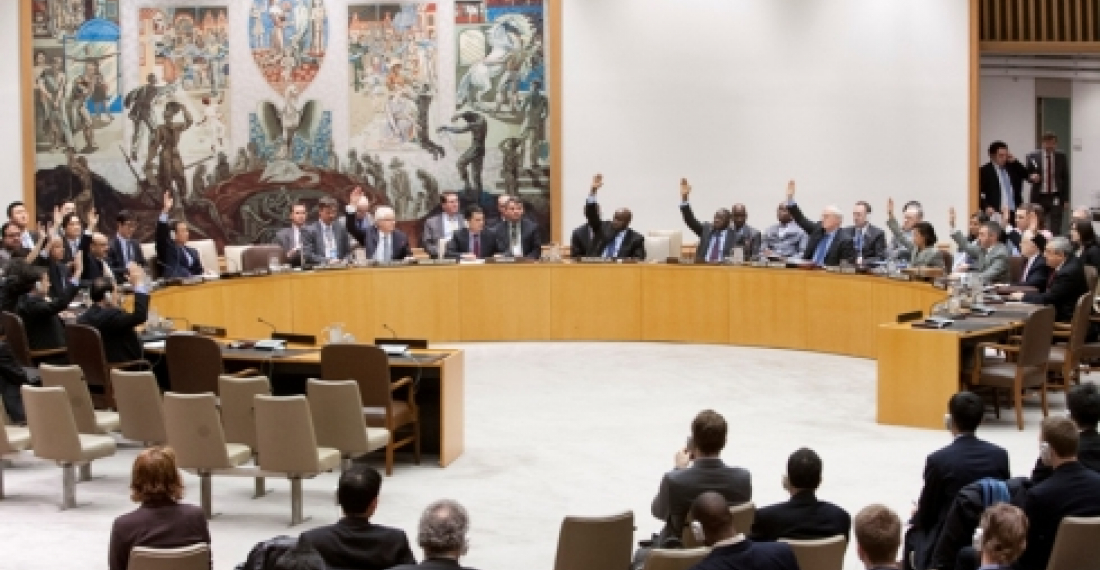
photo: The UN Security Council in Session.

Related articles

Editor's choice
News
Borrell tells the European Parliament that the situation in Afghanistan was critical, but the EU will remain engaged

Borrell tells the European Parliament that the situation in Afghanistan was critical, but the EU will remain engaged

Borrell underlined that the European Union will make every effort to support the peace process and to remain a committed partner to the Afghan people. "Of course, we will have to take into account the evolving situation, but disengagement is not an option.  We are clear on that: there is no alternative to a negotiated political settlement, through inclusive peace talks.
Editor's choice
News
Germany accuses Russia of cyberattacks and disinformation campaign

Germany accuses Russia of cyberattacks and disinformation campaign

The German government holds Russia responsible for a cyberattack on German air traffic control, and for targeted disinformation campaigns before the last federal election. According to the German Foreign Office in Berlin, the incidents could be clearly attributed to the Russian military intelligence service, the GRU. In response, the Russian ambassador to Berlin was summoned to the Foreign Ministry. "We have been observing a massive increase in threatening hybrid activities by Russia for some time now," a spokesperson for the Foreign Ministry stated. These range from disinformation campaigns and espionage to cyberattacks and sabotage attempts. The aim is to divide society, sow distrust, and undermine confidence in democratic institutions. The spokesperson added that with these actions, Russia is "very concretely threatening our security, not only through its war of aggression against Ukraine, but also here in Germany."  The Foreign Ministry spokesperson explained that the cyberattack on air traffic control in August 2024 was clearly attributed to the hacker collective "APT28," known as "Fancy Bear," and to the responsibility of the Russian military intelligence service, the GRU. Furthermore, it could now be "conclusively stated" that Russia had attempted "to influence and destabilize both the last Federal election and the ongoing internal affairs of the Federal Republic of Germany." There was "absolutely irrefutable evidence" for this". The so-called "Storm 1516" campaign, which has been running since 2024, is allegedly backed by "reliable information" that the Moscow-based think tank "Center for Geopolitical Expertise" is behind it. The Center is also said to be supported by Russian military intelligence. Its primary aim is to influence democratic elections in the West. (Click the image to read more).

Popular

Editor's choice
News
Germany accuses Russia of cyberattacks and disinformation campaign

Germany accuses Russia of cyberattacks and disinformation campaign

The German government holds Russia responsible for a cyberattack on German air traffic control, and for targeted disinformation campaigns before the last federal election. According to the German Foreign Office in Berlin, the incidents could be clearly attributed to the Russian military intelligence service, the GRU. In response, the Russian ambassador to Berlin was summoned to the Foreign Ministry. "We have been observing a massive increase in threatening hybrid activities by Russia for some time now," a spokesperson for the Foreign Ministry stated. These range from disinformation campaigns and espionage to cyberattacks and sabotage attempts. The aim is to divide society, sow distrust, and undermine confidence in democratic institutions. The spokesperson added that with these actions, Russia is "very concretely threatening our security, not only through its war of aggression against Ukraine, but also here in Germany."  The Foreign Ministry spokesperson explained that the cyberattack on air traffic control in August 2024 was clearly attributed to the hacker collective "APT28," known as "Fancy Bear," and to the responsibility of the Russian military intelligence service, the GRU. Furthermore, it could now be "conclusively stated" that Russia had attempted "to influence and destabilize both the last Federal election and the ongoing internal affairs of the Federal Republic of Germany." There was "absolutely irrefutable evidence" for this". The so-called "Storm 1516" campaign, which has been running since 2024, is allegedly backed by "reliable information" that the Moscow-based think tank "Center for Geopolitical Expertise" is behind it. The Center is also said to be supported by Russian military intelligence. Its primary aim is to influence democratic elections in the West. (Click the image to read more).