


20 May: Cooperation between Azerbaijan and Russia acquire new prospects (Trend news)

20 May: Russia, Astrakhan, May 19 / Trend's special correspondent V.Tyukaev/

The main task of the participants of the second Russian-Azerbaijani inter-regional forum, which opened today in Astrakhan, is to raise the inter-regional cooperation between countries to an even higher level, Azerbaijani Presidential Administration Social and Political Department head Ali Hasanov said, addressing the event, Trend's special correspondent reports.

He said the national leader of Azerbaijan Heydar Aliyev has always attached a great importance to developing bilateral relations between the two countries and could lay a solid and constructive basis for them. "Thanks to the efforts of Presidents Dmitry Medvedev, of Russia and Ilham Aliyev, of Azerbaijan, this cooperation is acquiring new prospects. Our relations are multifaceted and multi-aspect and covers practically all spheres," Hasanov said.

He said the sides have reached consensus on many issues, including operation of the Gabala radar station, as well as the legal status of the Caspian Sea. A number of important agreements were signed during Russian President Dmitry Medvedev's visit to Azerbaijan last September. The documents also included the agreement on the state border, which indicated the land border line. "Russia has become the first country with which Azerbaijan has concluded such an agreement," said Hasanov.

In his speech, he drew the attention of the Forum participants to the boosting relations between Russia and Azerbaijan, as evidenced by the fact that President Medvedev has thrice visited Azerbaijan in recent years, and in turn, Aliyev has repeatedly visited Russia's various regions.
"Azerbaijan and Russia effectively cooperate within the UN, OSCE and other international organizations," Hasanov said. "Russia, as one of the co-chairs of the OSCE Minsk Group, acts as a mediator on the Nagorno-Karabakh conflict settlement and contributes to the resolution of this conflict."
Hasanov said the two countries are also connected by close economic cooperation. "The trade between our countries fell slightly during the global financial crisis in 2009, but already started its growth last year. Bilateral trade turnover amounted to $616 million in January-March, 2011, or up by 78 percent compared to the same period of the last year. More than 17 percent of goods imported to Azerbaijan falls on Russia, which also is of interest for us as a market to sell agricultural products grown in Azerbaijan," he added.

Hasanov said an important role in co-operation of countries is played by the humanitarian cooperation thanks to the agreements signed between the two countries on cooperation in culture, medicine, education, sports and youth policy, the creation of joint information centers and a number of other projects in this regard.

Azerbaijan supports the special status of Russia, since about 160,000 Russian-speaking people live the country, said Hasanov.
"While the Russian language is losing its position in other former Soviet republics, in Azerbaijan, 21 schools teach in Russian and another 335 schools teach in Azerbaijani and Russian languages," said Hasanov.

He said about 50 newspapers and magazines are published in Russian language in Azerbaijan, Russian periodicals are freely available throughout the country. "A branch of Lomonosov Moscow State University, Russian Drama Theatre operate, branches of leading Russian news agencies have been opened in Baku. This tendency indicates the closeness of our peoples. About 160,000 Russians live Azerbaijan. This is the largest national diaspora," said Hasanov.

He also said that about 70 subjects of the Russian Federation today make inter-regional cooperation with Azerbaijan, inter-governmental agreements have been signed with some of them, including Astrakhan region. This region dynamically cooperates with Azerbaijan in the fields of shipbuilding, transportation, and supplies fishery products to the Republic.

The second Russian-Azerbaijani Interregional Forum "Russia - Azerbaijan: towards new horizons of interregional cooperation" kicked off in Astrakhan Thursday. The event was organized by the Development Fund of Eurasian Studies Institute, with the support from the presidential administrations of Russia and Azerbaijan.

The forum is attended by representatives of central and regional authorities, business circles and non-governmental organizations of both countries. Azerbaijan is represented at the forum by a delegation headed by Hasanov. The delegation also includes representatives of the Azerbaijani Presidential Administration, government, MPs, heads of executive powers of several regions of the country, entrepreneurs.
The forum was opened with congratulation messages from Presidents of Azerbaijan Ilham Aliyev and Russia Dmitry Medvedev.

source: www.trend.az
photo:
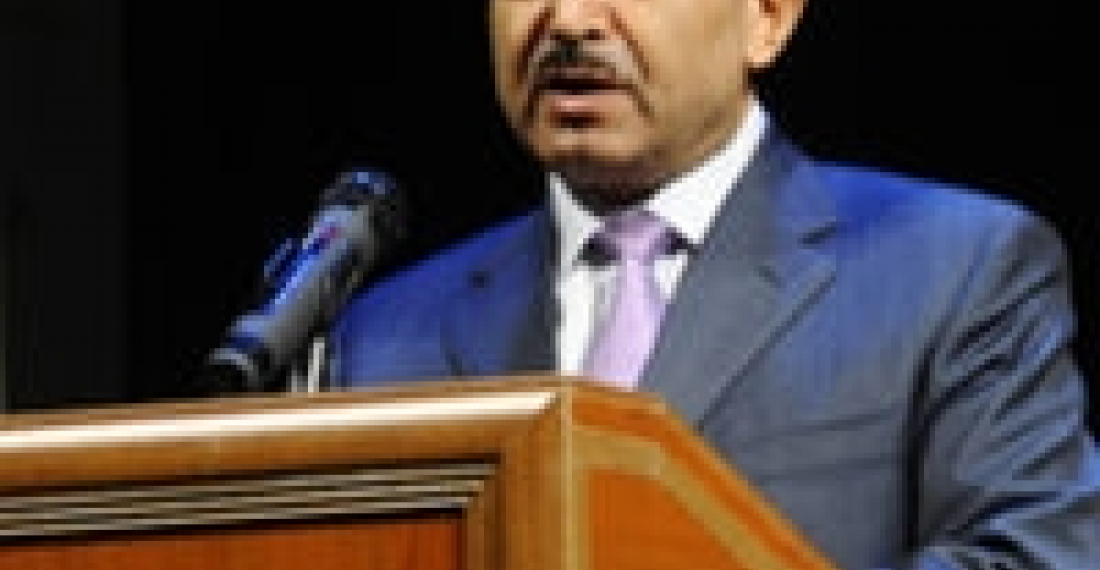
Ali Hasanov, Head of Azerbaijan Presidential Administration Social and Political Department

Related articles

Editor's choice
News
Borrell tells the European Parliament that the situation in Afghanistan was critical, but the EU will remain engaged

Borrell tells the European Parliament that the situation in Afghanistan was critical, but the EU will remain engaged

Borrell underlined that the European Union will make every effort to support the peace process and to remain a committed partner to the Afghan people. "Of course, we will have to take into account the evolving situation, but disengagement is not an option.  We are clear on that: there is no alternative to a negotiated political settlement, through inclusive peace talks.
Editor's choice
News
NATO Chief says war is on Europe's doorstep, and warns against complacency

NATO Chief says war is on Europe's doorstep, and warns against complacency

Russia could attack a Nato country within the next five years, the Secretary General of NATO, Mark Rutte, said in a stark new warning. "Nato's own defences can hold for now," Rutte warned in Berlin, but conflict was "next door" to Europe and he feared "too many are quietly complacent, and too many don't feel the urgency, too many believe that time is on our side. "Russia is already escalating its covert campaign against our societies," Rutte said in a speech in Germany. "We must be prepared for the scale of war our grandparents or great-grandparents endured." Earlier this month, Russia's President Vladimir Putin said his country was not planning to go to war with Europe, but it was ready "right now" if Europe wanted to - or started a war. But similar reassurances were given by Moscow in 2022, just before 200,000 Russian troops crossed the border and invaded Ukraine. Putin has accused European countries of hindering US efforts to bring peace in Ukraine - a reference to the role Ukraine's European allies have recently played in trying to change a US peace plan to end the war, whose initial draft was seen as favouring Russia. But Putin was not sincere, Nato's secretary-general said in the German capital, Berlin. Supporting Ukraine, he added, was a guarantee for European security. "Just imagine if Putin got his way; Ukraine under the boot of Russian occupation, his forces pressing against a longer border with Nato, and the significantly increased risk of an armed attack against us." Russia's economy has been on a war footing for more than three years now - its factories churn out ever more supplies of drones, missiles and artillery shells. According to a recent report by the Kiel Institute for the World Economy, Russia has been producing each month around 150 tanks, 550 infantry fighting vehicles, 120 Lancet drones and more than 50 artillery pieces. The UK, and most of its Western allies, are simply not anywhere near this point. Analysts say it would take years for Western Europe's factories to come close to matching Russia's mass-production of weapons. "Allied defence spending and production must rise rapidly, our armed forces must have what they need to keep us safe," the Nato chief said.

Popular

Editor's choice
News
NATO Chief says war is on Europe's doorstep, and warns against complacency

NATO Chief says war is on Europe's doorstep, and warns against complacency

Russia could attack a Nato country within the next five years, the Secretary General of NATO, Mark Rutte, said in a stark new warning. "Nato's own defences can hold for now," Rutte warned in Berlin, but conflict was "next door" to Europe and he feared "too many are quietly complacent, and too many don't feel the urgency, too many believe that time is on our side. "Russia is already escalating its covert campaign against our societies," Rutte said in a speech in Germany. "We must be prepared for the scale of war our grandparents or great-grandparents endured." Earlier this month, Russia's President Vladimir Putin said his country was not planning to go to war with Europe, but it was ready "right now" if Europe wanted to - or started a war. But similar reassurances were given by Moscow in 2022, just before 200,000 Russian troops crossed the border and invaded Ukraine. Putin has accused European countries of hindering US efforts to bring peace in Ukraine - a reference to the role Ukraine's European allies have recently played in trying to change a US peace plan to end the war, whose initial draft was seen as favouring Russia. But Putin was not sincere, Nato's secretary-general said in the German capital, Berlin. Supporting Ukraine, he added, was a guarantee for European security. "Just imagine if Putin got his way; Ukraine under the boot of Russian occupation, his forces pressing against a longer border with Nato, and the significantly increased risk of an armed attack against us." Russia's economy has been on a war footing for more than three years now - its factories churn out ever more supplies of drones, missiles and artillery shells. According to a recent report by the Kiel Institute for the World Economy, Russia has been producing each month around 150 tanks, 550 infantry fighting vehicles, 120 Lancet drones and more than 50 artillery pieces. The UK, and most of its Western allies, are simply not anywhere near this point. Analysts say it would take years for Western Europe's factories to come close to matching Russia's mass-production of weapons. "Allied defence spending and production must rise rapidly, our armed forces must have what they need to keep us safe," the Nato chief said.


