The International Committee of the Red Cross has said it is willing to act as a “neutral intermediary” in the ongoing violence between Armenia and Azerbaijan over Nagorno-Karabakh, as civilian casualties are reported on both sides.
Despite reports of a truce there are many reports of continued violence on both sides.
Armenian media claims Azerbaijani soldiers murdered Valepa Khalapyan and his wife Razmela, as well as Marousya Khalapyan, in Talish village in the north-east of Nagorno-Karabakh. Graphic images have been shared on social media.
Azerbaijani media has reported that Jalal Rahimov and his son Orkhan were killed on Saturday morning after their home in Garagaji village, Tartar district, was shelled by Armenian troops.
Images are also circulating of Armenian children in an intensive care unit in Stepanakert, after reports Vaghinak Grigoryan, a 12 year-old boy, was killed when Azerbaijani troops fired a MM-21 Grad missile at Martuni village in Nagorno-Karabakh at 8.30am on Saturday morning.
On Saturday, Armenia said 18 of its soldiers have been killed and Azerbaijan said 12 were, when a helicopter was downed on Saturday morning.
The Azerbaijan Ministry of Defence said on Monday morning that three more soliders have been killed, while it has subjected the Armenian side to “numerous losses”.
Meanwhile, the Azerbaijani Defence Ministry said on Monday morning that its troops are being fired on with heavy weaponry.
Both sides continue to spread stories about exaggerated losses inflicted on their opponents.
Photos circulated online also show civilians leaving the conflict zone, some of them on foot. APA.az, an Azerbaijani agency, is reporting “All the civilian population of the Armenian-occupied Aghdere region of Azerbaijan has begun to leave their homes.”
In sharp contrast, the Armenian side is claiming Aghdere, which it calls Martakert, is being bombarded by Azerbaijani forces, with a shell hitting a school yesterday and the shelling continuing on Monday morning.
"All sides to the conflict have an obligation to respect the rules of international humanitarian law. As per these rules, the parties must ensure that civilian life and infrastructure is protected", said Patrick Vial, the ICRC’s head of operations for the region.
In December, the ICRC handed the parties to the conflict a list of 4,496 names who went missing during the full-blown conflict over Nagorno-Karabakh, which formally ended in 1994.
SOURCES: commonspace.eu and agencies
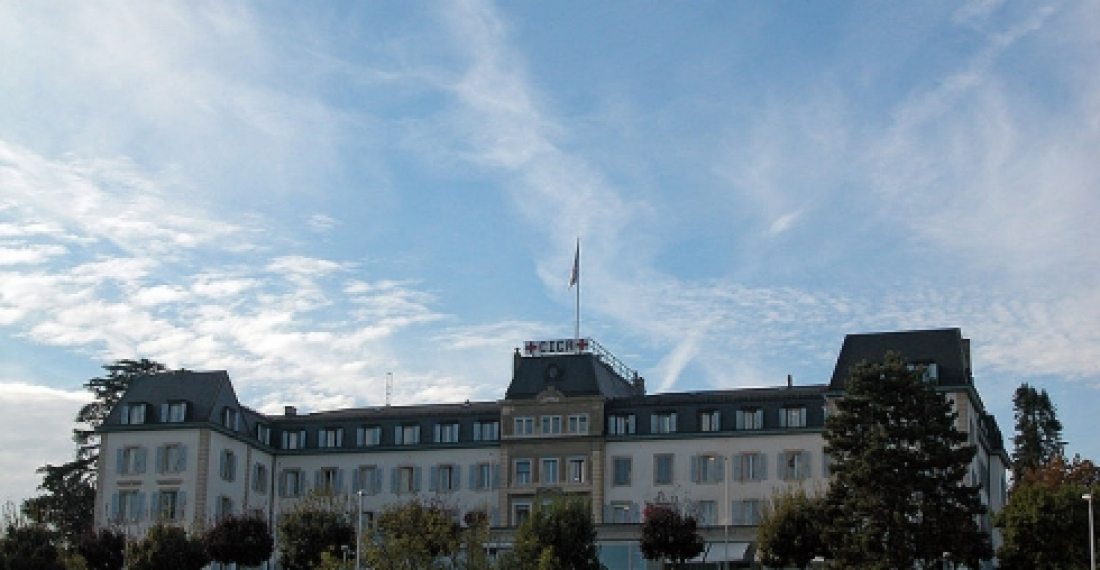
PHOTO: the ICRC headquarters in Geneva