


Christmas in Eastern Europe

Christians in Eastern Europe are celebrating Christmas.

In Armenia, and within Armenian communities in the diaspora all over the world, people lit candles in Churches and participated in special Christmas services.

Orthodox Christians celebrate Christmas this year on 7 January, according to the old Julian calendar. Russian, Greek and Georgian Orthodox Churches and other Orthodox communities celebrate Christmas on this day.

The Editorial Team of commonspace.eu  wishes a Happy Chrismas to all Armenians and to all Orthodox Christians.

source: commonspace.eu

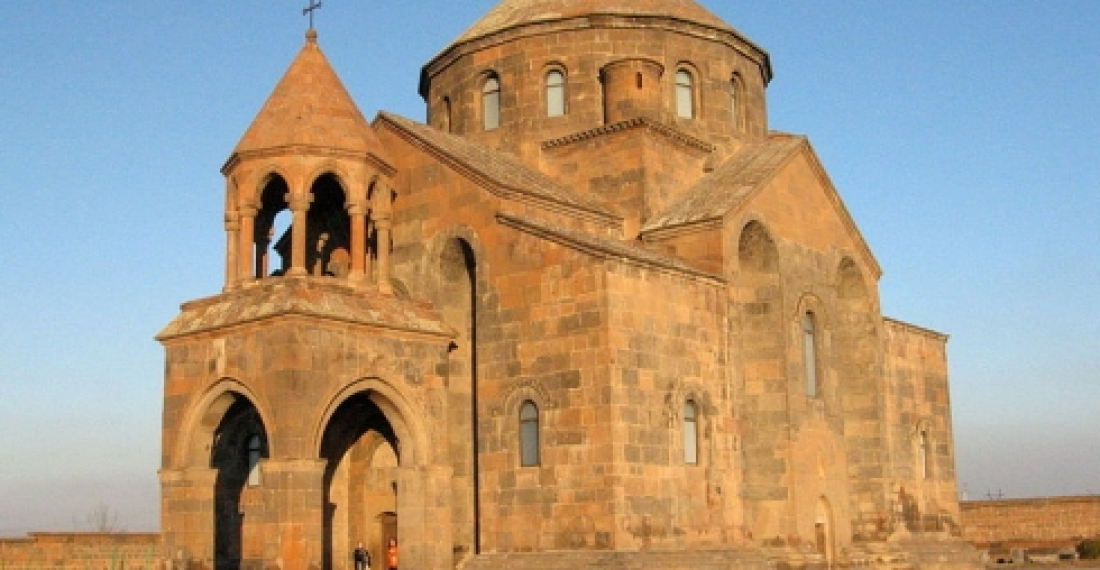
photo: The Armenian Church of Saint Hripsime Church build in 618 AD survives basically unchanged. It is considered one of the oldest surviving churches in Armenia, known for its fine architecture of the classical period, which influenced many other Armenian churches. The church was erected in 618 by Catholicos Gomidas atop the original mausoleum, built by Catholicos Sahak the Great in 395, which contained the remains of the martyred Saint Hripsimé. (archive picture)


Related articles

Editor's choice
News
Borrell tells the European Parliament that the situation in Afghanistan was critical, but the EU will remain engaged

Borrell tells the European Parliament that the situation in Afghanistan was critical, but the EU will remain engaged

Borrell underlined that the European Union will make every effort to support the peace process and to remain a committed partner to the Afghan people. "Of course, we will have to take into account the evolving situation, but disengagement is not an option.  We are clear on that: there is no alternative to a negotiated political settlement, through inclusive peace talks.
Editor's choice
News
Egypt rejects Israeli "offer" for an exit only Rafah checkpoint in Gaza

Egypt rejects Israeli "offer" for an exit only Rafah checkpoint in Gaza

gypt has rejected an Israeli "offer" for opening for exit only the Rafah checkpoint in Gaza. According to the Egyptian State Information Service, Egyptian authorities refuted on Wednesday afternoon reports that Israel claims it will open the Rafah crossing, the only lifeline for Gaza to the outside world, but only for those wishing to leave the besieged coastal enclave.  Citing an Egyptian official, the service stated that ''any agreement to open the crossing will cover both entry and exit, in line with US President Donald Trump's plan for humanitarian and political arrangements following the ceasefire.'' Cairo reaffirmed its adherence to the plan and UN Security Council Resolution 2803, including the right of return for Palestinians and maintaining two-way operations at the crossing. Earlier in the day, Israel's Coordinator of Government Activities in the Territories (COGAT) announced that the Rafah crossing would reopen ''within the next few days,'' marking the first such move since February 2025. According to the statement, departures would require prior Israeli security approval and would follow mechanisms previously implemented under EU supervision. Notably, the statement made no mention of the entry of humanitarian aid, which continues to flow through the Kerem Shalom crossing. A Palestinian official also echoed the Egyptian denial of Israel's claim. Speaking to The New Arab, the official, who preferred to remain anonymous due to the sensitivity of the issue, said, "Neither the Palestinian Authority nor the bodies authorised to manage the crossing have received any formal notification regarding reopening arrangements." "What Israel has announced bears no relation to reality, and there are no signs on the ground that the crossing will actually open in the near future," he added. According to the official, the Israeli statement appears mainly symbolic, aimed at presenting a positive image to domestic or international audiences rather than addressing the urgent needs of Gaza's residents. "The citizens of the Strip continue to live under extreme hardship due to the ongoing siege. Any unilateral announcement, not coordinated officially and within international frameworks, will provide no tangible benefit," the official stressed. He also warned that Israel could be using such declarations as a form of psychological pressure, attempting to frame Egypt as obstructive, while Cairo maintains its commitment to international agreements. ''Egypt cannot accept unilateral steps that displace Palestinians or undermine their right of return,'' the official said, emphasising that the Palestinian Authority is in continuous contact with the European Union and the United Nations to ensure any reopening is conducted safely and in accordance with prior agreements. A European Union official, who requested anonymity and is familiar with the matter, told TNA that the EU has received no official notification from Israel regarding new arrangements, stressing that "no changes exist beyond the January agreements, and we await Israel's formal approval for crossing operations under the Trump plan." The announced agreements stress that no Palestinians will be forced to leave Gaza. Those who choose to travel will have the right to return, while humanitarian aid will continue through UN agencies, the International Red Cross and Crescent, and other independent organisations. Reopening the crossing will follow mechanisms jointly supervised by the EU and the Palestinian Authority to ensure oversight and transparency, according to the EU official.

Popular

Editor's choice
News
Egypt rejects Israeli "offer" for an exit only Rafah checkpoint in Gaza

Egypt rejects Israeli "offer" for an exit only Rafah checkpoint in Gaza

gypt has rejected an Israeli "offer" for opening for exit only the Rafah checkpoint in Gaza. According to the Egyptian State Information Service, Egyptian authorities refuted on Wednesday afternoon reports that Israel claims it will open the Rafah crossing, the only lifeline for Gaza to the outside world, but only for those wishing to leave the besieged coastal enclave.  Citing an Egyptian official, the service stated that ''any agreement to open the crossing will cover both entry and exit, in line with US President Donald Trump's plan for humanitarian and political arrangements following the ceasefire.'' Cairo reaffirmed its adherence to the plan and UN Security Council Resolution 2803, including the right of return for Palestinians and maintaining two-way operations at the crossing. Earlier in the day, Israel's Coordinator of Government Activities in the Territories (COGAT) announced that the Rafah crossing would reopen ''within the next few days,'' marking the first such move since February 2025. According to the statement, departures would require prior Israeli security approval and would follow mechanisms previously implemented under EU supervision. Notably, the statement made no mention of the entry of humanitarian aid, which continues to flow through the Kerem Shalom crossing. A Palestinian official also echoed the Egyptian denial of Israel's claim. Speaking to The New Arab, the official, who preferred to remain anonymous due to the sensitivity of the issue, said, "Neither the Palestinian Authority nor the bodies authorised to manage the crossing have received any formal notification regarding reopening arrangements." "What Israel has announced bears no relation to reality, and there are no signs on the ground that the crossing will actually open in the near future," he added. According to the official, the Israeli statement appears mainly symbolic, aimed at presenting a positive image to domestic or international audiences rather than addressing the urgent needs of Gaza's residents. "The citizens of the Strip continue to live under extreme hardship due to the ongoing siege. Any unilateral announcement, not coordinated officially and within international frameworks, will provide no tangible benefit," the official stressed. He also warned that Israel could be using such declarations as a form of psychological pressure, attempting to frame Egypt as obstructive, while Cairo maintains its commitment to international agreements. ''Egypt cannot accept unilateral steps that displace Palestinians or undermine their right of return,'' the official said, emphasising that the Palestinian Authority is in continuous contact with the European Union and the United Nations to ensure any reopening is conducted safely and in accordance with prior agreements. A European Union official, who requested anonymity and is familiar with the matter, told TNA that the EU has received no official notification from Israel regarding new arrangements, stressing that "no changes exist beyond the January agreements, and we await Israel's formal approval for crossing operations under the Trump plan." The announced agreements stress that no Palestinians will be forced to leave Gaza. Those who choose to travel will have the right to return, while humanitarian aid will continue through UN agencies, the International Red Cross and Crescent, and other independent organisations. Reopening the crossing will follow mechanisms jointly supervised by the EU and the Palestinian Authority to ensure oversight and transparency, according to the EU official.

